Major Problems of Pakistan: The Data Behind the Headlines
Headlines name Pakistan’s problems; data measures them. This deep dive puts numbers on the major problems — poverty, inequality, energy, water, governance — so you can argue from evidence, not anecdote.
Quick answer: Pakistan’s major problems in data: ~26M children out of school, <3% of GDP on health, water near scarcity thresholds, chronic energy circular debt, 251M people growing 1.5%/year, and top-10 climate vulnerability.
In this guide
Poverty and inequality
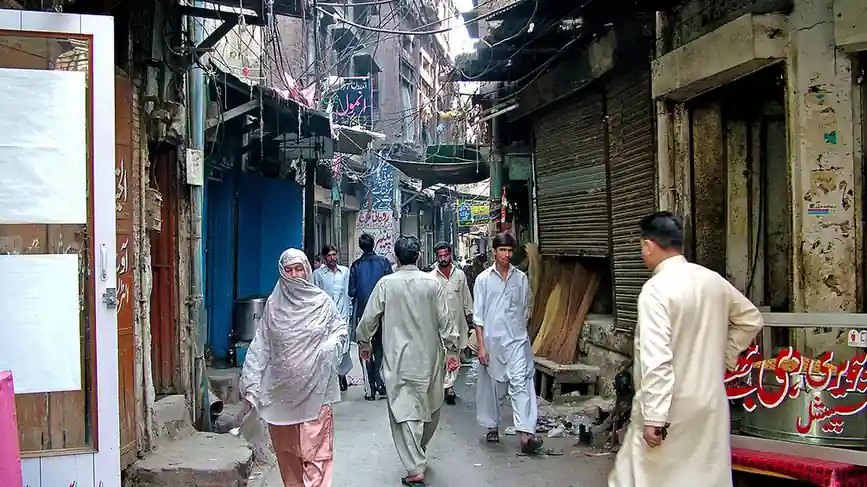
Poverty in Pakistan is officially measured around a quarter of the population below the national line — but the number swings with inflation: the 2022–23 price shock pushed millions back below it. Inequality is stark and visible: gated housing societies beside katchi abadis, private schools beside ghost schools. BISP’s cash transfers (around Rs. 13,500 quarterly per family in recent years) cushion the poorest — a proven programme in a landscape of unproven ones.
The dashboard
| Indicator | Figure | Verdict | |
|---|---|---|---|
| Out-of-school children | ~26 million | Emergency | |
| Health spending | <3% of GDP | Far too low | |
| Water per capita | ~1,000 m³ | Scarcity threshold | |
| Population growth | ~1.5%/year | Straining systems | |
| Tax-to-GDP | Among world’s lowest | Reform imperative | |
| Climate vulnerability rank | Top 10 globally | Adaptation lagging |
Using this data
In essays and debates, pair each number with a cause and a solution — data without prescription is trivia. The 10 major problems guide gives the causes-and-solutions structure; the hub the full context.
Inequality in numbers
Pakistan’s inequality isn’t just rich-vs-poor — it’s access inequality: who gets the working school, the staffed hospital, the clean water connection.
- Education: elite private schools vs ghost schools — same country, different centuries.
- Health: private hospitals for those who can pay; underfunded BHUs for those who can’t.
- Water: tanker mafias in Karachi vs piped supply in cantonments.
- Justice: the well-connected navigate the system; the poor wait in it.
Cash transfers (BISP) cushion the income gap; nothing yet cushions the access gap — which is why inequality feels worse than the income statistics suggest.
Where the numbers come from
Good data hygiene matters. The figures in this guide’s dashboard trace to:
- Population & growth: World Bank / UN World Population Prospects.
- Inflation: Pakistan Bureau of Statistics (PBS).
- IMF programme: IMF press releases (September 2024).
- Out-of-school children: UNICEF-aligned government estimates.
- Flood damage: the post-disaster needs assessment (2022).
- Remittances: State Bank of Pakistan.
Treat any unsourced number — including in exam guides — with suspicion. The numbers above are the ones you can defend.
Frequently asked questions
What are the major problems of Pakistan?
Poverty and inequality, educational exclusion, water and energy stress, rapid population growth, weak governance and climate vulnerability — measured in the dashboard above.
How many Pakistanis live in poverty?
Roughly a quarter by the national poverty line, with the figure highly sensitive to inflation — the 2022–23 shock pushed millions back under it.
Is inequality rising in Pakistan?
Income inequality is moderate by global standards; access inequality — to schools, hospitals, water, justice — is stark and widely felt to be widening between planned and unplanned Pakistan.
Where can I verify Pakistan’s economic data?
The Pakistan Bureau of Statistics (pbs.gov.pk), State Bank of Pakistan (sbp.org.pk), and the IMF’s Pakistan pages — the primary sources behind most published figures.
What is Pakistan’s poverty rate?
Roughly a quarter of the population below the national poverty line — highly sensitive to inflation, which pushed millions back under it during the 2022–23 shock.
What are Pakistan’s problems in simple words?
Not enough good jobs, schools and hospitals for 251 million people — plus water running short, power costing too much, and a climate hitting harder each year. The dashboard above puts numbers on each.