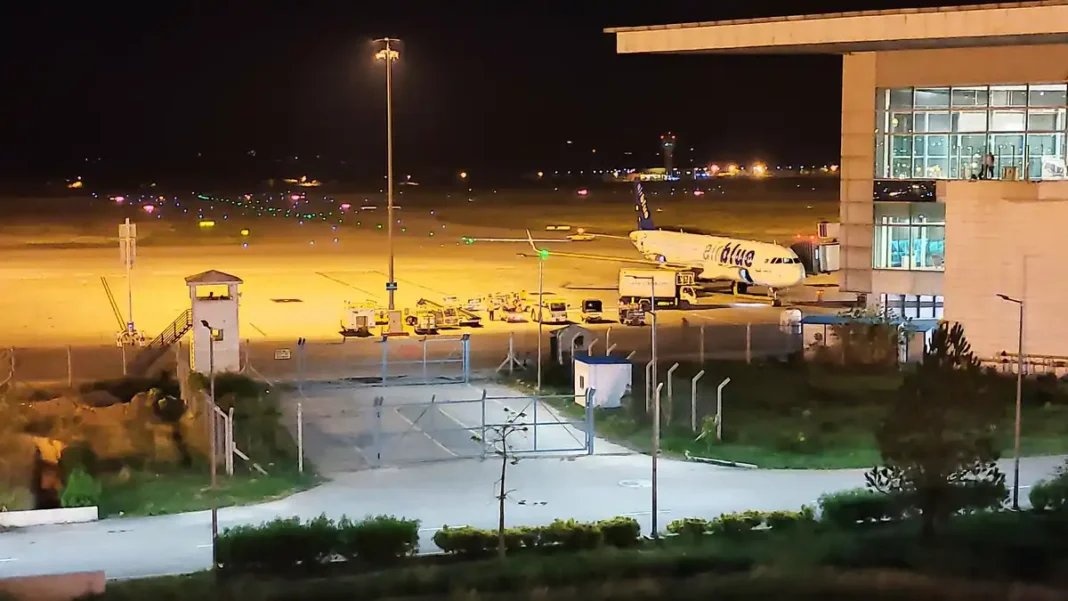
PAA Signs Agreements for Wind Shear Alert System at Islamabad Airport
ISLAMABAD: The Pakistan Airports Authority has signed two agreements to strengthen aviation safety and air-ground communications at the country’s airports. Under the accords, a new wind shear alert system will be installed at Islamabad International Airport for Rs254 million, alongside advanced equipment to test and improve aviation radio communications.
The wind shear alert system is expected to be installed within six months.
The agreements cover two distinct needs. The wind shear system will give air traffic controllers real-time warnings of dangerous low-level wind changes near the runway, while the communications equipment will test and improve the reliability of radio links between controllers and pilots.
Why the PAA aviation safety agreements matter
Wind shear is a sudden change in wind speed or direction over a short distance. At low altitude, during take-off and landing, it is one of the most dangerous weather phenomena for aircraft. A strong downdraft or headwind-to-tailwind shift can rob a plane of lift in seconds, and several fatal accidents worldwide have been linked to it.
Wind shear alert systems use ground-based sensors, often Doppler radar or laser-based lidar, to detect these shifts and warn controllers and pilots in time to abort a landing or delay a take-off. Installing one at Islamabad International Airport, the country’s largest and busiest airport, is a direct investment in the safety of its most crowded airspace.
The radio communications equipment addresses the other side of the safety chain. Clear, reliable air-ground radio is the foundation of air traffic control. Regular testing and modernisation of this equipment reduces the risk of communication breakdowns, which sit behind a significant share of reported aviation incidents globally.
Part of a wider passenger-facilitation push
The agreements follow a move a day earlier, when the PAA established a pre-departure screening facilitation desk at Islamabad International Airport to help passengers complete their screening and identification processes promptly. The desk is expected to reduce the number of passengers offloaded from flights because of incomplete checks.
Senior officials of the Federal Investigation Agency and Immigration attended the desk’s inauguration, signalling coordination between the airport authority and border agencies.
The two moves together show the authority working on both ends of the departure experience: getting passengers through the terminal smoothly, as NADRA’s recent guidance for first-time CNIC applicants also addresses for travellers, and making the airspace around the airport safer once they are airborne.
What to watch
The six-month installation timeline will be the measure of the announcement. Aviation infrastructure projects in Pakistan have a history of slipping on delivery, so the PAA’s progress on the wind shear system will be worth tracking through the spring.
If delivered on schedule, Islamabad International Airport will join a relatively small group of airports in the region with dedicated low-level wind shear alerting, a meaningful upgrade for one of South Asia’s busiest airfields.
Frequently asked questions
What is a wind shear alert system?
It is a ground-based system, usually using Doppler radar or lidar sensors, that detects sudden changes in wind speed or direction near runways and alerts air traffic controllers and pilots in real time.
How much will the Islamabad airport wind shear system cost?
Rs254 million, according to the Pakistan Airports Authority. It is to be installed within six months.
What else did the PAA agreements cover?
Advanced equipment to test and improve aviation radio communications between air traffic controllers and pilots.