Pakistan domestic cricket is the engine room behind the national team — the first-class, List A and T20 competitions where future internationals earn their reputations. But the structure changes almost every season, and even regular fans lose track of which tournament is which. Here is how it all works in 2025–26.
Quick answer: Pakistan domestic cricket is run by the PCB through the Quaid-e-Azam Trophy (first-class, 10 teams in 2025–26), the National T20 Cup (T20, one of the world’s oldest T20 leagues) and the departmental President’s Trophy (first-class). A 12-team Hanif Mohammad Trophy acts as the qualifier, and age-group U15/U17/U19 competitions feed the bottom of the pyramid.
In this guide
- The 2025–26 Structure at a Glance
- First-Class, List A and T20 — What Each Format Does
- Regions vs Departments: Two Systems in One
- The Road to the National Team
- FAQs
The 2025–26 Structure at a Glance
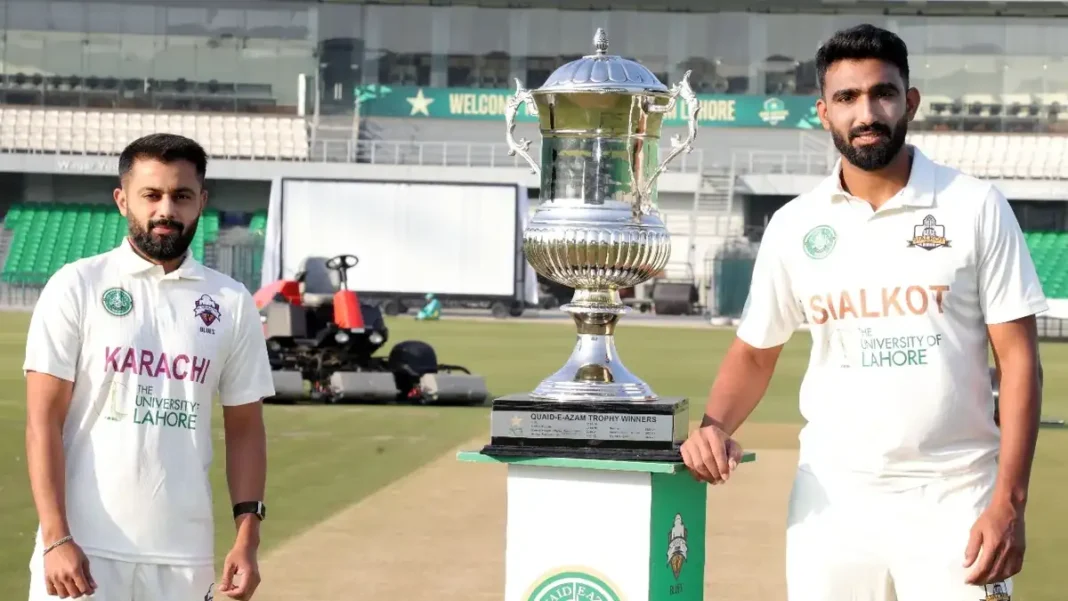
The PCB’s domestic calendar for 2025–26, announced on 7 July 2025, was built around one idea: merit-based participation. The bloated 18-team Quaid-e-Azam Trophy of 2024–25 — criticised for diluting quality — was cut to 10 teams. Six kept their places from the previous season’s standings (Abbottabad, Bahawalpur, Islamabad, Lahore Whites, Peshawar, Sialkot) and four qualified through the Hanif Mohammad Trophy (Faisalabad, FATA, Karachi Blues, Multan).
The season opens each year with the Hanif Mohammad Trophy (named after Pakistan’s original “Little Master”) — a 12-team, non-first-class four-day competition that doubles as the qualifying route into the Quaid-e-Azam Trophy. The white-ball season is anchored by the National T20 Cup, which in 2025–26 ran as a qualifier followed by a 10-team Super 10. Alongside all this, the departmental President’s Trophy Grade-I gives first-class cricket to teams fielded by banks, broadcasters and utilities. Read our complete Pakistan domestic cricket overview for the season-by-season story.
First-Class, List A and T20 — What Each Format Does
First-class: the Test pathway
Four-day cricket remains the foundation. The Quaid-e-Azam Trophy, first played in 1953–54, is where selectors look for Test prospects — technique against the new ball, patience against spin, and the stamina to bowl long spells. Sialkot’s Saad Baig made exactly 1,000 runs in the 2025–26 edition and was named player of the series — the kind of season that puts a name on the selectors’ list.
T20: the talent showcase
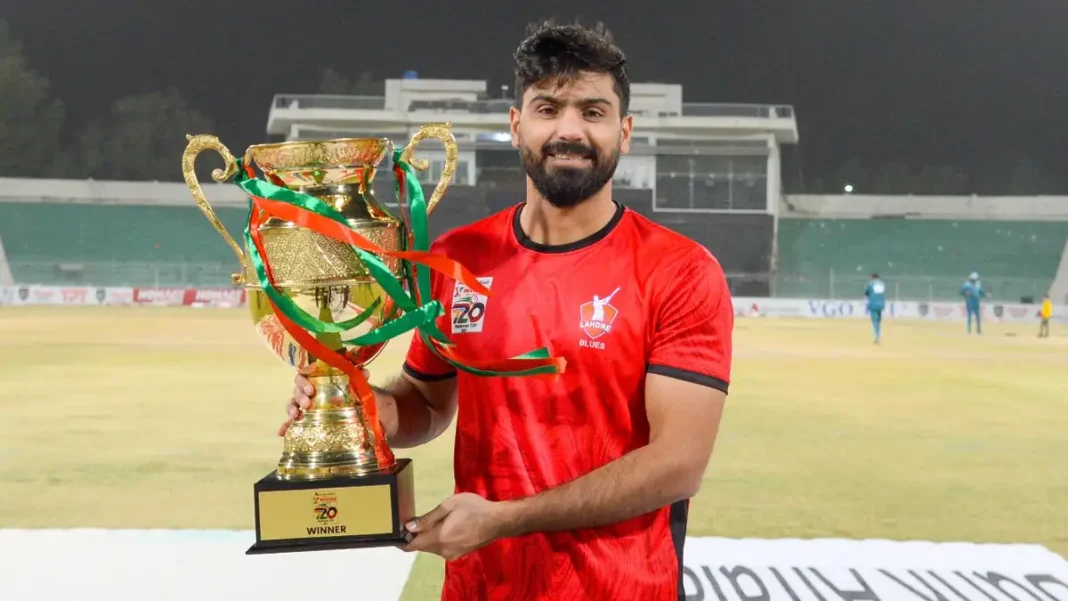
The National T20 Cup is where unknown players become household names overnight. Peshawar’s Sahibzada Farhan smashed a record 605 runs in the 2024–25 edition — including three centuries — and walked straight into the national conversation. With the PSL scouting every edition, a big National T20 season can change a career in three weeks.
List A and the one-day gap
Pakistan’s domestic one-day competition has had stop-start history. The Champions Cup’s planned List A edition was the latest casualty when the whole venture was scrapped after one season — leaving the 50-over format as the quietest corner of the domestic calendar.
Regions vs Departments: Two Systems in One
Pakistan uniquely runs two parallel first-class streams. Regional sides (Karachi Blues, Lahore Whites, Peshawar, Multan and the rest) represent cities and provinces in the Quaid-e-Azam Trophy and National T20 Cup. Departmental sides (Pakistan Television, State Bank, WAPDA, SNGPL) represent employers in the President’s Trophy.
The departments are the system’s safety net: they employ hundreds of first-class cricketers as staff, giving players salaried careers that regional cricket alone cannot provide. Departments were excluded from first-class cricket during the 2019–23 six-team experiment, and their return has been widely seen as stabilising players’ livelihoods.
The Road to the National Team
The ladder is straightforward even if the structure around it shifts:
- Age-group cricket (U15, U17, U19) — where the PCB expanded competitions in 2025–26 and where scouts first spot talent. The PCB Talent Hunt Program 2026 draws from this level upward.
- Hanif Mohammad Trophy — the regional proving ground and QEA qualifier.
- Quaid-e-Azam Trophy / National T20 Cup — the shop window for selectors.
- Pakistan Shaheens and the national side — the destination.
Players like Khushdil Shah — in the news over Pakistan exit rumours — and emerging names like Maaz Sadaqat, who announced himself with a maiden T20I fifty, all came through this domestic grind before the green shirt.
Frequently Asked Questions
How is Pakistan domestic cricket structured?
Around three main competitions: the Quaid-e-Azam Trophy (first-class, regional teams), the National T20 Cup (T20, regional teams) and the President’s Trophy (first-class, departmental teams). The Hanif Mohammad Trophy acts as the qualifier for the Quaid-e-Azam Trophy, and U15/U17/U19 competitions sit below.
Who runs Pakistan domestic cricket?
The Pakistan Cricket Board (PCB), which announces the domestic calendar each July, sets formats and team numbers, awards domestic contracts, and appoints match officials.
How many domestic teams are there in Pakistan?
In 2025–26: 10 in the Quaid-e-Azam Trophy, 10 in the National T20 Cup Super 10 (after qualifiers), 9 departments in the President’s Trophy Grade-I, and 12 in the Hanif Mohammad Trophy. The PCB plans a 20-team Quaid-e-Azam Trophy for 2026–27.
Which domestic tournament is the most important?
The Quaid-e-Azam Trophy — it is Pakistan’s oldest and premier first-class competition and the primary route to Test selection. For white-ball cricket, the National T20 Cup carries the most weight.