PHC sets aside 10-year sentence of police inspector in fabricated evidence case
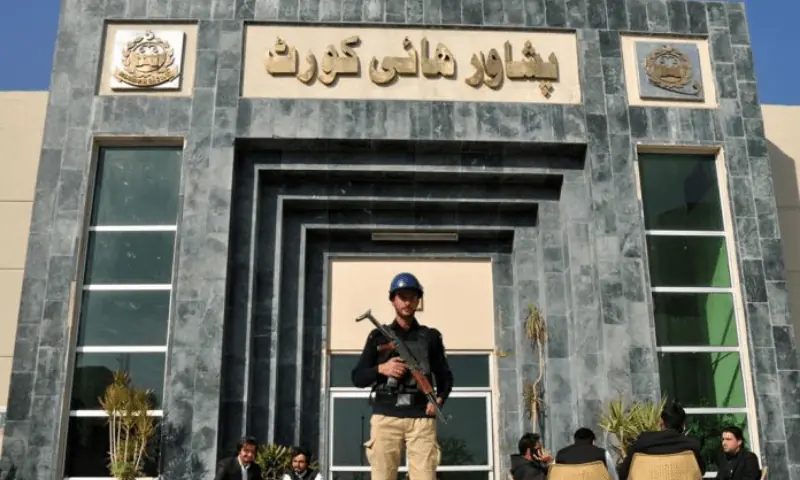
A two-member bench of the Peshawar High Court has set aside the conviction and 10-year prison sentence handed to police inspector Hidayatullah for allegedly fabricating evidence in a murder case. The PHC acquittal, reported on Wednesday, rested on the finding that he had been denied his fundamental legal and constitutional rights.
The bench of Justice Sahibzada Asadullah and Justice Farah Jamshed held that the appellant never got a proper chance to present an effective defence. It ruled that the trial violated his rights to a fair trial and due process under Article 10-A of the Constitution, and that he was not given adequate opportunity to engage counsel of his own choice.
Why the PHC acquitted the police inspector
Hidayatullah had been convicted in June this year by Additional Sessions Judge Imtiaz Ali. He received three years under section 186(2) of the Pakistan Penal Code for hampering investigation, and seven years under section 193 for fabricating false evidence.
He had been the investigating officer in the murder of Mehfooza Bibi, who was killed at a bus stand in Peshawar. The first information report was registered at Pahari Pura police station on July 4, 2024, under sections 302, 324 and 34 of the PPC. Hidayatullah appeared as a prosecution witness and was cross-examined on January 7, 2026.
His counsel, Advocate Shabbir Hussain Gigyani, argued that a conviction can only stand when the proceedings follow the Constitution, the law and the prescribed procedure. The bench agreed. It observed that the trial judge had acted as complainant, prosecutor and adjudicator at the same time, which offended the principle of judicial impartiality.
The court further observed that even where a breach of investigative duty is established, the procedure laid down by law must be followed. Direct punishment, it said, cannot replace that procedure.
What the trial court had found against the IO
The trial court had built the conviction on the inspector’s own admissions about gaps in the investigation. According to the judgment, he admitted that he never recorded the statements of the bus stand manager or other staff, and never cited them as witnesses on the recovery memo.
He also admitted that he never recorded the statement of the CCTV operator, had no record of who copied the footage onto a USB drive, and never sent the USB to a forensic laboratory, the Punjab Forensic Science Agency in Lahore, or the cybercrime agency to check whether the footage was genuine.
The High Court bench did not dispute that such lapses matter. Its ruling turned instead on the process: the law requires a prescribed procedure even for punishing an investigator, and that procedure was not followed.
Why the PHC acquittal matters
The bench’s reasoning reaches beyond this one case. The order stresses that the right to counsel of one’s choice and the right to a fair trial apply to every accused person, including a police officer standing in the dock.
The judgment also repeats a long-standing caution about judicial roles. When the same judge effectively investigates, prosecutes and decides, the court said, impartiality is lost and the trial cannot survive a constitutional challenge.
Related
- PHC dismisses Sohail Afridi plea against ECP notice
- SC rules on shiqaq marriage dissolution
- Mir Raza judicial commission concludes proceedings
FAQs
Who was the police inspector convicted in the case?
Police inspector Hidayatullah was the investigating officer in the murder of Mehfooza Bibi, killed at a bus stand in Peshawar in 2024.
What was his original sentence?
A sessions court sentenced him in June 2026 to three years for hampering investigation and seven years for fabricating false evidence, a total of 10 years.
Why did the Peshawar High Court acquit him?
The bench ruled he was denied a fair trial and due process under Article 10-A, had no adequate chance to engage counsel of his choice, and that the trial judge had acted as complainant, prosecutor and adjudicator at once.