Pakistan waging ‘global war’ against terrorism, Naqvi tells UN chief on last day of his visit
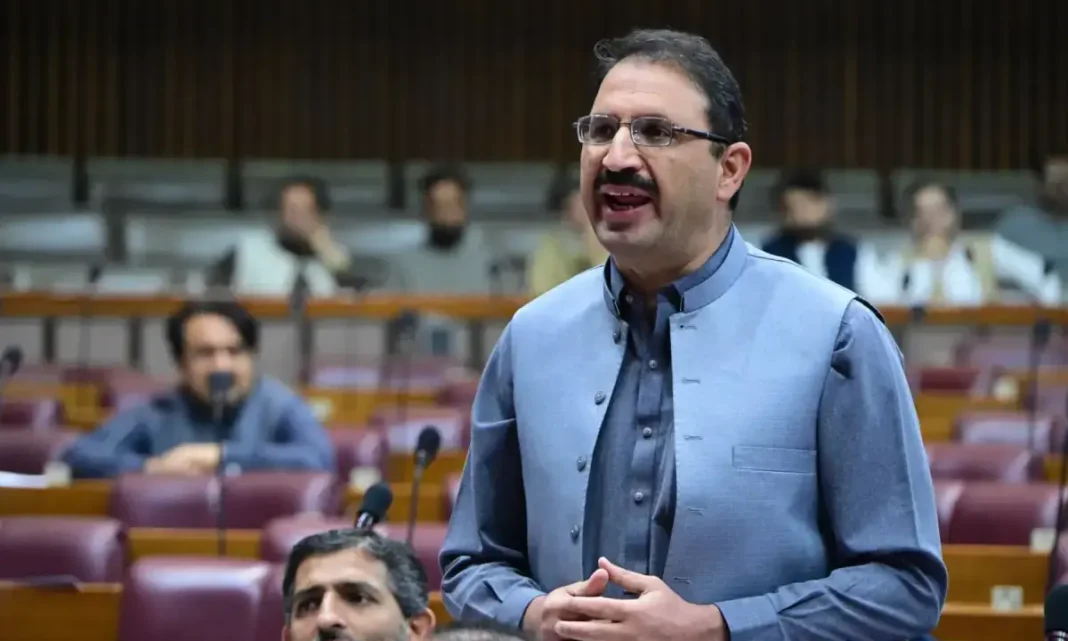
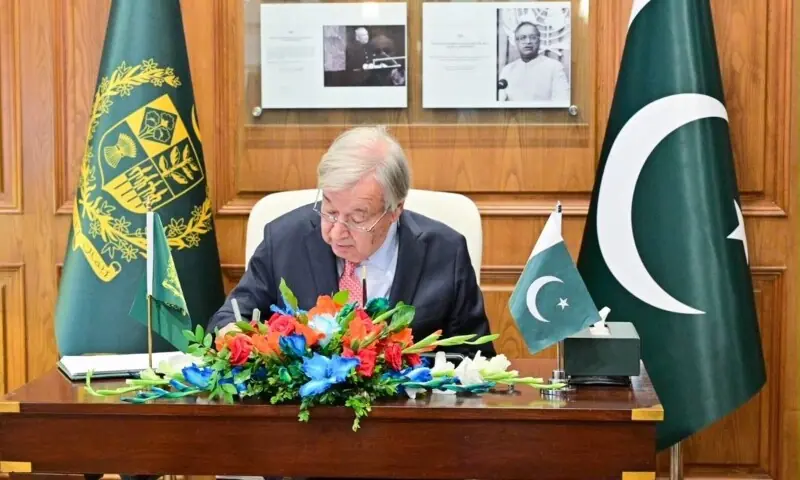
Interior Minister Mohsin Naqvi told UN Secretary-General Antonio Guterres on Thursday that Pakistan is waging a “global war” against terrorism, as the UN chief wrapped up his visit to the country. The Naqvi UN chief meeting closed a trip that Islamabad presented as a reaffirmation of the “longstanding” partnership between Pakistan and the United Nations.
The meeting came at the end of a visit during which Guterres also called on the country’s top military leadership, including a meeting with Chief of Defence Forces Field Marshal Asim Munir at GHQ Rawalpindi.
Naqvi UN chief meeting: what was discussed
Naqvi briefed Guterres on the scale of the militant threat Pakistan says it faces, describing the counterterrorism campaign as a global war rather than a domestic law-and-order problem. The framing matters: Islamabad has long argued that the terrorism spilling over its western border is a regional and international threat, not just a Pakistani one.
The interior minister’s remarks fit a pattern of recent Pakistani diplomacy that links the country’s counterterrorism operations to wider regional security, from the Afghan border to the new defence commitments in the Gulf.
A visit heavy with symbolism
Guterres’s trip landed at a crowded moment for Pakistani diplomacy. His meetings spanned the civilian and military leadership, and the UN’s public line through the visit stressed solidarity with Pakistan’s fight against terrorism and violent extremism.
The visit also overlapped with the sharp deterioration in Khyber-Pakhtunkhwa’s security situation, which has become a daily political battleground between the federal government and the PTI’s provincial administration. State media reported on Thursday that nine terrorists, including four commanders, were killed in an intelligence-based operation in North Waziristan, a reminder of the tempo of operations in the tribal districts.
Why the ‘global war’ language matters
Pakistani officials have increasingly described militancy as a shared international responsibility. Naqvi himself has previously said that dozens of terrorist organisations are active in Afghanistan and that eliminating them is a collective duty of the region and beyond.
By putting that argument directly to the UN secretary-general, Islamabad is seeking two things: political backing for its operations, and pressure on Kabul over militant sanctuaries across the border. Whether the UN chief’s visit produces anything concrete on either front will become clear in the coming weeks, as Pakistan’s security establishment weighs its next moves in the tribal districts.
For now, the visit ends with the familiar exchange: Pakistan pledges to keep fighting, and the United Nations pledges solidarity. The gap between the two has always been about what solidarity is worth in practice.
FAQ
What did Mohsin Naqvi tell the UN chief?
On the last day of Antonio Guterres’s Pakistan visit, Naqvi told him that Pakistan is waging a “global war” against terrorism.
Who else did the UN chief meet in Pakistan?
Guterres met the country’s top civilian and military leadership during the visit, including Chief of Defence Forces Field Marshal Asim Munir at GHQ Rawalpindi.
Why does Pakistan call it a ‘global war’?
Islamabad argues that the militant threat it faces, particularly from groups operating across the Afghan border, is a regional and international problem rather than a purely domestic one.
What is the state of counterterrorism operations?
Operations continue at a steady tempo. State media reported on Thursday that nine terrorists, including four commanders, were killed in an intelligence-based operation in North Waziristan.