Punjab On-Screen Marking Brings Facial Recognition to Board Exams
Punjab on-screen marking is now in use for board examinations, after the province introduced a digital system with facial recognition to modernise paper checking and make it more transparent across its nine education boards.
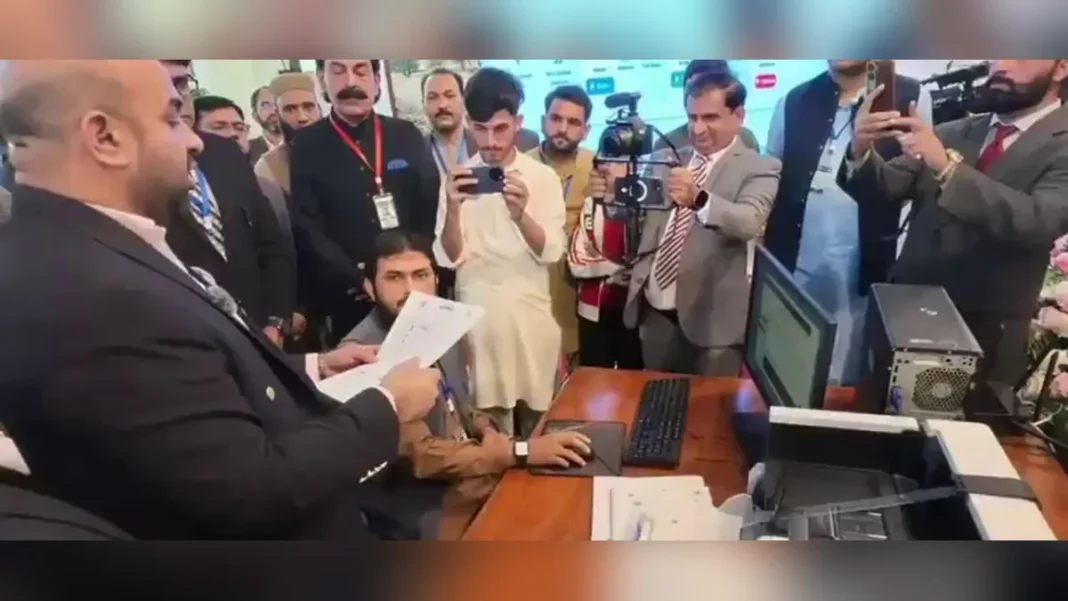
Under the system, students’ handwritten answer scripts will be scanned with advanced scanners and uploaded to a digital platform, where examiners assess them online through a real-time dashboard. Provincial Minister for School and Higher Education Rana Sikandar Hayat announced the initiative, sharing a video of a live demonstration of the system, and said facial recognition technology would verify examiners’ identities.
The system will lock automatically if it detects more than one face or the presence of an unauthorised person during the marking process, Hayat said. He said artificial intelligence and digital monitoring would help make the examination process more transparent, secure and efficient.
How Punjab on-screen marking will work
BISE Lahore Chairman Professor Badr-ul-Islam announced that on-screen marking would be introduced from the second annual examinations. BISE Lahore is leading the change, and the same marking model is being prepared for the province’s other boards.
Workshops for examiners, principals and students ran across the Lahore board’s districts in October to prepare them for the new system. The system will also be used in the next annual examinations, starting with four intermediate subjects: chemistry, biology, computer science and statistics.
A demonstration run through the Board of Intermediate and Secondary Education Bahawalpur showed answer sheets being fed into a scanner while their scanned pages appeared on a real-time dashboard, where examiners can mark answers directly on screen.
Under the digital assessment framework, answer scripts can be divided into individual questions or portions and assigned to different subject specialists, so several examiners can assess different answers in the same script instead of one examiner checking the entire paper. The system is also meant to bring greater uniformity to marking through standardised assessment criteria and digital monitoring of examiners, while the dashboard tracks progress in real time.
Facial recognition and AI-assisted checking
Facial recognition sits at the centre of the new checks. Before starting work, examiners must confirm their identity through a camera-based verification process, so only registered individuals can open the marking system. Access is granted only when a single matching face is detected, and the system locks at once if a second face appears.
The digital marking platform also includes an AI-assisted checking feature that works alongside the examiner’s assessment. The demonstration did not settle whether the AI would award marks on its own or only support human examiners, and that point remains open as the rollout continues.
Other measures in the programme include biometric verification of candidates. The boards have also finalised the subjects for on-screen marking at matriculation and intermediate levels, starting with four science subjects on e-sheets next year.
The reforms aim to cut inconsistencies in manual marking, strengthen accountability and make checking more consistent.
A wider digital shift in Punjab exams
The change is part of a wider set of digital reforms in Punjab’s examination system. The Lahore board has also made biometric thumb impressions mandatory for Class 9 and 11 candidates during registration, as part of the same push to verify identities.
The province had already been moving in this direction. About seven weeks ago, Punjab’s education boards said they were preparing to replace physical paper checking with scanning and on-screen evaluation, starting on a pilot basis for supplementary examinations. That plan has now reached the second annual examinations.
Punjab has also been changing how papers are set and sat. The province issued a revised smart syllabus for Class 10 exams in 2027, and Class 8 students will sit examinations in four subjects on e-sheets, with their scripts checked through online screen marking. Punjab is also training teachers in artificial intelligence as part of the same push to bring digital tools into classrooms and examination halls.
For students, little changes on the day of the paper. They will still write their answers by hand, and the change affects how answer sheets are processed and marked after the exam. For boards, the test will be whether the system holds up at full scale in the annual examinations, when the number of scripts runs far higher than in the second annual round now under way. The boards have also been changing fees and formats, with Punjab’s boards raising matric fees and the FBISE moving to bilingual matric papers for 2027.
Frequently asked questions
What is Punjab on-screen marking?
On-screen marking scans students’ handwritten answer scripts and uploads them to a digital platform, where examiners mark them online through a real-time dashboard instead of checking physical copies.
How does facial recognition work in the system?
Examiners must verify their identity through a camera before they can start marking. Access is given only when one registered face is detected, and the system locks if a second face or an unauthorised person appears.
Which exams will use the new system?
The system is being used in the ongoing second annual examinations across Punjab. It will also be used in the next annual examinations, starting with four intermediate subjects: chemistry, biology, computer science and statistics.
Will students still write papers by hand?
Yes. Students will continue to write their answers on paper. The change affects how answer sheets are scanned, divided among examiners and marked after the exam.
What other digital reforms has Punjab introduced for exams?
Punjab has introduced digital biometric attendance for candidates, e-sheets for Class 8 papers, a revised smart syllabus for Class 10 exams in 2027 and AI training for teachers in schools.