Former Tottenham defender Ramon Vega to challenge Infantino for FIFA presidency
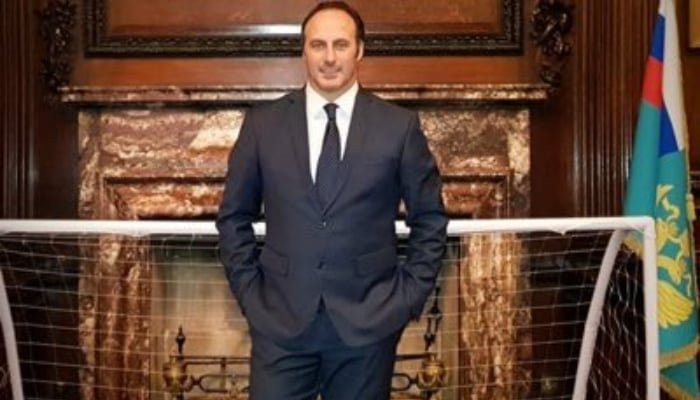
Former Tottenham Hotspur defender Ramon Vega, 55, announced on Wednesday that he intends to stand against Gianni Infantino in next year’s FIFA presidential election. The bid makes him the first person to publicly declare a challenge to the incumbent.
Infantino is seeking re-election in March for a fourth term. He faces mounting opposition after his failed July attempt to bring private investors into a new FIFA commercial entity holding rights linked to competitions including the World Cup.
Vega set out his stall in a manifesto. He said: “My purpose is straightforward: to serve football and the people who give the game its life,” and “I am standing to reunite the global football family, deliver genuine and lasting reform, modernise FIFA for the 21st century, restore stability and credibility, and rebuild the trust that our game urgently needs.”
Who is Ramon Vega
Vega won 23 caps for Switzerland between 1993 and 2001. At club level he played for Cagliari, Tottenham, Celtic and Watford. He lifted the League Cup with Spurs in 1999 and helped Celtic to a domestic treble in 2000-01, winning the Scottish Premier League, the Scottish Cup and the Scottish League Cup.
Since retiring, he has built business interests and has explored FIFA presidency bids before, in 2015, 2019 and 2022. His playing pedigree gives him a profile most challenger candidates lack, and his public declaration puts early pressure on other potential rivals to declare their hand.
In his manifesto he argued that football “does not belong to presidents, confederations or administrators”. He added: “the current leadership has demoralised the game… Weak governance has damaged FIFA’s credibility and eroded trust across the global football family.”
Infantino under pressure from European associations
Vega’s challenge lands at a difficult moment for the incumbent. Last month the Swiss Football Association withdrew its support for Infantino’s bid, following England, Wales, France, Serbia and several other European associations.
UEFA has pledged to present a rival candidate before the November deadline. Infantino has written to FIFA’s 211 member associations proposing an independent review of decision-making, a move seen as an attempt to steady his support.
The row over the commercial entity in July remains the sharpest point of friction. Critics argued that bringing private investors into rights linked to the World Cup would dilute the control of member associations and concentrate power in the presidency.
The path to the ballot
To stand in the election, candidates must have held a role in football for two of the past five years, be endorsed by five national associations, and pass FIFA’s eligibility check. The declaration deadline is mid-November.
Securing five endorsements is the first real test for Vega. A public declaration helps, but national associations will weigh his chances against the incumbent’s entrenched support across Africa, Asia and the Americas. UEFA’s promised rival candidate could either split the reform vote or force a contest that Vega alone might not sustain.
Whether Vega clears the bar or not, his bid signals that the 2027 election will be a genuine contest rather than a coronation. The coming weeks will show which associations are willing to put their names behind a challenge.
Related
- Ronaldo pays tribute as Messi bids Argentina farewell
- Pakistan-England-Sri Lanka ODI tri-series preview
- Pakistan beat Bangladesh in Asian Games cricket final
FAQs
Who is Ramon Vega?
He is a former Switzerland defender with 23 caps who played for Cagliari, Tottenham, Celtic and Watford, winning the League Cup with Spurs in 1999 and a domestic treble with Celtic in 2000-01.
When is the FIFA presidential election?
Infantino is seeking re-election in March next year, and candidates must declare by mid-November after securing five national association endorsements and passing FIFA’s eligibility check.
Why is Infantino facing opposition?
European associations including England, Wales, France and Serbia have withdrawn support after his failed July attempt to bring private investors into a new FIFA commercial entity linked to rights including the World Cup.