Trump Warns US Could Resume Iran Strikes After New Year
US President Donald Trump has said he is inclined to order the United States to resume Iran strikes after the New Year if Washington and Tehran fail to reach an agreement by then. The warning, made in a phone interview with Fox News, raises the prospect of renewed military action between the two countries, Al Jazeera reported.
Trump said indirect negotiations with Iran had so far produced no tangible results. “Iranians talk all the time, all they do is talk,” he said. He added that he hoped Iranian tankers would try to test the US blockade on Iranian shipping. “They will all be at the bottom of the sea, like Iran’s navy,” he said.
Trump has already said he wants a “permanent” deal to stop Iran obtaining a nuclear weapon, one no future American president could undo, as Feature Pakistan reported in its coverage of the Fox News interview.
Tankers hit near Hormuz as US weighs whether to resume Iran strikes
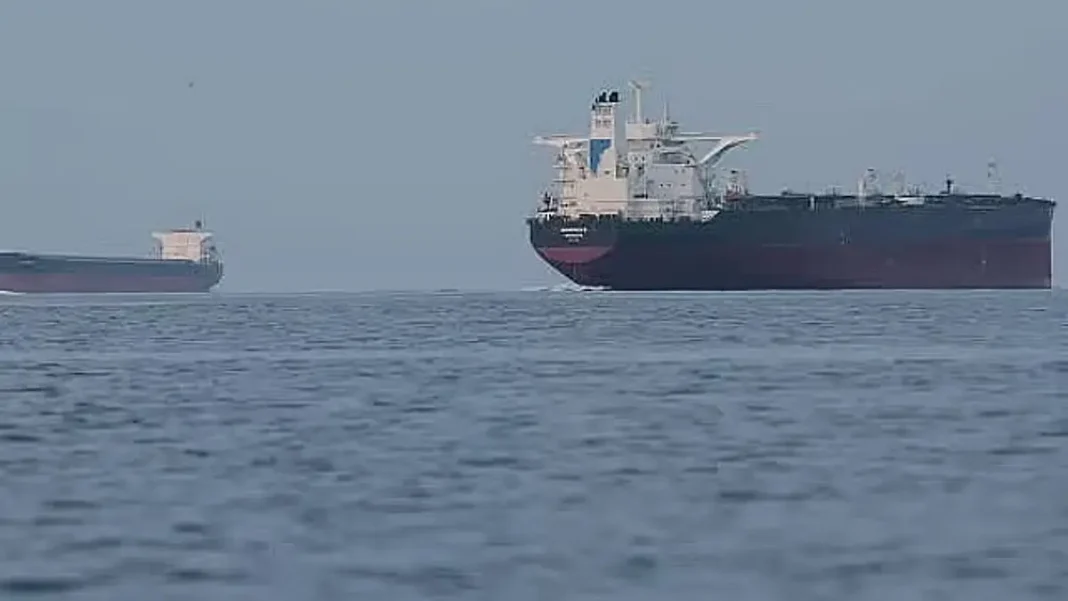
The warning comes as shipping through the Strait of Hormuz faces fresh danger. Iran’s navy said two supertankers caught fire after hitting mines in a restricted area east of the strait.
UKMTO reported a tanker leaving the strait was hit on the stern by an unknown projectile, with no casualties. It later reported a second tanker hit in its engine room 17 nautical miles east of Khasab, Oman. It was not clear whether the two reports involved the same vessel.
Iran also claimed it shot down a US drone over Qeshm Island. US Central Command rejected a separate Iranian claim that an F-16 fighter jet was damaged over the Gulf, saying no American fighter jet had been attacked.
Iran plans to test the blockade with 14 tankers
Iran is preparing to send 14 oil tankers through the US naval blockade, according to reports, in a move that could bring its vessels face to face with American warships. Gulf News reported the plan, which raises the prospect of a dangerous confrontation with American warships. Shipping through the strait is already 65 per cent below pre-war levels.
UKMTO said 114 vessels transited the strait with US help between November 19 and 21, well below the 2025 baseline average of 138 a day, and that congestion “remains high”. In the Bab al-Mandeb Strait, 68 transits were recorded in the same period.
Houthis claim strikes on Saudi targets
Yemen’s Houthis claimed they carried out two precision operations against targets in Saudi Arabia, including the Rabigh oil refinery on the Red Sea coast and a radar in al-Dawasir in Najd province. Their military spokesperson Yahya Saree said the strike on Rabigh “scored a direct hit”, while the other attack “successfully achieved its objective”.
The Saudi-led coalition said it intercepted a drone targeting the kingdom’s southern region and a ballistic missile headed for the western Red Sea coast. No independent confirmation of damage from the claimed strikes was reported.
Bahrain’s air defences also intercepted several Iranian aerial attacks. Bahrain accused Iran of striking a civilian industrial facility on Saturday, sparking a fire. The attacks left two people injured, including a Pakistani resident who is in critical condition, while a Bahraini citizen is in stable condition.
Diplomacy still in play
Egypt’s Foreign Minister Badr Abdelatty said a military solution would have a “more devastating impact” on the region, adding that Egypt was working with Qatar, Turkiye, Saudi Arabia and Pakistan to return the sides to the negotiating table.
Saudi Arabia’s foreign minister discussed “the latest regional developments and ongoing diplomatic efforts” with his Pakistani counterpart in a phone call on Sunday, according to the Saudi Press Agency.
Pakistan has a direct stake: Deputy Prime Minister Ishaq Dar has said Islamabad hosted direct negotiations between Washington and Tehran in April and has pressed for an early agreement. Bilawal Bhutto-Zardari has also warned that a collapse of the US-Iran dialogue could widen the conflict. A lasting deal would ease pressure on energy prices and shipping through Hormuz, while a breakdown would deepen the disruption already hitting the region. The two countries are also near a free trade deal, with talks at the final stage.
Iran’s President Masoud Pezeshkian has rejected reports of disagreements inside the Iranian government, calling them “false, baseless, and malicious”.
Frequently asked questions
What did Trump say about resuming strikes on Iran?
Trump told Fox News he is “inclined” to resume military action against Iran after the New Year if no agreement is reached by then. He said indirect negotiations with Iran had so far produced no tangible results.
What did Trump say about Iranian tankers?
Trump said he hoped Iranian tankers would try to test the US blockade on Iranian shipping, adding that “they will all be at the bottom of the sea, like Iran’s navy”.
What happened to the tankers near the Strait of Hormuz?
Iran’s navy said two supertankers caught fire after hitting mines east of the strait. UKMTO reported one tanker hit on the stern by an unknown projectile and a second tanker hit in its engine room off the coast of Oman.
What is Iran’s 14-tanker plan?
Reports say Iran is preparing to send 14 oil tankers through the US naval blockade, raising the risk of a confrontation with American warships. The tankers have gathered near Kharg Island, Iran’s main oil export terminal.
What does this mean for Pakistan?
Pakistan has hosted direct US-Iran negotiations and pressed for an early deal. A breakdown in talks would hit energy prices and shipping through the Strait of Hormuz, while a lasting agreement would ease pressure on the region.