Slug: sc-upholds-bail-chauntra-case-october-2026
Category: National
Focus keyphrase: Supreme Court bail petition Chauntra case
SEO title: Supreme Court Bail Petition Chauntra Case Rejected
Meta description: Supreme Court bail petition Chauntra case ends as the bench refuses to cancel bail for four suspects and orders the trial to finish in six months.
Tags: Supreme Court, bail petition, Chauntra Rawalpindi, Justice Muhammad Ali Mazhar, Justice Naeem Akhtar Afghan, criminal justice, trial courts
Original element: explainer context (bail vs acquittal; why cancellation requires misuse; significance of the six-month trial directive)
Supreme Court Refuses to Cancel Bail of Four Suspects in Chauntra Case
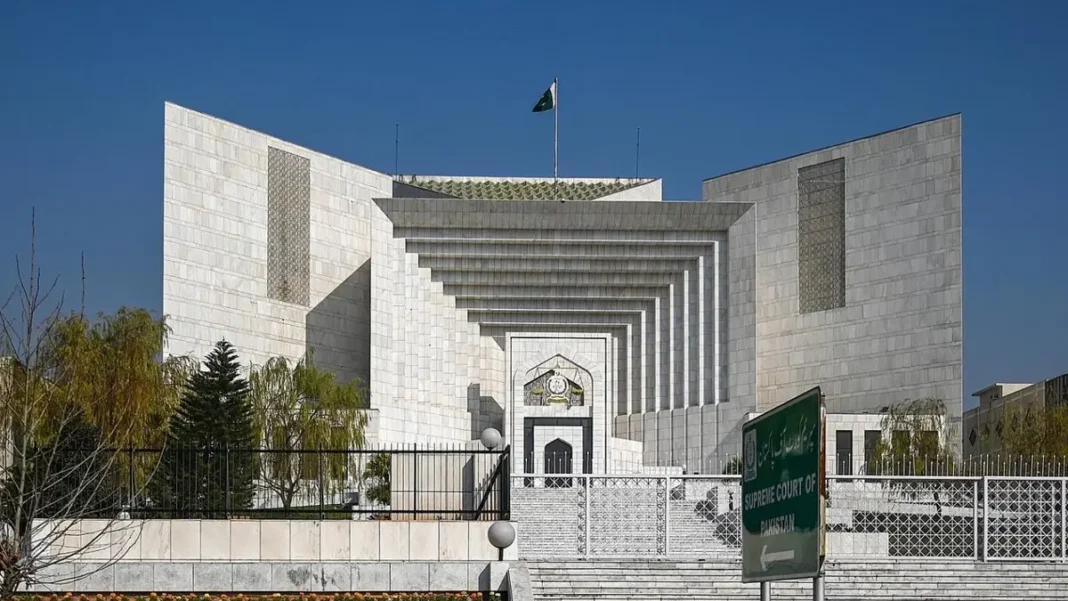
The Supreme Court has dismissed petitions that asked for the cancellation of bail granted to four suspects in a land-grabbing and murder case from Rawalpindi’s Chauntra area. The Supreme Court bail petition Chauntra case ruling was reported on Wednesday, October 21. The court instead ordered the trial court to decide the case within six months.
A two-member bench took up the matter. It comprised Justice Muhammad Ali Mazhar and Justice Naeem Akhtar Afghan. The suspects named in the case are Ali Imran, Waseem Ejaz, Roman Imran and Waheed. They face trial over a killing that fell within the jurisdiction of Chauntra police station.
Why the Petitions Failed
Bail cancellation is not the same as conviction. A petition for cancellation asks the court to undo an earlier grant of bail. Courts grant it only on narrow grounds. The most common is misuse of the concession, such as jumping bail, threatening witnesses or hampering the investigation.
Justice Naeem Akhtar Afghan observed during the hearing that no one had alleged that the four suspects misused their bail. That point decided the matter. Without misuse, the court saw no reason to take the bail away.
The court also noted a practical detail. A private complaint is running alongside the main case. This means the complainant is pursuing the prosecution through more than one route at the same time.
The complainant’s counsel then asked that the petitions be disposed of as withdrawn. The bench dismissed them. The bail remains in place.
Bail Is Not Acquittal
Many readers mix up bail with a not-guilty verdict. The two are different things. Bail is temporary release before trial. It says nothing about the final outcome. The suspect must still face the trial and the evidence.
Cancellation, in turn, is not punishment. A court does not cancel bail because it thinks the suspect will lose the trial. It cancels bail when the suspect abuses the freedom it gives. The Chauntra ruling fits that pattern.
This distinction matters for earlier bail coverage, where the Supreme Court also weighed release pending trial rather than guilt.
The Six-Month Directive
The bench told the trial court to wrap up the case within six months. This is a common tool in Pakistani litigation. Courts use it to push cases that have sat too long. It does not decide who is right. It simply puts a clock on the proceedings.
The direction is significant for trial backlogs. Understaffed trial courts in Punjab often carry heavy dockets. A six-month order tells the judge and the parties to move without delay. It also protects the accused from open-ended uncertainty. In the Imaan Mazari and Hadi Ali Chattha bail hearing, delays on the prosecution’s side drew judicial criticism as well.
Readers can compare this with how the apex court has handled other criminal matters, such as its dismissal of Sindh’s Baldia factory fire plea. The Supreme Court’s word on these questions is binding on all lower courts, a principle the court restated in a Federal Constitutional Court matter.
What Comes Next
The trial court in Rawalpindi will now hear the case on a compressed timeline. Both sides must present their evidence and witnesses within the window. If the trial ends in acquittal, the suspects walk free. If it ends in conviction, the earlier bail gives them no protection.
The long gap between arrest and release in the Jagtar Singh Johal case shows how bail and final liberty are separate questions.
One honest note: the published reports carry no statement from the complainant’s side explaining the request for withdrawal. The account above reflects what the court record, as reported, contains.
Frequently Asked Questions
What did the Supreme Court decide in the Chauntra case?
It dismissed petitions seeking cancellation of bail for four suspects. The bail stays. The court directed the trial court to decide the case within six months.
Who were the judges on the bench?
Justice Muhammad Ali Mazhar and Justice Naeem Akhtar Afghan heard the petitions.
Why did the court refuse to cancel the bail?
The bench noted that no one alleged the suspects had misused their bail. Courts in Pakistan cancel bail mainly for misuse, not for disagreement with the original order.
Does this mean the suspects are acquitted?
No. Bail is release before trial. The trial will decide guilt or innocence. The six-month order simply speeds up that decision.
What is the six-month directive?
It is an order to the trial court to conclude the proceedings within six months. Courts issue such directions to cut delays in cases that have lingered.
*Source: Tribune*