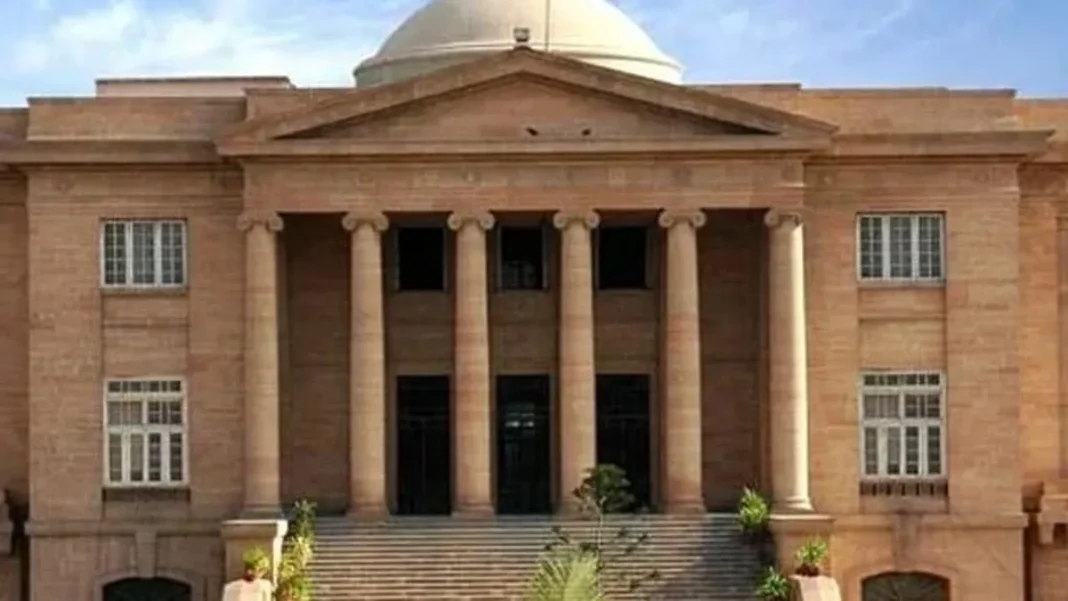
SHC Video Link for Undertrial Prisoners
The SHC video link order covers undertrial prisoners lodged in jails across Sindh, who will now be produced before courts through video links, following the escape of two accused from a court in Ghotki district.
The SHC video link directive was issued by the chief justice, who has instructed all district and sessions judges to ensure strict compliance. The chief justice also directed the authorities to strictly implement Rule 670 of the Sindh Prisons and Correctional Services Rules, 2019, which covers production of prisoners before courts through video conferencing.
The directives were issued after two accused escaped from a court in Ubaro, a town in Ghotki district, according to an official letter. Dunya News reported the same order on Monday, and The Express Tribune carried it on Tuesday.
The order means prisoners awaiting trial will no longer be brought to court in person for routine hearings. Instead, they will appear on a screen from the jail where they are held, while the judge, lawyers and court staff remain in the courtroom.
An order issued before
The directive is not new to Sindh. In January 2024, the court issued a similar order for the Karachi division and the districts of Thatta and Sujawal. Then chief justice Aqeel Ahmed Abbasi directed the lower courts and jail authorities to introduce the e-Court facility for undertrial prisoners to appear through a video link.
That order followed a letter from the court’s Member Inspection Team-II, which had placed the matter before the chief justice. It relied on the same Rule 670 and asked the courts and jail authorities to make the necessary arrangements.
Online judicial proceedings through video link were introduced by the Supreme Court in May 2019, when it connected its four provincial registries with its principal seat in Islamabad. What has changed now is the scope. The earlier order covered Karachi and two districts. The new order covers the whole province, and it was issued because two accused escaped from a court in Ubaro.
Why the SHC video link matters
Moving undertrial prisoners to court is one of the riskiest parts of the criminal justice system. Each journey needs police escorts, secure transport and holding cells, and each journey is a chance for an escape. When a prisoner escapes from court premises, the police must register a fresh case, the trial is disrupted, and the court’s authority is called into question.
Sindh has seen such escapes before. A woman undertrial prisoner facing theft charges absconded from the City Courts in Karachi, and the senior superintendent of the women prison had to explain it to the Sindh High Court.
Video links remove the journey altogether. The prisoner stays inside the jail, the hearing goes ahead, and the risk of an escape on the way to court disappears. The system also saves time and police escort costs.
There are limits, too. A video link works for routine hearings, but it cannot replace a physical appearance in every case, and it needs working equipment. Punjab is setting up special courts for women and children, which will face the same question of how to hear cases quickly without moving vulnerable people around. The Sindh High Court’s answer is to make the video link the default, and to hold district judges responsible for making it work.
The Islamabad High Court has also used firm directions to settle questions of ownership and procedure, and the Supreme Court has granted bail in a smuggling case that turned on how the lower courts handled the accused. Human rights observers have warned about the state of democratic institutions in Pakistan, and a court system that cannot keep its prisoners in custody is part of that concern.
For Ghotki, the order carries a direct message: two accused escaped from the local court, and the province’s highest court has answered that no prisoner should need to leave jail to attend a hearing. Whether district judges can put the system in place across Sindh, and quickly, is the test the order now sets.
Frequently asked questions
What has the Sindh High Court ordered?
Undertrial prisoners in jails across Sindh must be produced before courts through video links, under Rule 670 of the Sindh Prisons and Correctional Services Rules, 2019.
Why was the order issued?
Two accused escaped from a court in Ubaro, in Ghotki district. The directives were issued in the wake of that escape.
Has this been ordered before?
Yes. In January 2024, the court issued a similar order for Karachi division and the districts of Thatta and Sujawal. The new order extends it to the whole province.
What is Rule 670?
It is a rule under the Sindh Prisons and Correctional Services Rules, 2019, that provides for the production of prisoners before courts through video conferencing.
Will prisoners never come to court again?
No. Video links are mainly for routine hearings. The order does not end physical appearances in every case, and it depends on working equipment in courts and jails.