South Areas of Pakistan: Cities, Coast and Culture Explained
Ask a Pakistani to describe the south of the country and you will hear about Karachi’s sea breeze, the Sufi shrines of Multan and the empty beaches of the Makran coast in the same breath. The south areas of Pakistan are not one place but three — Sindh, South Punjab and southern Balochistan — each with its own cities, coastline and character. This guide walks through them city by city.
Quick answer: The south areas of Pakistan are Sindh, South Punjab (Multan, Bahawalpur and Dera Ghazi Khan divisions) and the Makran coast of Balochistan. Karachi — over 20 million people — is the anchor city, followed by Hyderabad, Multan, Bahawalpur, Sukkur, Quetta and Gwadar. The region holds Pakistan’s entire 1,050 km Arabian Sea coastline.
In this guide
Sindh’s Cities: Karachi to Sukkur
Sindh is the heartland of the south. Karachi, with more than 20 million residents, is Pakistan’s largest city, its main seaport and its economic capital — the port here handles the bulk of the country’s seaborne trade. The city runs on contrasts: the colonial-era streets of Saddar, the high-rises of Clifton, the beaches of Sea View and Hawksbay, and food streets like Burns Road that stay busy past midnight. Ongoing development keeps the city in the news, from the Rs72bn K-IV water project to port modernisation drives.
Up the Indus, Hyderabad is Sindh’s second city, known for the Pacco Qillo fort, Rani Bagh gardens and its glass-bangle bazaars. Sukkur sits on the Indus where the Sukkur Barrage — completed in 1932 — diverts river water into the canal network that irrigates much of Sindh. Nearby Larkana is the gateway to Mohenjo-Daro, the 4,500-year-old planned city of the Indus Valley Civilisation and a UNESCO World Heritage Site. Thatta, the old capital of Sindh, holds the Makli necropolis (also UNESCO-listed) and the 93-domed Shah Jahan Mosque built between 1647 and 1659.
South Punjab’s Cities: The Saraiki Belt
South Punjab — the Multan, Bahawalpur and Dera Ghazi Khan divisions, 11 districts covering roughly half of Punjab’s area — is culturally distinct from the Punjab of Lahore. Saraiki is the dominant language, and the cities carry centuries of independent history.
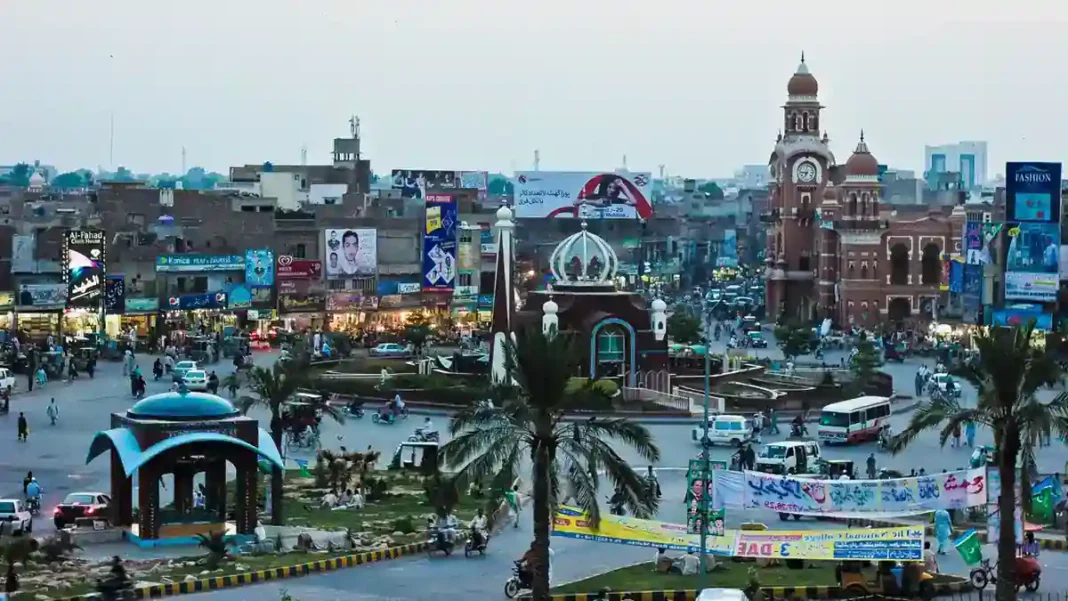
Multan, the “City of Saints”, is among the oldest continuously inhabited cities in South Asia. Its skyline is defined by the blue-tiled shrines of Shah Rukn-e-Alam and Bahauddin Zakariya, and its bazaars trade in embroidery, pottery and the region’s famous mangoes. Bahawalpur was a princely state whose ruler acceded to Pakistan in 1947; the Noor Mahal palace and the vast Derawar Fort in the Cholistan desert are its landmarks. Rahim Yar Khan is the agricultural trading hub of the belt, and Dera Ghazi Khan sits at the foot of the Sulaiman Range as Punjab’s western gateway.
Southern Balochistan: Quetta to Gwadar
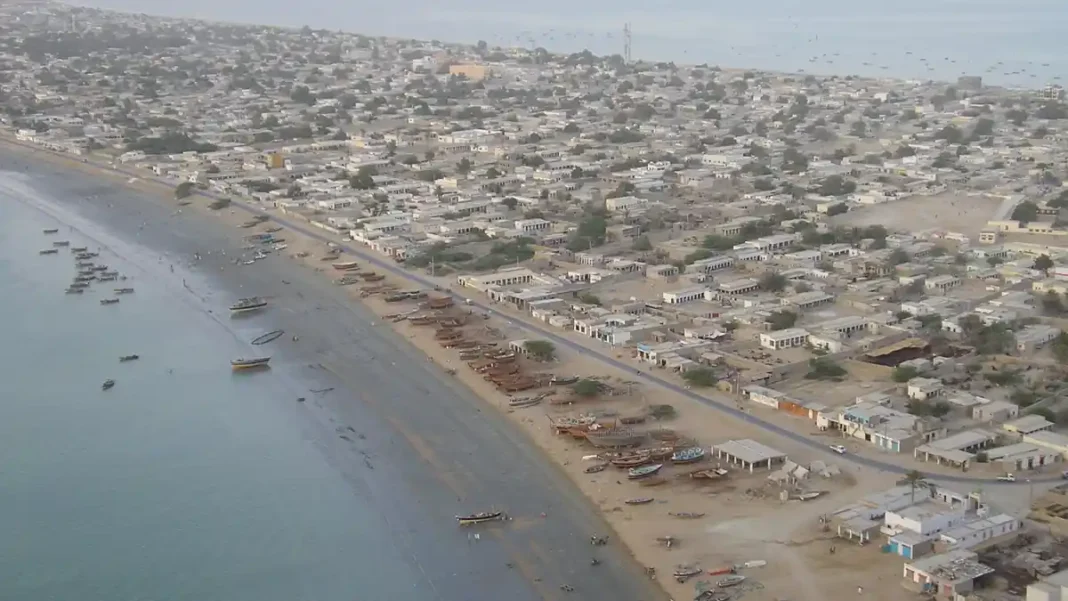
The south of Balochistan is the rugged Makran coast — arid mountains dropping straight into the Arabian Sea. Quetta, the provincial capital in its high valley, is the region’s main urban centre, known as the “fruit garden of Pakistan” for its orchards. Down on the coast, Gwadar is the deep-sea port city at the centre of the China-Pakistan Economic Corridor, set on the dramatic Hammerhead peninsula with Astola Island — Pakistan’s largest offshore island — lying offshore. Turbat anchors the Kech valley’s date-palm country, while Pasni and Ormara are fishing towns on the coastal highway. Gadani, between Karachi and the Makran coast, is home to one of the world’s largest shipbreaking yards, recently visited by the ILO Director-General.
What Ties the South Together
Three threads run through all three zones. First, the coast and the Indus: every southern city ultimately faces the sea or the river that feeds it. Second, Sufi heritage: from Lal Shahbaz Qalandar’s shrine at Sehwan Sharif to the saints of Multan and Uch Sharif, the south’s spiritual calendar draws millions. Third, heat and trade: this is Pakistan’s hottest zone and its commercial front door — Karachi’s port, Gwadar’s rising terminals, and the farm belts of Sindh and South Punjab that feed the country. For the full regional overview, see our pillar guide South Areas of Pakistan: The Definitive Guide.
Frequently asked questions
Which is the biggest city in the south of Pakistan?
Karachi, by an enormous margin — its population exceeds 20 million, making it Pakistan’s largest city and one of the largest in the world. The next southern cities, Hyderabad and Multan, are each under 2.5 million.
Is Multan in the south of Pakistan?
Yes. Multan is the principal city of South Punjab — the southern third of Punjab province — and one of the defining cities of southern Pakistan, known as the City of Saints.
Is Gwadar in the south of Pakistan?
Yes. Gwadar sits on the Makran coast of southern Balochistan, on the Arabian Sea roughly 600 km west of Karachi. It is the site of Pakistan’s deep-sea port and a flagship project of CPEC.
Related Guides
- South Areas of Pakistan: The Definitive Guide — the full regional overview
- South Region of Pakistan: What Counts as the South, Mapped — the geography definition
- Karachi–Europe Direct Shipping Restored — the port city’s trade links
- 96km of Karachi Roads to Be Dug Up for K-IV — development in the south