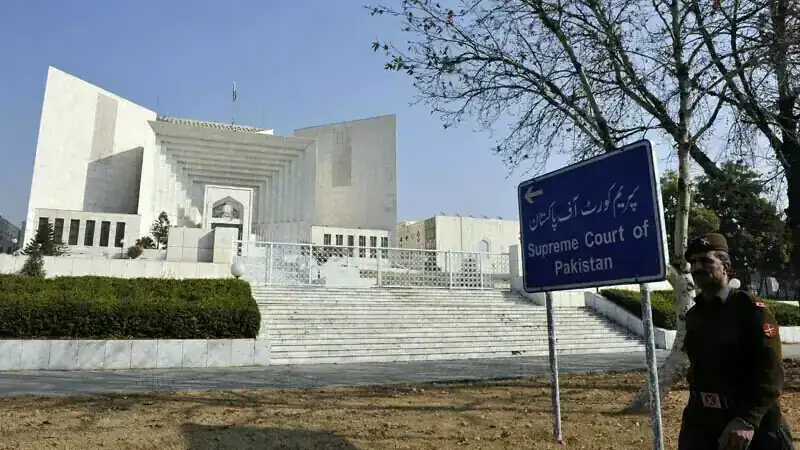
SC upholds death sentence in marriage-proposal murder case, calls the violence a shame on society
ISLAMABAD: Pakistan’s Supreme Court has dismissed the review plea of a man convicted in a marriage proposal murder case, and kept his death sentence in place.
The nine-page judgment, written by Justice Muhammad Hashim Khan Kakar, held that a woman’s refusal does not lessen the severity of such a crime. It makes the crime worse, the court said. The verdict called violence over a refused proposal a profound shame on the conscience of society.
Marriage proposal murder case: no mitigation for wounded ego
The court observed that the convict, Kamran, had not acted in a moment of sudden, grave and immediate provocation. The girl’s refusal of his marriage proposal was a decision she had every right to make. Her rejection, the judgment said, only wounded his ego, and a bruised ego cannot count as mitigation that reduces the death sentence prescribed by law.
“The sole reason he takes her life is to appease his wounded ego,” the judgment observed, describing the act as the result of an ego-driven impulse among men in the society. The court said such grief and anger could never stand on the same footing as genuine provocation.
Why the death sentence stands
The judgment said sentencing is a judicial discretion that must weigh the nature of the act, the manner of its commission, the helplessness of the victim, and the message the punishment sends to society. By that test, the bench found, murdering a girl simply because she rejected a marriage proposal is an extremely severe crime.
The court noted that the convict had asked it to revisit the verdict through a review petition. It found no ground to interfere with the earlier decision and dismissed the plea, leaving the death penalty intact.
Court rejects Ghag, Swara and Watta Satta as patriarchal customs
In the same judgment, the court rejected archaic patriarchal customs that treat women as objects in family disputes. It named Ghag, Swara and Watta Satta, customs under which women are given in marriage against their will or exchanged to settle disputes, and held that they have no place in the country’s legal order.
To underline the human cost of such violence, the judgment also quoted a woman survivor, Inteha Bibi, who had said she had no life and could not sleep without medication after similar violence. She was a human being, not an item or a toy, the court noted, and had every right to marry according to her own will.
A wider message on forced customs
The verdict adds to a line of recent rulings in which the apex court has pushed back against customs and practices that deny women legal rights. Feature Pakistan reported earlier this month that the Supreme Court had ruled a marriage could be dissolved on the ground of shiqaq, or serious continuing marital discord, even when cruelty was not proved, and that a family court could not convert a woman’s plea into khula without her clear and voluntary consent.
The judgment lands amid continued public attention on violence against women, including the case of five members of a family found dead in Karachi’s Bin Qasim area this week, covered by Feature Pakistan here. Courts have also been moving on other cases involving crimes against women, such as the Azeri woman case in Lahore, where a court extended the physical remand of two suspects, as Feature Pakistan reported.
Legal observers say the latest judgment carries a similar signal: the courts will treat the killing of women over rejected proposals as one of the gravest crimes, and they will not accept patriarchal customs as a defence.
Background: related rulings on women’s rights
The Supreme Court has repeatedly intervened in cases involving violence and discrimination against women. The court’s latest rulings continue to shape how lower courts handle cases where women are harmed for asserting the right to choose. Earlier rulings on the binding nature of apex court decisions, covered by Feature Pakistan here, mean such judgments set the standard for courts across the country.
Frequently asked questions
Who is the convict in the case?
Kamran, who was convicted of murdering a girl after she refused his marriage proposal. His review petition against the death sentence has now been dismissed.
Why did the court uphold the death penalty?
The court held that a rejected marriage proposal is not provocation and cannot be used as mitigation. It said the crime was extremely severe and the punishment was proportionate.
What did the court say about Ghag, Swara and Watta Satta?
The judgment rejected these customs as patriarchal and anti-women practices, and held that they cannot justify violence or forced marriages.