Trump May Hold Fire on Iran Unless Provoked
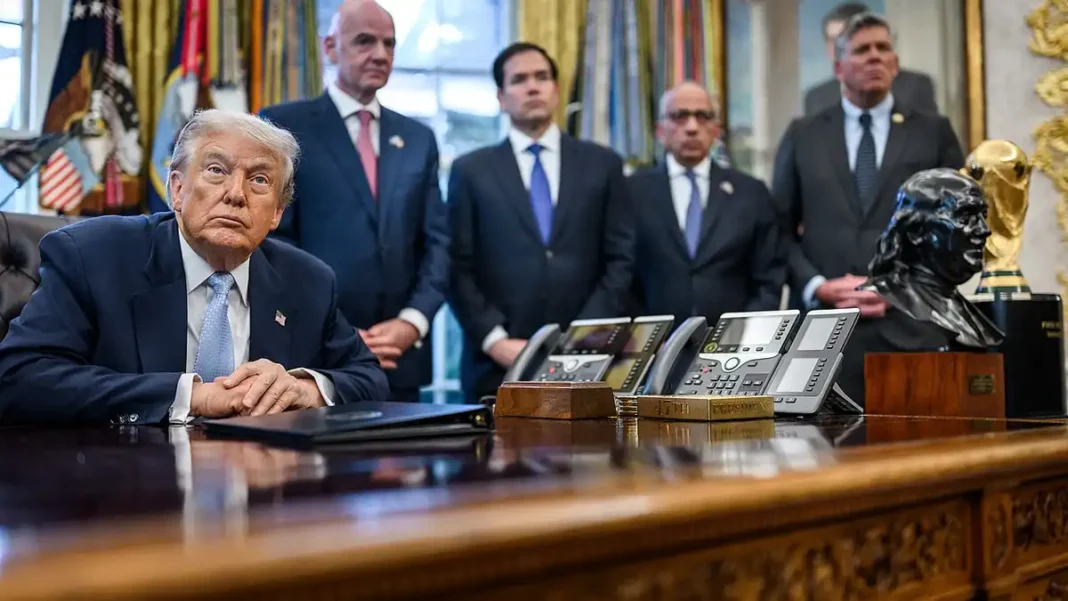
President Donald Trump has told senior advisers he may hold fire on Iran if Tehran and its allies in Yemen give him no fresh reason to strike. The remarks point to a pause in a war the United States launched with Israel in February, even as American forces stay ready to act.
Three people familiar with the matter said he raised the idea with national security advisers after intelligence briefings. He has swung between threats of new strikes and talk of winding down the fighting, and has not yet settled on a course.
He put it this way on Thursday: “I could end it immediately, but at the request of the nations that I am looking to protect, we are doing it a little bit longer way, a bit more civilly,” he told sports broadcaster Stephen A. Smith.
Allies urge Trump to hold fire on Iran
Saudi Crown Prince Mohammed bin Salman and Turkish President Tayyip Erdogan both urged Mr Trump not to resume attacks in phone calls over the past two weeks, two people familiar with the calls said. Mr Trump asked for their views and made no commitment either way.
On October 31, Mr Trump told the Saudi crown prince he planned to attack after the American elections. The crown prince pleaded with him to hold off, arguing that economic sanctions were already working against Iran.
Mr Trump has spoken with Mr Erdogan three times since October 28, and a readout from their November 7 call stressed that tensions needed to end. US intelligence agencies have assessed that the blockade and sanctions are hurting the Iranian economy, and that renewed strikes would not shift Tehran’s demands.
Military stays ready to strike
A third aircraft carrier is moving into the Middle East to replace one of the two now in the region, though all three could stay if needed, people familiar with US planning said.
Mr Trump could also order new strikes on Iran’s underground nuclear sites, though the United States has already hit them and further strikes may not work. Briefings also warned that stocks of precision munitions have run low. Reuters reported in August that the United States had used “virtually all” of its long-range stocks.
A White House official said Mr Trump alone would decide, and that the United States controls the Strait of Hormuz. “Only President Trump knows what he will do, and when,” the official said.
Mr Trump wrote on Thursday: “We don’t need a deal with Iran. We’ve got their money, Hundreds of Billions of Dollars, and we’ve got their Strait!”
Why the pause matters for Pakistan
The war has pushed up global fuel prices and proved unpopular: 55 percent of Americans told a Reuters/Ipsos poll before the November 3 elections that it was not worth the cost.
For Pakistan, the stakes are direct. Much of the country’s oil moves through the Gulf, and any disruption in the Strait of Hormuz feeds straight into fuel prices at home. Pakistan has already urged de-escalation at the United Nations, and it has tracked each new Gulf incident, including Iran’s claim its Guards targeted a US base in Bahrain.
The strait also carries fertiliser. The head of the UN Office for Project Services, Jorge Moreira da Silva, told the COP31 talks in Antalya on Saturday that Iran and the United States should “immediately” allow fertiliser shipments through. Before the conflict, a third of the world’s fertilisers passed through the strait, and prices have risen 30 percent. He warned that missed planting seasons could leave 45 million people facing acute food insecurity. Mines have already hit three ships in the strait in two days, and oil prices have climbed on the disruption.
Frequently asked questions
What did Trump tell his advisers?
He may hold off on attacking Iran if the United States faces no new provocations from Tehran or the Houthis in Yemen.
Who urged him not to resume attacks?
Saudi Crown Prince Mohammed bin Salman and Turkish President Tayyip Erdogan, in calls over the past two weeks. Both argued that sanctions were working.
Is the US military still ready to strike?
Yes. A third aircraft carrier is moving to the Middle East, and Mr Trump could order strikes on Iran’s underground nuclear sites. But precision munitions stocks have run low.
Why does the Strait of Hormuz matter for Pakistan?
Oil and fertiliser pass through it, so disruption raises fuel prices and farm costs at home. Before the conflict, a third of the world’s fertilisers moved through the strait.
What happens next?
Mr Trump has made no commitment either way. The White House says only he knows what he will do, while allies keep pressing for restraint.