Trump Putin Xi Meeting Raises New Yalta Fears
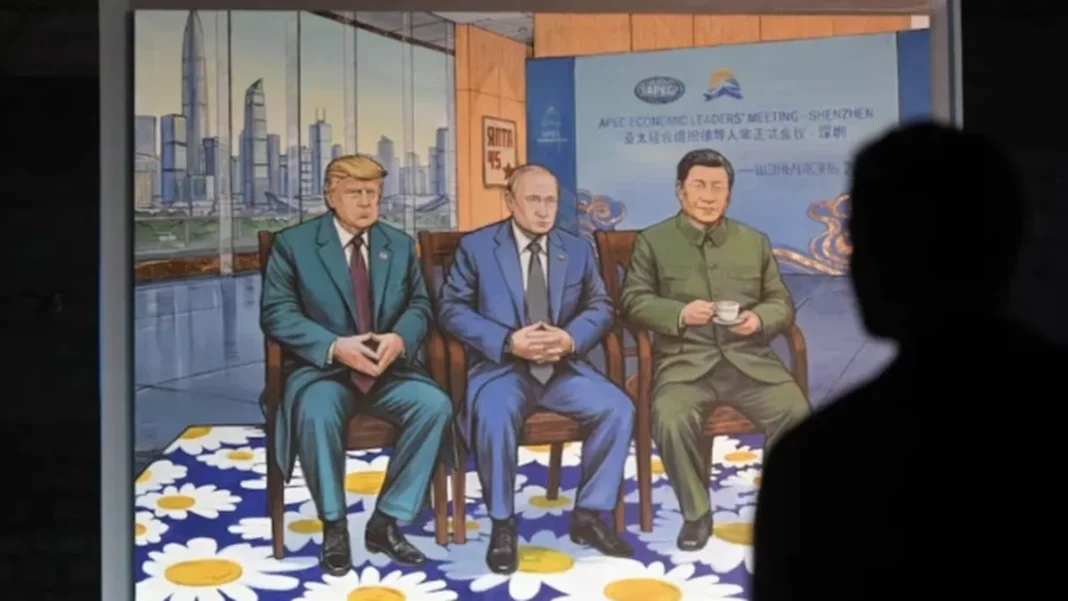
A Trump Putin Xi meeting could take place next week, but the talks are unsettled and the host wary. Donald Trump, Xi Jinping and Vladimir Putin are expected to meet in Shenzhen at the Asia-Pacific Economic Cooperation forum, yet talks have not produced an agenda or a format.
Putin sees a chance to end the war in Ukraine on his terms. Trump, battered by his party’s recent electoral losses, sees a moment for the history books, with possible movement towards a three-way nuclear arms deal. For Xi, it is an unpredictable gathering.
The White House said on Friday that the meeting will take place on Thursday on the sidelines of the APEC summit, with Trump planning to raise nuclear arms reduction and the war in Iran. But according to two people familiar with the planning, the details are still being negotiated, and a senior US official said “we do not expect to get to any kind of agreement” on nuclear issues.
Why Xi is wary of the Trump Putin Xi meeting
Trump’s improvisational style clashes with Xi’s scripted approach. His hope for arms control runs against the reality that China, with far fewer nuclear weapons than the US or Russia, considers itself a nuclear underdog. Russia and the US each hold more than 5,000 warheads, while China has around 500.
“This is something the Chinese hate,” said Edgard Kagan, a former Biden White House official for East Asia. “I think it’s fair to say the Chinese do not want arms control discussions with the United States. And they certainly don’t want to do it with the United States and Russia, because it suggests that they accept the framing that they are now a major nuclear power that should be subject to similar restrictions.”
Some nations fear a new Yalta
The meeting has drawn comparisons, particularly in Russia, with the 1945 Yalta Conference, where the US, Britain and the Soviet Union formalised spheres of influence and set the post-Second World War order. Yalta has become shorthand for great-power deals imposed on smaller countries.
For Russian nationalists, the prospect has generated excitement, potentially opening the door to a deal ending the four-year-old Ukraine conflict in Moscow’s favour. “It shows who is important in the world: We are, China and the West,” ideologue Alexander Dugin told Radio Sputnik this week. “It’s deeply symbolic. It’s a confirmation of a multi-polar world that the West denies.”
But the meeting has generated anxiety from Kyiv to Tokyo. “We really don’t want this to turn into ‘Yalta 2, 3, 4,’ with a redistribution of influence,” Ukrainian President Volodymyr Zelensky said last month. China, not invited in 1945, tries to present itself as an advocate for smaller countries.
Beijing and Moscow differ: Moscow sought a conversation on the war in Ukraine, while Beijing has resisted putting it on the agenda. A US official said on Friday that Trump was not likely to raise the war in Ukraine. Putin has already rejected any compromise on Ukraine in the Moscow talks, and Russia and China have urged an immediate end to the war against Iran at the United Nations.
Trump’s hope for a legacy moment
The meeting would be Trump’s latest diplomatic spectacle in nearly six years as president, after meetings with Putin and Kim Jong Un that produced no breakthrough. Facing a Democratic-controlled Congress next year, he may seek wins abroad, and a deal on arms or help ending the war with Iran could burnish his legacy.
“The president will undoubtedly be seeking to use this trip to reassert leadership, authority, demonstrate his statesmanship capabilities, and essentially show off on the international stage,” said Kurt Tong, a former senior State Department official. US envoys have already been in Moscow for talks with Putin on Ukraine.
Frequently asked questions
When will Trump, Putin and Xi meet?
It is expected in Shenzhen next week. The White House said it will take place on Thursday, but no agenda or format has been settled.
What is on the agenda?
Trump wants to discuss nuclear arsenals and the war in Iran, not Russia’s war in Ukraine, US officials said.
Why is Xi wary of the meeting?
Beijing does not want arms control talks treating China as a nuclear peer. China holds around 500 warheads, against more than 5,000 each for the US and Russia.
What is the Yalta comparison?
At Yalta in 1945, the US, Britain and the Soviet Union carved up spheres of influence. Smaller states, including Ukraine, fear Shenzhen could produce a similar deal over their heads.
Will the meeting produce a deal?
A senior Trump official said “we do not expect to get to any kind of agreement” on nuclear issues.