Killer Robots: UN Chief Urges Binding Rules
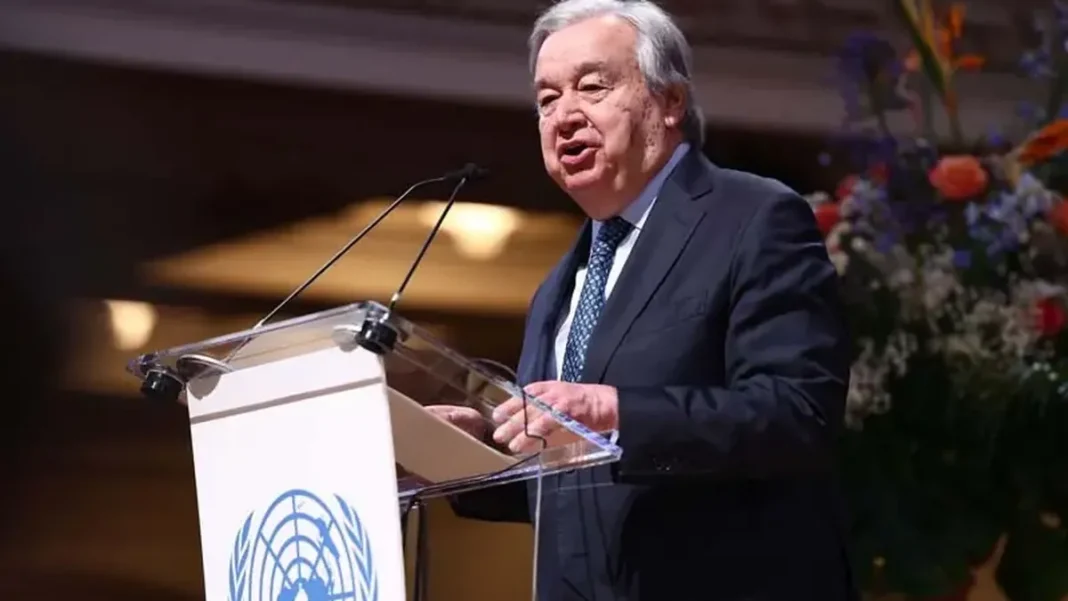
The United Nations chief has called on countries to agree strict and binding rules on the use of “merciless” lethal autonomous weapons systems, often called killer robots.
Antonio Guterres spoke in a video message to a conference at the UN in Geneva on Monday. Country representatives have gathered there this week to debate whether to open talks on binding rules for such weapons.
“Take action to prevent the use and spread of these merciless weapons,” Guterres urged the conference. “I call on you to move towards negotiating a legally binding instrument to regulate autonomous weapon systems, including clear prohibitions and restrictions,” he said.
“We must never stop shielding civilians from the carnage and devastation of armed conflict, and preventing unnecessary suffering.”
Killer robots: high stakes in Geneva
Warfare is changing fast as armies use artificial intelligence to find and strike targets more quickly and with greater accuracy. Campaigners warn of the danger if machines are allowed to pick and kill targets without human control.
The Geneva meeting brings together 128 countries to decide whether to open talks on legally binding rules. Full consensus is needed for any decision, and the talks are expected to be hard, with countries split on the issue.
While many states back tighter rules, countries that hold the technology are reluctant to have their hands tied. Even before Monday’s talks could start, Russia’s representative objected to observers, including the European Union and civil society, taking part in the debate.
The move forced a temporary halt to the proceedings. Campaigners said the Russian move was a bid to dodge criticism of its own alleged use of such weapons in Ukraine.
“States must ensure that Russia, or any of the handful of governments blocking progress, are not allowed to hold the future hostage,” said Anna Hehir, head of military AI governance at the Future of Life Institute. “The stakes are too high.”
Human Rights Watch said the meeting of the UN’s Review Conference of the Convention on Conventional Weapons would leave civilians “dangerously exposed” if it failed to act firmly.
What a ban would cover
The International Committee of the Red Cross is calling for a ban on two types of autonomous weapons: so-called “unpredictable autonomous weapons” and those designed or used to target humans directly.
“States have a crucial responsibility to ensure that the future of warfare is not handed over to machines,” ICRC president Mirjana Spoljaric said ahead of the conference. “Future generations will judge whether leaders acted to prevent a world where machines autonomously kill humans.”
At the UN General Assembly last month, 163 states adopted a resolution calling for talks on rules for autonomous weapons. Five countries voted against it: the United States, Russia, Belarus, Israel and North Korea, which last week boasted of a new AI-enabled torpedo system.
Nine states abstained, including Iran, Saudi Arabia and China, which has kept what one analyst called a “carefully cultivated ambiguity” on the issue.
Washington has proposed a five-year process to develop a non-binding instrument. Non-government groups and the ICRC want a one-year timeline towards binding rules.
The debate matters for Pakistan too. Feature Pakistan has covered the risks of AI in warfare for Pakistan in an earlier report on UN oversight of AI weapons, and North Korea’s test of an AI-enabled torpedo. The wider spread of drone warfare in the Middle East is set out in Feature Pakistan’s report on the Pentagon drone surge, while Pakistan’s own push for a fairer global order is covered in its report on the UN Security Council debate.
Frequently asked questions
What are killer robots?
Killer robots are lethal autonomous weapons systems that can select and strike targets without human control. Armies are building them with artificial intelligence to find and hit targets faster.
What did the UN chief ask for?
Antonio Guterres urged states to move towards a legally binding instrument to regulate autonomous weapons, with clear prohibitions and restrictions. He called the weapons “merciless” and said civilians must be shielded from them.
Which countries oppose binding rules?
At the UN General Assembly last month, the United States, Russia, Belarus, Israel and North Korea voted against a resolution calling for talks on rules. Nine states abstained, including Iran, Saudi Arabia and China.
What does the Red Cross want banned?
The ICRC wants a ban on two types of autonomous weapons: unpredictable autonomous weapons, and weapons designed or used to target humans directly.
What happens next in Geneva?
The 128 countries at the Review Conference of the Convention on Conventional Weapons must decide whether to open talks on binding rules. Any decision needs full consensus, and positions are far apart.