


Global markets reacted sharply as uncertainty around the US-Iran ceasefire persisted. Investors showed concern and closely tracked every new development from the Middle East.
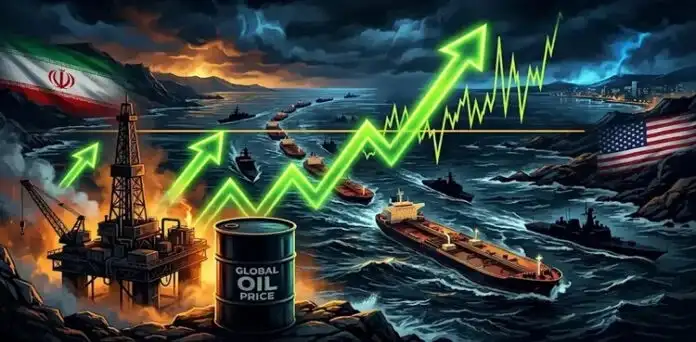
At the same time, rising tensions pushed crude oil prices higher. Brent crude jumped nearly 5% and reached around $95 per barrel. This sudden increase reflected fears of supply disruption. As a result, energy markets became highly volatile.
Meanwhile, Western stock markets faced pressure. S&P 500 futures slipped by 0.6%, while European futures declined by more than 1%. These losses showed how sensitive global markets remain to developments in the US-Iran ceasefire situation.
However, Asian markets moved in a different direction. Stocks in Seoul, Taipei, and Tokyo posted gains. In fact, Taiwan’s stock market reached a record high. This contrast suggested that regional factors and investor confidence played a role despite global concerns.
In addition, Iran’s actions around the Strait of Hormuz added another layer of tension. Although Iran restricted movement in the area, shipping activity did not fully stop. Data showed that over 20 vessels recently crossed the route. This indicated that trade flows continued, even amid pressure from the US-Iran ceasefire uncertainty.
Soon after, the situation became more complicated. The United States seized an Iranian cargo vessel. Consequently, Iranian military officials hinted at a response. This move raised doubts about whether the US-Iran ceasefire could hold in the coming days.
On the financial side, concerns also emerged in the banking sector. National Australia Bank warned about rising risks. It even estimated potential losses of up to $500 million due to global instability.
Moreover, bond markets showed mixed signals. Yields on the 10-year US Treasury climbed to around 4.266%. At the same time, the US dollar regained strength after recent weakness. These movements reflected shifting investor sentiment tied to the US-Iran ceasefire.
Overall, the global outlook remains uncertain. While markets have not entered a full crisis, they continue to react to every change. Therefore, the future direction of the US-Iran ceasefire will likely shape economic trends in the coming days.