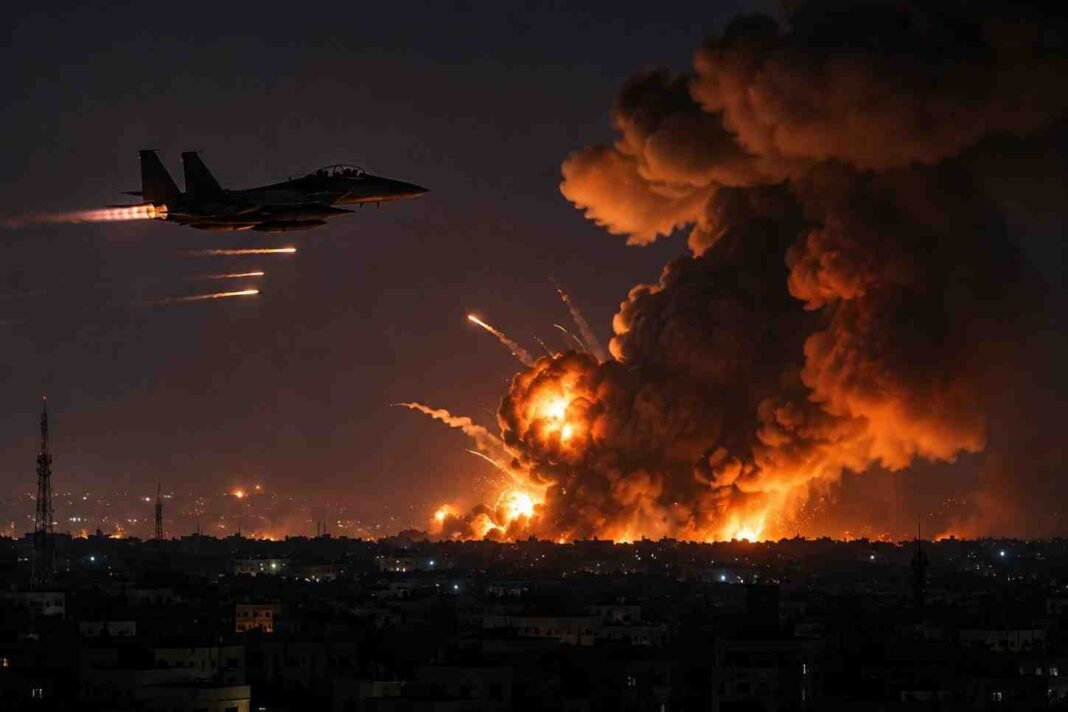
The United States expanded its military campaign in the Middle East as U.S. strikes on Iran entered an eighth consecutive night. American forces launched another round of air raids after President Donald Trump approved fresh military action. Officials said the operation reflects Washington’s determination to respond to growing regional threats.
According to U.S. Central Command (CENTCOM), the latest strikes targeted locations linked to Iran’s military infrastructure. Military officials explained that the mission aims to protect international shipping through the Strait of Hormuz while reducing Iran’s ability to support attacks against American interests.
The latest phase of U.S. strikes on Iran follows a deadly incident in Jordan that raised tensions across the region. CENTCOM confirmed that Iranian-backed attacks killed two American service members on July 17. The command also reported that one U.S. soldier remains missing after the confrontation.
Meanwhile, medical teams treated four injured American troops in Jordan. Doctors later discharged all four after completing their treatment. Military officials praised their recovery and thanked healthcare workers for their efforts.
Defense Secretary Pete Hegseth strongly condemned the attack on U.S. forces. He said the loss of American troops would strengthen the country’s commitment to defending its personnel and protecting national security. He also promised that the United States would continue taking decisive action against those responsible.
Furthermore, CENTCOM stated that American forces continue monitoring security conditions throughout the region. Officials stressed that they remain prepared to respond to any additional threats targeting U.S. troops, military facilities, or commercial shipping routes.
The continued U.S. strikes on Iran also focus on securing one of the world’s most important energy corridors. American officials believe uninterrupted navigation through the Strait of Hormuz remains essential for global trade and regional stability. Therefore, military planners continue prioritizing operations around strategic maritime routes.
At the same time, Iranian state media reported multiple explosions across several cities. Residents reportedly heard blasts in Bandar Abbas, Qeshm, and Sirik within a short period of time. However, Iranian authorities have not released detailed information about the exact targets or the extent of the damage.
Regional tensions have continued to rise as both sides exchange military actions and political warnings. Several international observers fear that additional confrontations could further destabilize the Middle East and disrupt energy markets if the conflict expands.
Moreover, security analysts believe recent developments could influence diplomatic efforts in the coming weeks. Many governments have urged restraint while encouraging dialogue to prevent a wider regional conflict. Despite those calls, military activity continues to increase across several strategic areas.
The latest U.S. strikes on Iran demonstrate Washington’s willingness to maintain military pressure following the deadly Jordan attack. As both countries remain on high alert, the international community continues watching the situation closely for signs of either further escalation or renewed diplomatic engagement.