

Vance Lays Down Terms to End US-Iran War: Iran Nuclear Enrichment Must Be Cut
Vance Lays Down Terms to End US-Iran War: Iran Nuclear Enrichment Must Be Cut
US Vice President JD Vance has set out Washington’s terms for ending the seven-month war with Iran, telling Reuters that Tehran must make a “meaningful” reduction in Iran nuclear enrichment capacity rather than offer promises of future restraint.
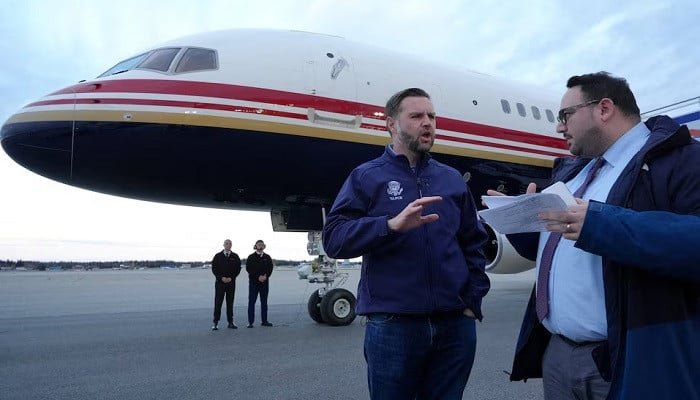
Speaking in an exclusive interview in Fairbanks, Alaska, Vance said any agreement would require Iran to scale back how much uranium it enriches.
“If you don’t want a nuclear weapon, then why do you need 60% enriched fuel? And if you want to show commitment to not building a nuclear weapon, don’t build highly enriched fuel. That’s a very basic threshold issue,” Vance said.
The Iran nuclear enrichment demand
Vance said Washington remains open to an agreement but would demand concrete Iranian nuclear concessions first.
“We’re not going to trade words for actions,” he said. “The United States is not going to do things for mere promise of actions on the Iranian side. We need to trade actions for actions here, and we’ll see what the Iranians do.”
Iran and the United States have exchanged proposals in recent weeks aimed at ending the war and reopening the Strait of Hormuz, the shipping lane for much of the world’s oil and gas. President Donald Trump rejected Tehran’s latest offer and has warned that military operations could intensify after next month’s midterm elections.
Washington unsure who runs Iran
A striking admission in the interview was Vance’s statement that the United States is uncertain who actually makes decisions in Tehran.
He said Washington deals with Iran’s political leadership, including President Masoud Pezeshkian and Foreign Minister Abbas Araqchi, but their real authority is unclear after joint US-Israeli strikes at the start of the war killed Supreme Leader Ayatollah Ali Khamenei.
“One of the things we picked up on is it’s not totally clear how their country makes decisions,” Vance said.
Iran’s Foreign Ministry pushed back on Sunday. Spokesman Esmaeil Baghaei said US officials know their Iranian counterparts, blaming “contradictory positions and mixed messaging from US officials” instead.
A war shaping the midterms
Vance, a longtime sceptic of US involvement in foreign wars, has taken a leading role in negotiating a settlement. He brokered a provisional peace agreement in September that quickly fell apart.
The war has jolted global energy markets and become a political liability for Trump and fellow Republicans ahead of the November midterm elections. The conflict carries a $3 billion monthly price tag, and higher energy prices have put Republicans on the defensive in competitive states that will decide control of Congress.
Vance told Reuters he had spoken personally with field commanders. He dismissed concerns about critical munitions shortages, saying Iranian forces remain largely unable to stop energy exports through the Strait of Hormuz despite periodic strikes on commercial ships.
Alaska stop doubles as campaign duty
Before the interview, Vance was in Alaska to rally for Republican Senator Dan Sullivan, who faces a tight re-election battle with Democrat Mary Peltola. Trump carried Alaska by 13 points in 2024, but rising living costs have put the state in play.
Vance is widely seen as a leading Republican contender to succeed Trump, though he told Reuters he had not decided on a 2028 run. “I’m inherently a procrastinator,” he said. “I really haven’t thought about it much.”
Frequently asked questions
What did Vance demand of Iran?
A “meaningful” reduction in nuclear enrichment capacity. He questioned why Tehran enriches uranium to 60% if it does not seek a weapon, and said Washington wants concrete action, not assurances.
How long has the US-Iran war lasted?
Seven months. Vance brokered a provisional peace deal in September that collapsed; both sides have since exchanged fresh proposals to end the fighting and reopen the Strait of Hormuz.
Why does Washington doubt who runs Iran?
Vance said it is unclear how Tehran makes decisions, since Supreme Leader Ayatollah Ali Khamenei was killed in joint US-Israeli strikes at the war’s outset. Iran’s Foreign Ministry says the US knows its counterparts and blames mixed American messaging.