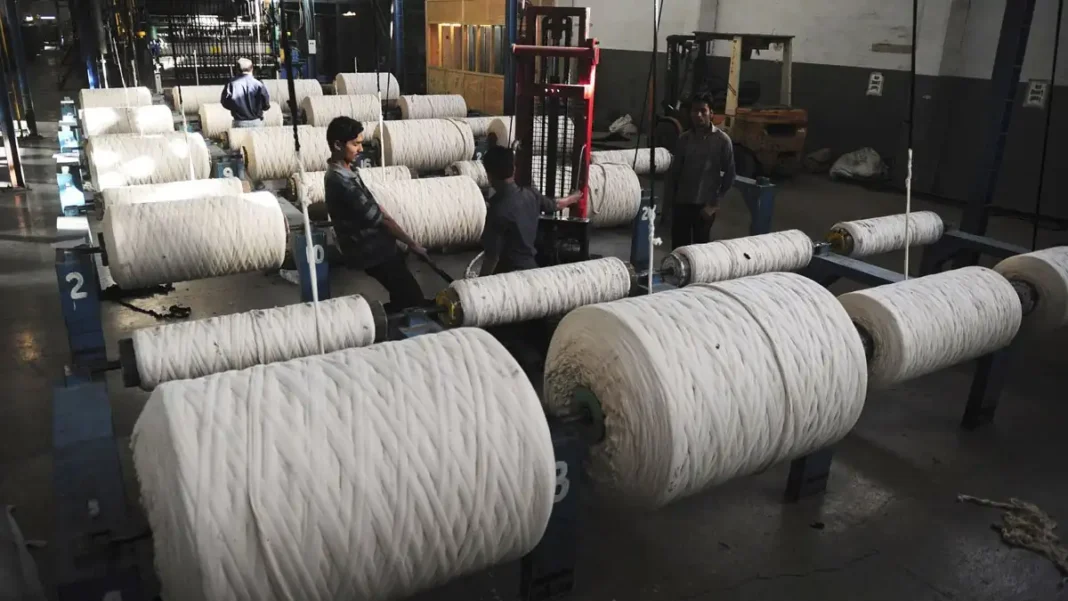
Zahidjee Textile Mills Limited has closed its weaving unit of 262 looms, the company told the Pakistan Stock Exchange in a material information notice dated October 16, 2026. The company described the closure as part of operational adjustments made in response to its business requirements and prevailing operating conditions. The move, first reported by ProPakistani, adds to the growing strain on Pakistan’s textile industry.
What Zahidjee Textile Mills disclosed to the PSX
The notice, filed under the Securities Act, 2015 and PSX rules, was short on detail. It did not name the location of the closed unit. It did not say how many workers were affected. It also stayed silent on the financial impact of the shutdown.
In its own words, the company stated: “Zahidjee Textile Mills Limited hereby informs its shareholders and the general public that the Company has closed its weaving unit consisting of 262 weaving looms. The closure of the said weaving unit forms part of the Company’s operational adjustments in response to its business requirements and operating conditions,” as reported by Pakistan Today.
The notice gave no word on the future of the facility or whether the closure would spill over into the company’s other operations.
Closure covers Zahidjee’s full weaving capacity
The company’s own filings underline how deep the cut goes. Zahidjee’s disclosures to the PSX listed 262 installed weaving looms. That figure matches the closed unit exactly.
A company profile by Business Recorder noted that the firm’s weaving division had a single unit in Faisalabad, alongside two spinning units. On that record, the closure effectively ends the company’s weaving operations rather than trimming a part of them. The firm has offered no comment beyond the notice itself.
Zahidjee Textile Mills was incorporated as a public limited company on July 17, 1990. Its principal business includes exporting value-added fabrics and textile made-ups, along with manufacturing and selling yarn.
Pressure mounts across the power loom belt
Zahidjee is far from alone. A recent Dawn report found that around 40 per cent of power loom units in Faisalabad and surrounding areas had shut down. Industry representatives estimated that more than 100,000 workers had lost their jobs in the wave of closures gripping the power loom crisis in Faisalabad.
Faisalabad’s power loom cluster has historically counted nearly 800,000 looms, from small workshops to large facilities. The causes of the shutdowns are well known to manufacturers: cheaper Chinese textile imports, rising electricity tariffs and heavy taxation.
Aslam Meraj, president of the Textile, Power Loom and Garment Workers Union Faisalabad, said local producers were struggling to compete with imported yarn, grey cloth and finished textile products. Industry voices have also raised concerns about Chinese polyester-based yarn that enters Pakistan for export orders but gets redirected into the domestic market when overseas demand weakens.
Why it matters for Pakistan
Textiles remain one of Pakistan’s major exports and its biggest private-sector employer. Every loom that stops in Faisalabad, often called the Manchester of Pakistan, ripples through yarn suppliers, dyeing units and transporters. When listed companies start closing entire divisions, the strain has moved beyond small workshops into the organised corporate sector.
The government has been pushing for export-led growth, but manufacturers argue that high energy costs and taxes keep undercutting that ambition. With subdued exports sparking a blame game in policy circles, the question is whether cost relief can arrive before more units follow Zahidjee.
What happens next
Zahidjee’s shareholders will look to the company’s next quarterly filing for the financial fallout from the closure. Investors will watch whether shutting the unit trims losses or dents revenue from fabric sales. For the wider sector, the coming weeks will test whether government measures can ease the cost pressure that has already silenced tens of thousands of looms.
Why did Zahidjee Textile Mills close its weaving unit?
The company said the closure formed part of operational adjustments in response to its business requirements and operating conditions. It disclosed the move in a material information notice to the PSX dated October 16, 2026.
How many looms were in the closed unit?
The unit comprised 262 weaving looms. Company filings show Zahidjee had 262 installed weaving looms, so the closure covers the company’s full listed weaving capacity.
Is Pakistan’s textile industry in trouble?
Manufacturers across the sector report mounting pressure from high energy costs, taxation and competition from cheaper imports. A Dawn report estimated that about 40 per cent of power loom units around Faisalabad had shut down, with more than 100,000 workers losing their jobs.