Pakistan to Build Buraq, Its Own Urdu AI Model, at Seoul Summit
SEOUL: Pakistan is building the Buraq Urdu AI model, its own large language model trained on Urdu and regional languages, with sovereign compute capacity so that Pakistani data is processed inside the country, the federal IT minister announced at the Global AI and Digital Summit 2026 in Seoul, according to TechX.
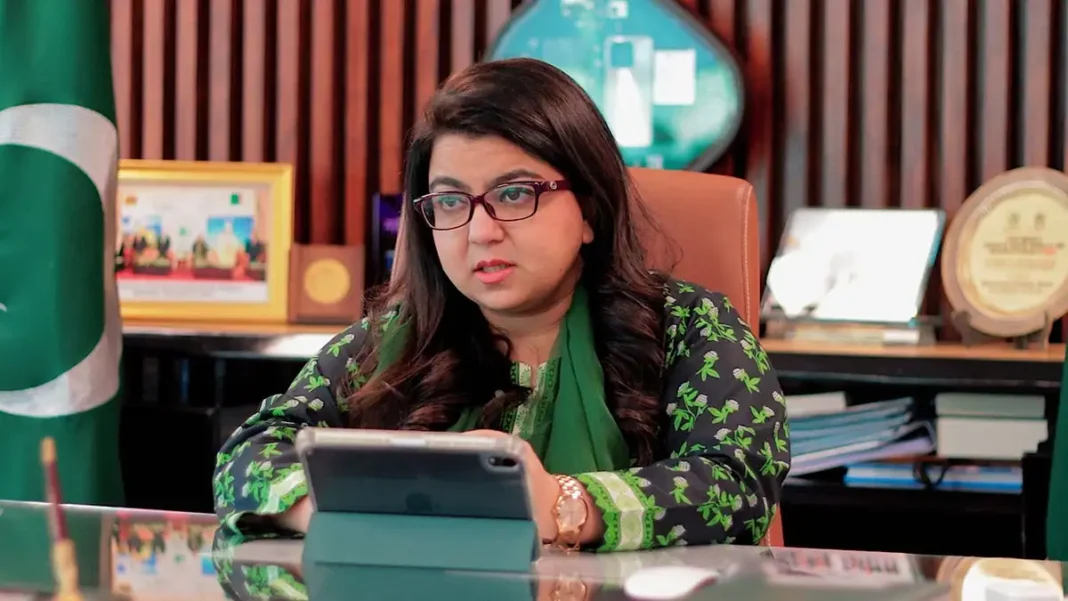
Federal Minister for IT and Telecom Shaza Fatima Khawaja delivered a keynote address presenting Pakistan’s blueprint for AI governance and digital transformation. The summit, hosted in Seoul from October 19 to 22 by the World Bank Group together with South Korea’s Ministry of Science and ICT and its Ministry of Finance and Economy, has drawn ministers and technology leaders from around the world.
Pakistan was set to become the first country to sign the Digital and AI Compact during the summit, a notable diplomatic step with the Buraq announcement at its heart, The Express Tribune reported.
Why the Buraq Urdu AI model matters for Pakistanis
Right now, when a user in Pakistan queries a major AI tool, the words travel to servers in the United States or Europe, sitting on foreign computers under foreign laws. Buraq changes that: sovereign compute lets organisations train and deploy models, process large datasets and run real-time applications without relying on offshore cloud regions, covering sensitive data such as financial transactions, medical imaging, telecom data and government records.
There is also a language gap. Urdu accounted for just 0.03 per cent of global URLs collected by Common Crawl in July 2026, so global AI models have very little Urdu training data and their Urdu output is often awkward or wrong.
The plan connects with Pakistan’s wider digital push, from the Digital Nation programme linking ministries’ data to debates over AI oversight in warfare. It also lands as global AI competition intensifies, with Google’s Gemini 4 Argon launch showing how fast the frontier is moving.
The four foundations behind Buraq
The minister told a World Bank panel on digital government service delivery that Buraq, and the public compute capacity behind it, form the AI layer of a programme built on four foundations, according to a statement issued by the Ministry of IT on Wednesday.
On digital identity, NADRA provides verified identity to more than 100 million Pakistanis, now extended into a digital identity that authenticates citizens online and records consent. On payments, the State Bank’s Raast instant payment rail turns an AI model’s identification of a qualifying household into delivery.
On data sharing, WASL, the national exchange layer of the Digital Public Infrastructure stack built under the World Bank-supported Digital Economy Enhancement Project, lets institutions share data with every transaction authenticated, encrypted and logged. On safeguards, the National Data Governance Policy sets a single rulebook for classifying, sharing, protecting and publishing public data.
“AI is the last layer, not the first,” the minister said, arguing that governments which skip the foundations get pilots that never scale and systems citizens do not trust.
Money, meetings and momentum
The minister also announced a $1 billion national funding commitment through 2030, alongside regulatory reforms and public-sector AI deployments.
For developers and IT companies, a locally hosted sovereign model opens new doors. Hospitals, banks and fintech startups handling sensitive data have been cautious about cloud AI because they cannot guarantee where their data goes; Buraq and the sovereign compute infrastructure are meant to solve that, in the same way digital financing tools are reshaping small-business credit.
Pakistan is not starting from zero on Urdu AI. Earlier in 2026, a Pakistani student in the United States, Taimoor Hassan, released a model called Qalb, trained on 1.97 billion tokens, with its creators saying it beats existing Urdu-focused systems on several real-world tasks. Buraq, as a state project with sovereign compute and a government mandate, goes much further: it is meant to power real public services, from welfare delivery to health records to tax systems.
Frequently asked questions
What is the Buraq Urdu AI model?
Buraq is a large language model being built by the Pakistani government, trained on Urdu and regional languages and designed to run entirely on servers inside Pakistan, so no Pakistani data is sent abroad.
Who announced Buraq and when?
Federal IT Minister Shaza Fatima Khawaja announced it on October 22, 2026, at the Global AI and Digital Summit in Seoul, during a World Bank panel on digital government.
Why does Pakistan need its own Urdu AI model?
Global AI models have very limited Urdu training data, Urdu made up only 0.03 per cent of Common Crawl URLs in July 2026, and Buraq keeps sensitive government, health and financial data inside the country.