World Bank Urges Pakistan to Shift From Stability to Growth
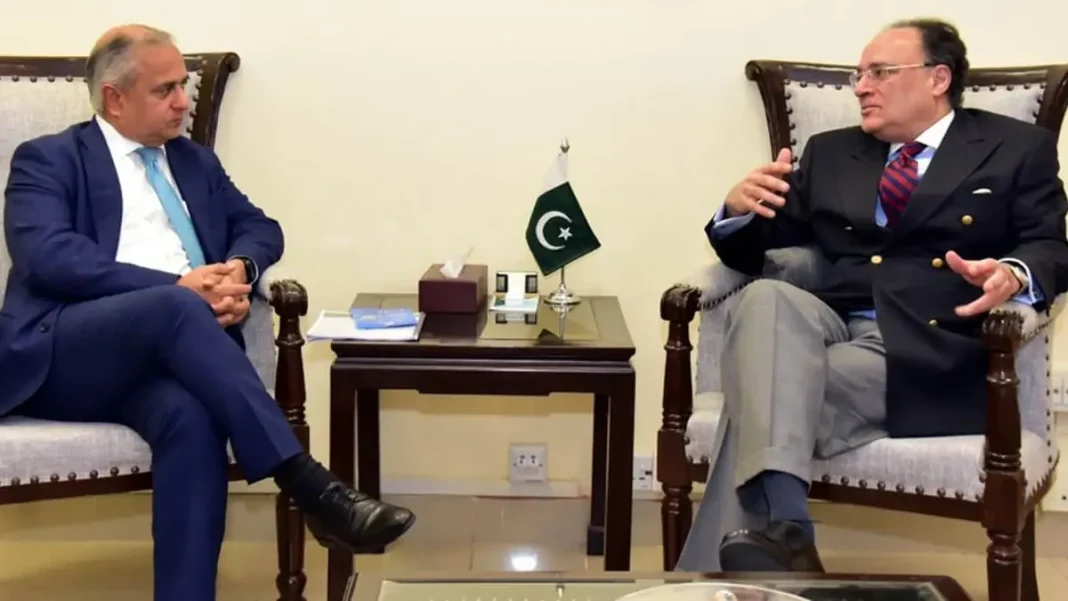
The World Bank has put Pakistan growth at the centre of its latest advice, urging a move from stabilisation to sustainable, investment-led expansion with a stronger private sector. The advice came during a meeting between the bank’s regional leadership and Finance Minister Muhammad Aurangzeb in Islamabad on Friday.
This marks the second such endorsement from the international financial institution. The bank recently commended Pakistan’s stabilisation programme and urged a shift towards sustainable growth to generate employment for the country’s youth. The International Monetary Fund has also offered similar advice to Islamabad at a recent workshop on tax reforms.
Mahajan meets Aurangzeb
World Bank Regional Practice Director for the Prosperity Vertical for the Middle East, North Africa, Afghanistan and Pakistan (MENAAP), Sandeep Mahajan, met Mr Aurangzeb on Friday. He was accompanied by Country Director Bolormaa Amgaabazar and International Finance Corporation (IFC) Division Director Simon Andrews.
An official statement said the meeting discussed Pakistan’s economic reform agenda. The transition from stabilisation to sustainable growth was the central theme. Both sides also discussed priorities for strengthening investment and private sector activity.
Mr Mahajan congratulated Pakistan on restoring macroeconomic stability. He commended the government’s management of the recent crisis arising from regional conflict.
He noted that buffers built through stabilisation efforts had helped Pakistan manage external pressures. A timely policy response also played a role, he said. World Bank representatives stressed the importance of sustaining these gains through continued reforms and effective implementation.
Eurobond and credit ratings
Mr Aurangzeb said the government’s priority was to make macroeconomic stability durable. He said the aim was to translate stability into sustainable, investment-led and export-driven growth.
He pointed out that Pakistan had regained access to international capital markets. This included the recent $3 billion Eurobond issuance with five-year and 10-year maturities. The successful issuance marked Pakistan’s return to global debt markets after a period of absence.
The minister stressed the need to secure further credit rating upgrades. He said strengthening investor confidence and improving Pakistan’s sovereign credit profile were essential for attracting investment.
Mr Aurangzeb underscored the importance of a credible transition framework. He said it should maintain fiscal discipline and address external sector vulnerabilities. The framework should also strengthen the foundations for private sector-led, responsible and sustainable growth.
Policy continuity and privatisation
The discussion covered international experience in strengthening fiscal frameworks. Both sides spoke about policy credibility to manage external risks and support investor confidence.
Policy continuity was highlighted as another key requirement for sustained economic progress. The finance minister noted that investment and productivity depended on a predictable policy environment. Consistent implementation mattered as much as the policies themselves, he said.
Pakistan growth and the jobs agenda
Mr Aurangzeb and the World Bank representatives also exchanged views on the government’s growth and jobs agenda. They discussed opportunities to strengthen private sector investment and improve the regulatory environment. Mobilising financing for infrastructure was also on the agenda.
The discussion covered privatisation in detail. Both sides spoke about the importance of clear regulatory frameworks and credible post-privatisation arrangements. They also discussed the potential to develop infrastructure projects through appropriate financing structures and collaboration with development partners.
Both sides reaffirmed the importance of continued cooperation between Pakistan and the World Bank. The focus would remain on sustaining macroeconomic stability and advancing structural reforms. Strengthening policy continuity and translating reform gains into investment, employment and improved economic opportunities were identified as shared goals.
Why this matters
The World Bank’s message reflects a broader shift in how international lenders view Pakistan’s economy. After years of crisis management and stabilisation programmes, the emphasis is now moving towards growth.
The $3bn Eurobond issuance is a concrete sign of returning market confidence. However, the bank’s insistence on policy continuity suggests concerns remain about Pakistan’s history of reform reversals. For ordinary Pakistanis, the shift from stability to growth could mean more jobs and investment — but only if the reforms are actually implemented.
For context on the World Bank’s engagement with Pakistan, see our coverage of the bank’s projection that Pakistan can triple incomes by 2050 with faster reforms, its warning that inflation could rise to 8.2% in FY27, and its caution that regional conflict could disrupt Pakistan’s debt rollover.