R4 Backs Islamabad MoU at Istanbul Meeting With European Powers
Pakistan, Türkiye, Saudi Arabia and Egypt on Friday threw their collective weight behind the Islamabad-brokered understanding between Iran and the United States, as regional and European powers stepped up diplomatic efforts to prevent another round of hostilities in the Gulf.
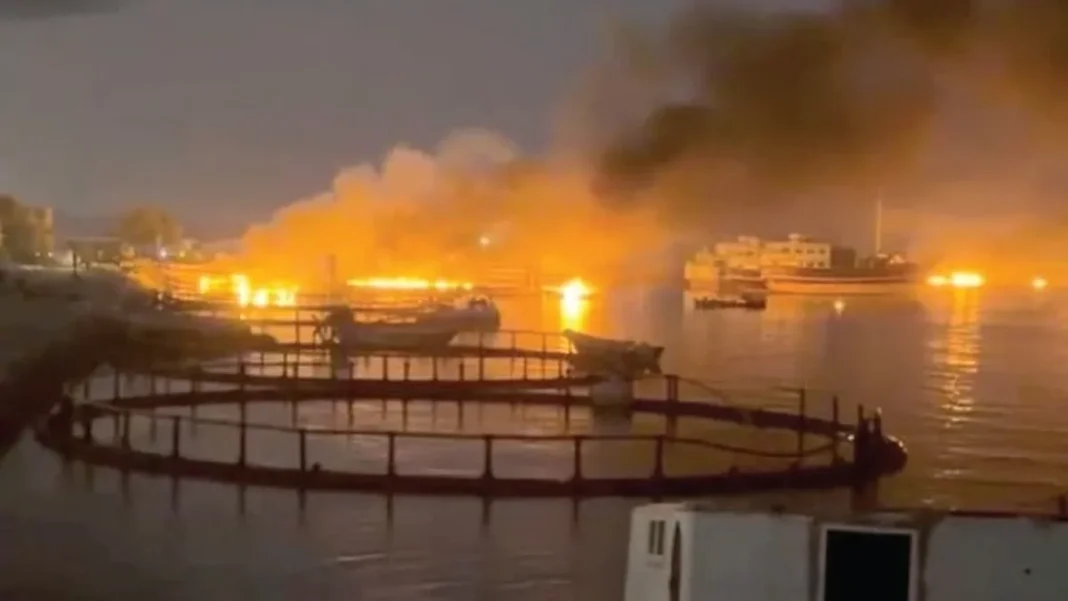
The endorsement came at the R4 foreign ministers’ meeting in Istanbul, held against the backdrop of renewed fears that the United States and Israel could strike Iran again. Such a move could unravel the fragile pause in fighting and further disrupt shipping through the Strait of Hormuz.
Joint statement backs Islamabad MoU
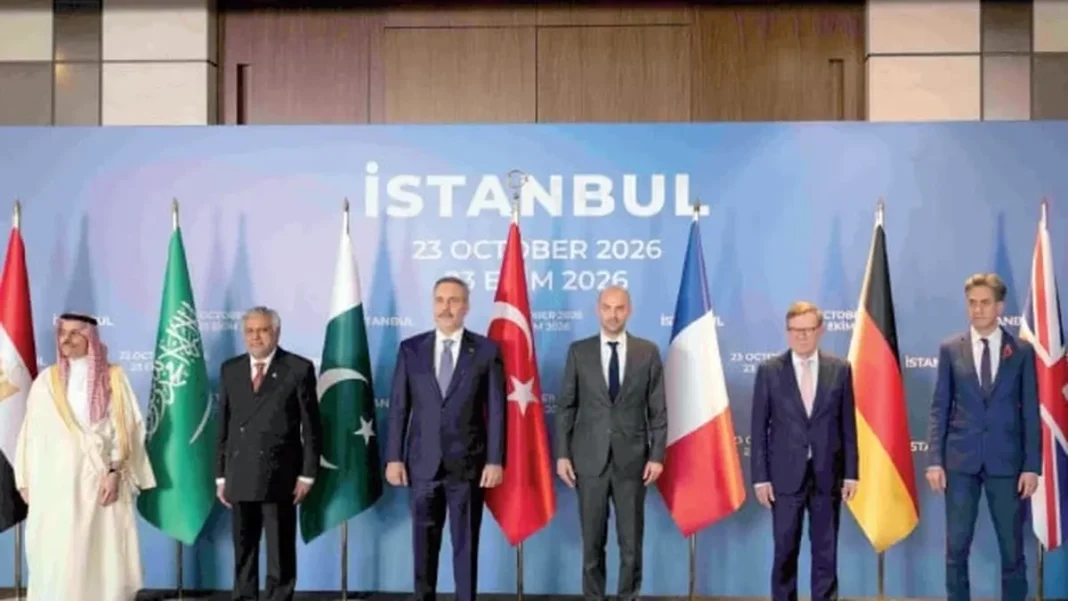
The meeting brought together Deputy Prime Minister and Foreign Minister Ishaq Dar, Turkish Foreign Minister Hakan Fidan, Saudi Foreign Minister Prince Faisal bin Farhan and Egyptian Foreign Minister Badr Abdelatty.
In a joint statement issued after the talks, the four countries underlined the urgent need to address the conflict between the US, Israel and Iran only through dialogue and diplomacy. They called for preventing attacks on civilians and civilian infrastructure, including vessels at sea.
Significantly for Islamabad, the ministers expressed support for the Islamabad MoU and welcomed continued diplomatic efforts to prevent further escalation. The reference was widely seen as recognition of Pakistan’s continuing diplomatic role in efforts to stop the Iran conflict from resuming.
Dar briefed his counterparts on Islamabad’s mediation efforts during the subsequent expanded session with European foreign ministers.
First R4-E3 expanded consultation
The Istanbul gathering carried added weight because the R4 sat with the major European powers for the first time. France, Germany and the United Kingdom, traditionally known as the E3, were joined by Italy. That turned Friday’s gathering into an eight-country consultation between four regional and four European states.
The discussions covered Iran, the Strait of Hormuz, Yemen, Palestine and wider threats to maritime security. Fidan warned that renewed military action against Iran would only deepen instability, while Italy’s Antonio Tajani cautioned that hostilities could resume after the US elections.
Hormuz and Yemen on the agenda
The R4 statement reflected growing concern over disruption to one of the world’s most important maritime arteries. The ministers stressed the importance of freedom of navigation and called for the swift and full resumption of safe, secure and unimpeded passage through the Strait of Hormuz.
They rejected restrictions affecting lawful navigation, warning that disruption of sea lanes threatened energy, food and fertiliser supplies as well as global supply chains. For Pakistan, which depends on the strait for oil imports and trade, the warning carries direct weight. Earlier reporting has noted how Gulf disruptions force costly rerouting for Pakistani businesses and exporters.
On Yemen, the four countries strongly condemned Houthi attacks against Saudi Arabia and on commercial shipping in the Red Sea and Bab al-Mandeb, expressing full solidarity with Riyadh and urging the Houthis to return to the political process.
Palestine and the Makkah pact
The R4 described Israeli occupation as a fundamental source of regional instability, called for an end to settlement activity, and reiterated support for an independent Palestinian state based on the June 4, 1967 lines, with East Jerusalem as its capital.
The statement holds added significance for Pakistan since Islamabad, Ankara and Riyadh are partners in the Makkah Joint Defence Agreement. Dar and Fidan, in their bilateral meeting, condemned the attacks on Saudi Arabia and agreed to maintain close coordination under the arrangement.
After the talks, the ministers called on Turkish President Recep Tayyip Erdogan. Dar conveyed greetings from President Asif Ali Zardari, Prime Minister Shehbaz Sharif and Field Marshal Syed Asim Munir.
What happens next
Foreign Office spokesperson Sajjad Haider Khan confirmed that Pakistan and Saudi Arabia had completed ratification of the Makkah pact, while Türkiye was completing its domestic legal process. He stressed the agreement was defensive and consistent with the UN Charter.
Dar’s arrival in Istanbul for the first-ever R4-E3 meeting was reported earlier; Friday’s joint statement is the first concrete outcome of that consultation.
Frequently asked questions
What is the Islamabad MoU?
The Islamabad MoU refers to the Pakistan-brokered understanding between Iran and the United States aimed at preventing a resumption of hostilities in the Gulf. Regional powers formally backed it at the R4 meeting in Istanbul.
Which countries attended the Istanbul R4 meeting?
Pakistan, Türkiye, Saudi Arabia and Egypt attended as the R4, joined for the first time by France, Germany, the United Kingdom and Italy in an expanded eight-country consultation.