Pakistan Canada Investment Treaty Talks Conclude
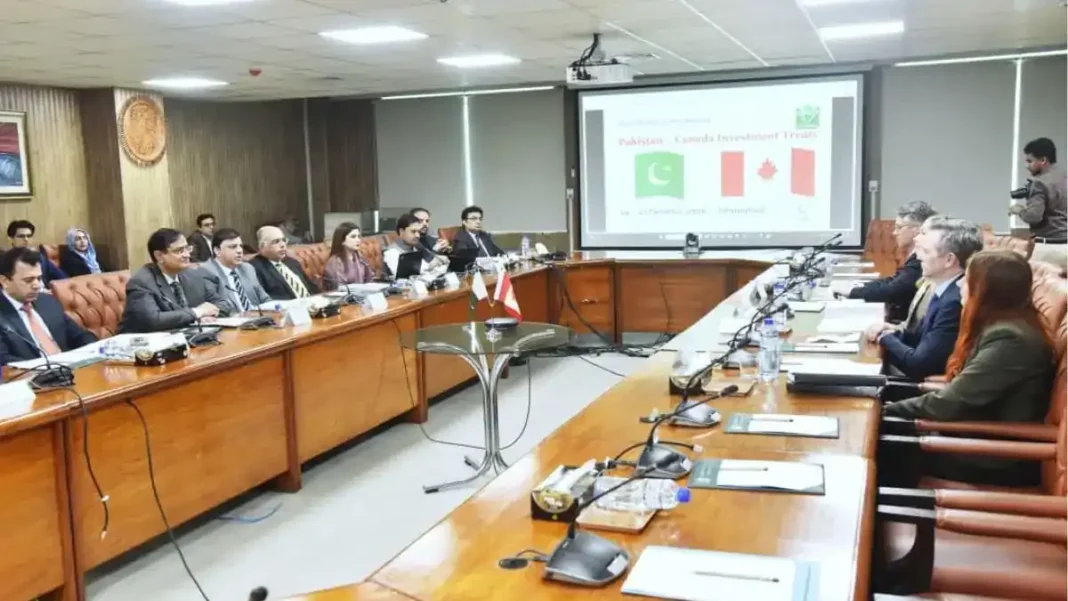
Pakistan and Canada have concluded the third round of negotiations on a bilateral investment treaty, marking significant progress toward a formal agreement on investment protection between the two countries. The talks closed in Islamabad on Saturday, according to a statement from Pakistan’s Board of Investment.
The Pakistan Canada investment treaty is intended to give investors in both countries clearer rules and stronger confidence. The Board of Investment said the successful conclusion of the third round reflected both sides’ continued commitment to the talks and to building long-term investment partnerships.
Daphnee Campeau, a senior trade policy officer in Global Affairs Canada’s Investment and Government Procurement Division, led Canada’s delegation. Additional Secretary Khashih ur Rehman of Pakistan’s Ministry of Law and Justice led Pakistan’s delegation.
What the two sides discussed
The negotiations covered a wide set of issues at the heart of any modern investment treaty. The two sides discussed direct and indirect investments, portfolio investments, performance requirements, expropriation, third-party funding, and investor-state dispute settlement.
Each of those topics matters for businesses weighing a move into a new market. Rules on expropriation set out how an investor is treated if a government takes over an asset. Rules on dispute settlement set out how a dispute between an investor and a host state is resolved.
The statement described the discussions as positive and productive. It did not announce a date for a fourth round, and it did not say a final text had been agreed.
What the Pakistan Canada investment treaty means
A bilateral investment treaty does not by itself bring in capital, but it can lower one barrier that investors weigh before committing funds. Clear and predictable rules make it easier for firms to price risk and plan over a longer horizon.
For Pakistan, that logic connects with a wider reform push. Pakistan has moved to scrap business rules that discourage foreign investors, with officials saying a large share of unnecessary or duplicative regulations could go.
The talks also fit a broader effort to widen Pakistan’s trade and investment ties. Pakistan’s trade gap with Gulf states narrowed in the latest quarter. Canada is a smaller trade partner than the Gulf states, but a treaty would still open a formal channel for Canadian firms looking at Pakistan’s market.
A follow-up to the round that opened in Islamabad
This round is a direct follow-up to the talks that opened earlier in October. Pakistan and Canada opened the third round of investment treaty talks in Islamabad, and the latest statement records how that round ended.
The conclusion was marked by a closing ceremony attended by Minister for Board of Investment Qaiser Ahmed Sheikh and Canadian High Commissioner to Pakistan Tariq Ali Khan. Both men praised the efforts of their negotiating teams.
That emphasis on balance matters. Investment treaties are often criticised when they are seen to favour investors over host states, or the reverse. Both sides here framed the goal as a balanced text, one that protects investors while preserving the state’s room to regulate in the public interest.
What happens next
The next step is further negotiation toward a final text, though no timetable was published in the Board of Investment statement. Until a treaty is signed and ratified, the existing rules for investors remain unchanged.
The broader economic backdrop remains mixed. Finance Minister Muhammad Aurangzeb has pointed to a fiscal deficit at a 22-year low, while the government continues to seek longer-term financing, including a 15-year oil facility from Saudi Arabia. A treaty with Canada would be one more plank in that wider strategy.
For now, the third round is closed, the key issues are on the table, and both capitals have said they want to keep going. The test of the talks will be whether the next round turns this progress into an agreed text.
When did Pakistan and Canada conclude the third round of treaty talks?
The two countries concluded the third round of negotiations on the bilateral investment treaty on Saturday, October 24, 2026, in Islamabad.
Who led the two delegations?
Daphnee Campeau, a senior trade policy officer in Global Affairs Canada, led Canada’s delegation, while Additional Secretary Khashih ur Rehman of Pakistan’s Ministry of Law and Justice led Pakistan’s delegation.
What issues did the talks cover?
The talks covered direct and indirect investments, portfolio investments, performance requirements, expropriation, third-party funding, and investor-state dispute settlement.
Is the investment treaty signed yet?
No. The two sides have concluded the third round of negotiations and reported significant progress, but no signed treaty or date for a fourth round was announced in the Board of Investment statement.