Pakistan’s Fiscal Deficit Falls to 22-Year Low, Aurangzeb Tells MENAP Meeting
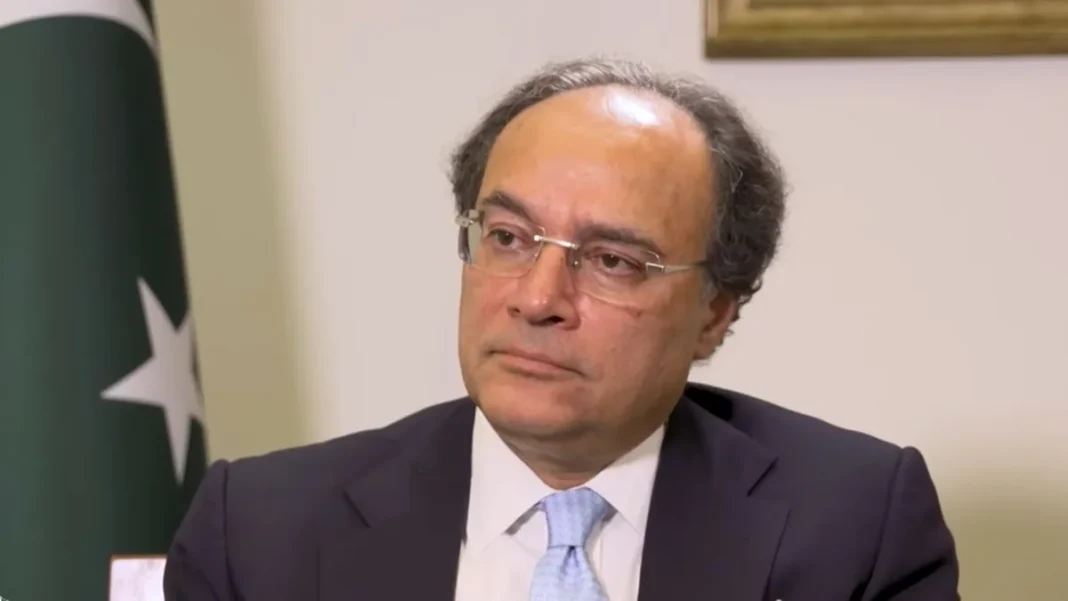
BANGKOK: Finance Minister Muhammad Aurangzeb has said Pakistan’s fiscal deficit has fallen to a 22-year low, crediting the IMF programme and the government’s economic policies for moving the country toward stabilisation. He made the claim while addressing the Middle East, North Africa, Afghanistan and Pakistan (MENAP) meeting on the sidelines of the World Bank Group-IMF Annual Meetings 2026 in Bangkok.
The minister said three consecutive years of primary surpluses and economic growth of 3.7 per cent reflected a positive trajectory. Foreign exchange reserves had reached a historic high, covering three months of imports, while stronger buffers against climate-related and regional shocks had placed the economy in a more stable position.
Aurangzeb cited sovereign credit rating upgrades, the issuance of a Eurobond in September and the IMF staff-level agreement reached on October 7 as further signs of progress.
Pakistan’s fiscal deficit: the numbers behind the claim
Fiscal operations data for the year ended June 30, 2026 show the overall budget deficit contained at Rs3.13 trillion, or 2.6 per cent of GDP. The country posted a primary surplus of Rs3.63 trillion, or 2.9 per cent of GDP, under IMF programme scrutiny.
The Federal Board of Revenue collected Rs13.01 trillion in taxes, while non-tax revenue stood at Rs5.18 trillion, including Rs2.42 trillion from State Bank of Pakistan profits and Rs1.57 trillion from the petroleum levy. After Rs7.67 trillion was transferred to provinces under the NFC Award, net revenue receipts were Rs10.51 trillion against total expenditure of Rs15.28 trillion.
Mark-up payments on borrowed loans, at Rs6.9 trillion, remained by far the largest single expenditure item, followed by defence spending of Rs2.59 trillion and pensions of Rs1 trillion.
What Aurangzeb promised investors
The finance minister reaffirmed the government’s commitment to reforms and stressed the need for targeted, budget-neutral and time-bound subsidies to protect low-income groups and maintain social cohesion, echoing remarks he made earlier in the week on Pakistan’s IMF subsidy framework.
He called for diversifying energy sources and trade routes, strengthening regional integration and increasing investment in logistics and food systems to improve resilience against external shocks. Pakistan, he said, was ready to play an active role in promoting regional cooperation and remained committed to multilateralism.
On the sidelines of the meetings, Aurangzeb also addressed a Sovereign Investor Roundtable hosted by Standard Chartered Bank, where he outlined plans for diversified borrowing, including sukuk, further Panda bond issuance and tokenisation. Secretary Finance Imdadullah Bosal and SBP Governor Jameel Ahmad joined the discussions.
At a separate Jefferies International roundtable and a Barclays investor session, the minister cited renewed access to international capital markets through private placement, Panda bond and Eurobond issuances. He said Pakistan’s approach aimed to lower financing costs, extend maturities and reduce rollover risks without increasing the overall size of the external debt.
The context investors will watch
The 22-year-low claim sits alongside the minister’s earlier position at the G-24 meetings, where as incoming chair he pushed for a broader overhaul of global finance. Pakistan’s recent sovereign rating upgrades and the October 7 IMF staff-level agreement have given Islamabad its strongest hand with investors in years.
Still, the numbers carry caveats. The fiscal data showed a statistical discrepancy of Rs853 billion, exposing an ongoing inability to reconcile revenues and expenditures between the federal government and the provinces, particularly Punjab. And with debt servicing consuming the bulk of expenditure, the consolidation story depends on sustained revenue mobilisation and expenditure restraint.
The IMF managing director also highlighted regional challenges at the Bangkok meetings, a reminder that the gains sit inside a volatile region.
Frequently asked questions
What is Pakistan’s fiscal deficit now?
According to Finance Minister Aurangzeb, Pakistan’s fiscal deficit has fallen to a 22-year low. Fiscal operations data for FY26 put the overall deficit at Rs3.13 trillion, or 2.6 per cent of GDP.
What is a primary surplus?
A primary surplus means the government collects more revenue than it spends, excluding interest payments on debt. Pakistan has posted primary surpluses for three consecutive years, with FY26 showing a surplus of Rs3.63 trillion, or 2.9 per cent of GDP.
What did the IMF agree with Pakistan on October 7?
Pakistan and the IMF reached a staff-level agreement on October 7, 2026 under the ongoing programme, which Aurangzeb cited as a sign of economic progress.