ECP Proposes AI Election Rules for Parties, Media
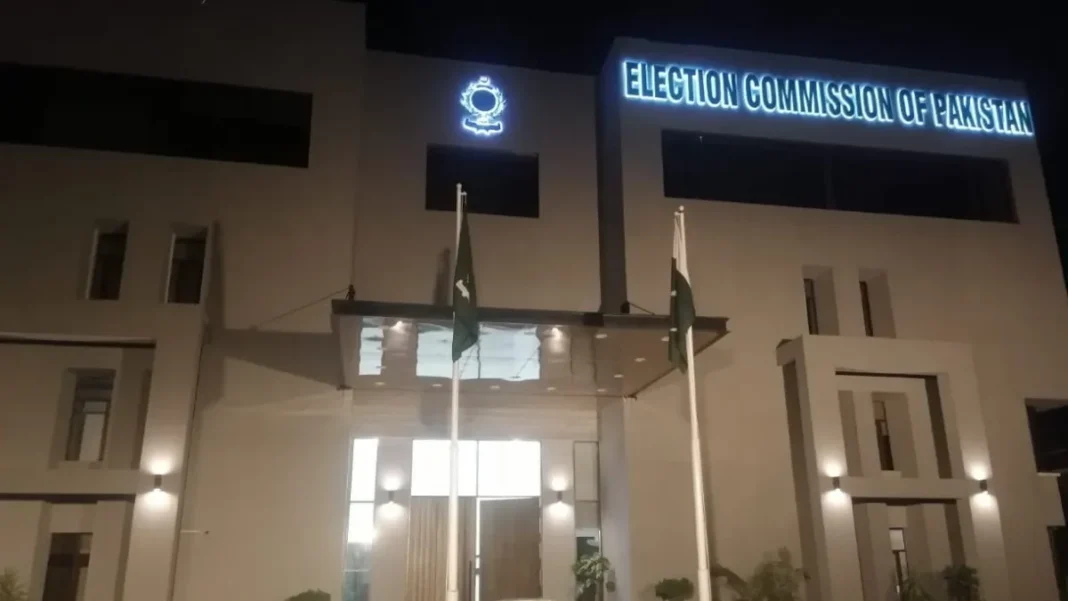
The Election Commission of Pakistan has proposed 12 amendments to the 2023 codes of conduct for political parties, media organisations and election observers in new AI election rules to control the misuse of artificial intelligence during elections. The draft was reported by APP on Sunday, and the commission has asked for public and stakeholder feedback by November 20.
The AI election rules would require clear labels on AI-generated campaign material, ban deceptive deepfakes, and set duties for media houses, parties, candidates and observers. The aim is to keep election communication transparent.
What the draft asks media houses to do
Under the proposed rules for media, outlets would have to disclose clearly when content generated or modified through AI is broadcast, published or released. The draft strictly bans the use of deepfake technology to create fabricated images, voices or statements of party leaders, candidates, election officials, members of the judiciary, armed forces personnel and other state officials, where the content is false, defamatory or meant to ridicule them.
Media organisations would still be allowed to use AI tools to prepare, translate, present or analyse election-related content. The condition is that they disclose such use to their audiences and remain responsible for the accuracy of the material.
The Pakistan Electronic Media Regulatory Authority, the Social Media Protection and Regulatory Authority and the National Cyber Crime Investigation Agency would monitor undisclosed or unlabelled AI-generated media content and report violations to the ECP. Media houses would then have to remove misleading or undisclosed AI-generated content from their platforms promptly, or label it correctly, when directed by a regulator or the commission.
Rules for parties, candidates and observers
Five amendments have been proposed for political parties and candidates. They would not be allowed to create, publish, broadcast or distribute AI-generated or manipulated content, including deepfake images, videos and audio clips, without clearly labelling it as AI-generated.
The draft also bans AI-generated material meant to deceive voters by falsely showing a person’s image, words or actions. It bars fabricated, ridiculing or defamatory images, voices or statements of political leaders, candidates, election officials, members of the judiciary, armed forces personnel and other state officials made through deepfake technology.
Parties and candidates would have to preserve all AI-generated content produced during the election process. The draft further bans the use of AI-powered bots and automated accounts to manipulate online engagement or create fake trends. Voter outreach through robocalls or voice-cloned messages would also be regulated, with a clear disclosure at the start of each call or message that the content has been generated through AI.
For observers, three amendments would require them to stay alert for AI-related manipulation and report any such case to the ECP at once. The draft bars observers from using AI to generate, alter or enhance their observations, findings, photographs, videos or reports submitted to the commission.
Why the AI election rules matter for Pakistan’s next polls
The codes of conduct that the ECP now wants to amend date back to 2023, before generative AI tools became widely available. The draft therefore updates an existing framework rather than creating a new law from scratch, and it treats disclosure as the central test: AI use in campaigns is not banned outright, but hidden AI use is.
That distinction matters for voters. A labelled AI-generated campaign video and an unlabelled deepfake of a candidate saying words they never spoke are treated very differently under the draft. The first is permitted with disclosure, while the second is banned where it is false, defamatory or meant to ridicule.
Enforcement would rest on regulators reporting undisclosed content to the ECP, which would decide on action. The draft describes that action only as appropriate action, so exact penalties remain to be set out in the final version.
The ECP has redescribed constituencies in Khyber-Pakhtunkhwa without redrawing them and settled constituency questions in Paharpur, while Islamabad’s local polls have a December 20 schedule. Election authorities elsewhere are also tightening rules, as shown by a US Justice Department demand for voter data from California counties.