slug: “pakistan-ev-fast-chargers-50km-highways-2030-october-2026”
category: “Tech”
headline: “Pakistan Plans EV Chargers Every 50km by 2030”
seo_title: “Pakistan Plans EV Chargers Every 50km by 2030”
meta_description: “Pakistan plans around 3,000 public EV chargers by 2030, with fast chargers about every 50km on major highways under the 2025-30 NEV Policy.”
focus_keyphrase: “EV chargers”
image_url: “hourly-2134-pakistan-ev-fast-chargers-50km-highways-2030-october-2026.webp”
image_credit: “Bloom Pakistan”
—
Pakistan Plans EV Chargers Every 50km by 2030
Pakistan plans to set up around 3,000 public electric vehicle charging stations across the country by 2030. The Ministry of Industries and Production shared the target in a written reply to the National Assembly, in response to a question from lawmaker Malik Shakir Bashir Awan.
The plan sits under the New Energy Vehicle Policy 2025-30. Its first phase covers 40 fast-charging stations along motorways and selected sections of the National Highway (N-5). Charging points are planned at intervals of about 50 kilometres on major highways, so drivers can travel long distances without fear of running out of charge.
EV chargers on motorways first
The first phase focuses on routes where range anxiety hits hardest. Long motorway journeys need reliable stops, and the ministry said some of this work is already visible on a major motorway that recently gained ultrafast charging stations.
The 50-kilometre spacing is the key practical detail. A driver leaving Lahore for Islamabad, or Karachi for Hyderabad, would pass a charging option at regular intervals instead of planning a trip around a single station. That change matters most for people considering their first electric car.
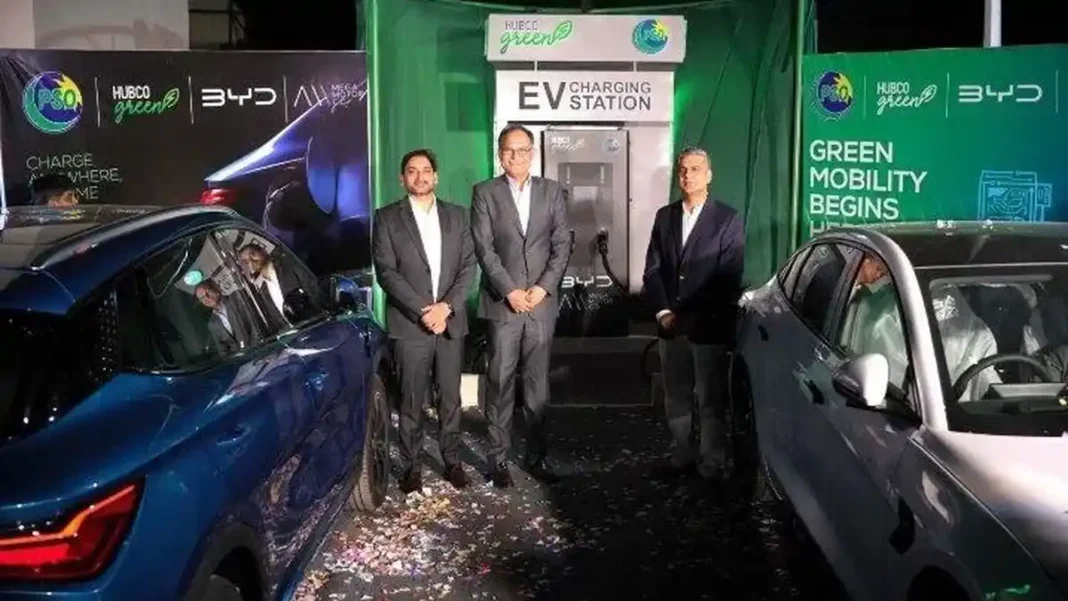
Pakistan already has a starting point on the Lahore-Islamabad Motorway. The first New Energy Vehicle charging station on the M-2 opened at the Magic River Rest Stop, with a 60kW fast charger able to charge two vehicles at once. A BYD Atto 3 can reach a 50 per cent charge in under 30 minutes there, giving 160 to 200 kilometres of range.
Fuel stations, battery swapping and private investment
Under the policy, fuel stations will be encouraged to install EV charging units. The government also plans to expand fast-charging, Level 2 and Level 1 facilities, so both quick top-ups and slower overnight charging have a place in the network.
Battery-swapping stations are also planned for electric two-wheelers and three-wheelers. Swapping suits rickshaws and delivery bikes, where riders cannot wait long for a charge and need to get back on the road quickly.
To attract private investment, the government is offering a dedicated commercial electricity tariff for charging stations and faster electricity connections. Public-private partnerships, including viability gap funding arrangements, are also part of the plan. Last year, 3,800 investors showed interest in setting up EV charging stations across Pakistan, according to the ministry.
What happens to old EV batteries
The policy also covers the end of an EV battery’s life. It sets out collection, transport, reuse, dismantling and recycling for used batteries, with a focus on lithium-ion units. The ministry said work is under way on a regulatory framework and a nationwide network of battery collection and recycling facilities.
That step matters for safety and cost. Used lithium-ion batteries need proper handling, and recycled material can feed new battery production instead of going to waste.
Why this plan matters for drivers
Electric cars remain a small share of Pakistan’s vehicles, but interest is rising as fuel prices stay high and new models reach the market. The main barrier for many buyers is not the car itself, but the doubt over where to charge on a long trip.
A 3,000-station network by 2030 would not remove that doubt overnight, yet the first phase gives the plan a clear test. If the 40 fast stations on motorways and the N-5 work well, and if private investors follow with stations at fuel outlets, the network can grow from corridors into cities.
The plan also links to wider energy policy. Feature Pakistan earlier reported Pakistan’s bank investment limits for shares and startups, the Geely electric car launch in Pakistan, and a StarCharge EV charging deal, and the charging rollout will need steady power supply and fair tariffs to stay viable for operators and fair for drivers. Electricity distribution remains a live issue, as shown by warnings over detection bills.
What happens next
The ministry’s reply sets the target, but delivery will depend on site selection, power connections and private partners. Drivers should watch for the first 40 fast stations on motorways and the N-5, and for announcements on the commercial tariff and viability gap funding that will decide how fast the wider network follows.