Rawalpindi Electric Buses Hit Roads From Friday
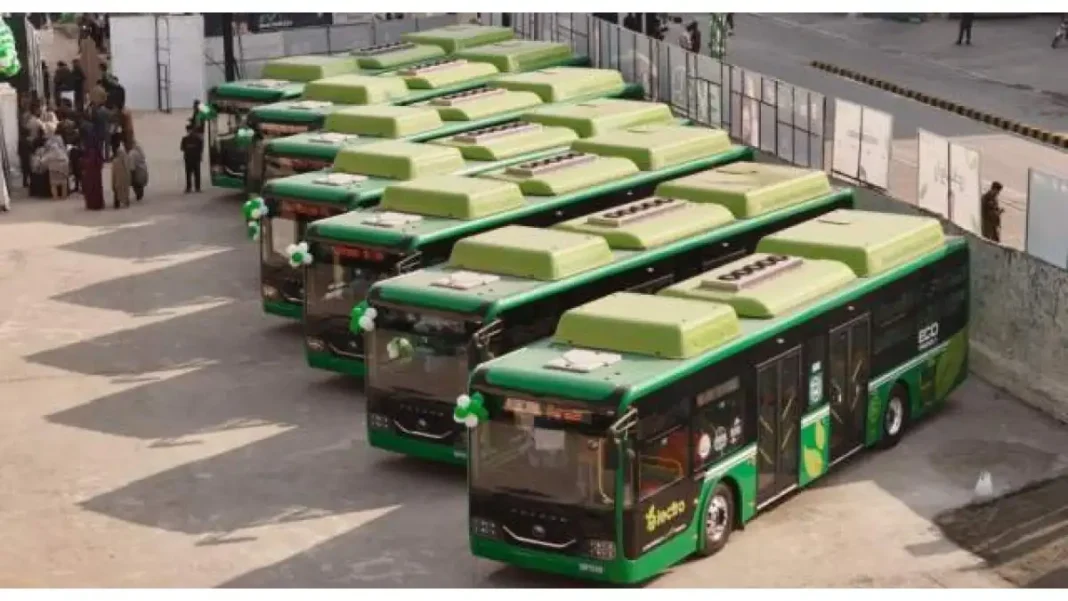
Seventy-five new electric buses will start running in Rawalpindi from Friday, November 13, giving commuters a cleaner and quieter way to travel across the city. The Rawalpindi electric buses are part of Punjab’s push to replace diesel buses with electric ones on busy urban routes.
The launch was confirmed at a Regional Transport Authority meeting chaired by Deputy Commissioner Captain (retd) Nadeem Nasir on Thursday. The meeting reviewed passenger facilities ahead of the new buses starting service on Friday.
The deputy commissioner also ordered a full upgrade of the Pirwadhai General Bus Stand before the launch. He directed officials to introduce an e-ticketing system, review shop subletting contracts and improve sanitation, drainage, washrooms, waiting lounges, streetlights, CCTV surveillance, security and anti-encroachment work at the terminal.
Officers must submit regular progress reports on the work, the deputy commissioner said. He also ordered an audit of illegal subletting contracts for shops at the bus stand, so that fare collection and passenger records stay transparent.
Rawalpindi electric buses: four routes in the first phase
Rawalpindi first received electric buses in November 2025, when 45 buses started running on four routes. The new fleet of 75 buses adds to that service from Friday.
The four routes cover the city’s busiest corridors. One runs from Saddar to Qabristan Chowk, a 7 km route served by seven buses. Another runs from Fawara Chowk to Koral Chowk, an 11.3 km route served by eight buses. A third links Saddar Metro Bus Station to Munawar Colony, and the fourth runs from Marrir Metro Bus Station to Motorway Chowk, a 13.1 km route served by 14 buses.
A dedicated charging station for the buses is already running at the Saddar GTS bus stand on Adamjee Road, with plans for a larger depot on Peshawar Road. The buses are expected to serve about 24,000 passengers a day and connect with the metro bus networks in Rawalpindi and Islamabad.
The fare for the service is Rs20. When the service launched, women, students, senior citizens and people with disabilities were allowed to travel free.
Part of a province-wide rollout
The Rawalpindi launch is one step in a much larger plan. The Punjab cabinet approved 1,500 electric buses for 91 tehsils on October 27, with services due to start in January 2027 and a target of 3,000 electric buses on the road by June 2027. Transport Minister Bilal Akbar has charge of the rollout, which will set up depots at tehsil level for charging and maintenance.
Rawalpindi Division is due to receive 219 buses for its 16 tehsils under that plan. Bahawalpur will get 215 buses for 11 tehsils, Faisalabad 202 for 12, Sargodha 198 for 14, Multan 169 for nine, Gujranwala 125 for seven, Gujrat 122 for eight, Sahiwal 87 for four and Dera Ghazi Khan 63 for 10. The chief minister has set a longer goal of 5,000 electric buses within five years.
The service began as a 27-bus pilot in Lahore in early 2025. By July, 400 electric buses were running in 18 districts, and new routes had opened in Khanewal, Khushab, Bhakkar, Attock, Mandi Bahauddin and Hafizabad. Multan’s fleet launched in September on the same Rs20 fare.
Why electric buses matter for Rawalpindi
Electric buses cut tailpipe emissions on routes that carry thousands of passengers a day. That matters in Rawalpindi, where smog has pushed the government to act on air quality across Punjab. Diesel buses add to the smoke and dust on the city’s roads, while electric buses run quietly and produce no exhaust at street level.
The buses also link with the metro network, so a passenger can switch from a metro bus to an electric bus without a long walk or a second ticket queue once e-ticketing is in place. Lahore’s metro bus and Orange Line already carry large crowds every day, and Rawalpindi’s planners want the same kind of linked network.
Delivery will be the test. In July the government said about 1,100 electric buses would be running by August 15, but it has not published a province-wide fleet count since. The Rawalpindi launch will show whether the new buses reach the road on time and keep to their routes.
Karachi is also reworking its bus routes and terminals, while the new auto policy aims to raise local production and exports. For Rawalpindi commuters, the change is simpler: from Friday, the green buses on Saddar, Marrir and Adiala Road will be electric.
Frequently asked questions
How many electric buses are starting in Rawalpindi?
Seventy-five new electric buses start running in Rawalpindi from Friday, November 13. The service began with 45 buses on four routes in November 2025.
Which routes will the electric buses run on?
The four routes are Saddar to Qabristan Chowk, Fawara Chowk to Koral Chowk, Saddar Metro Bus Station to Munawar Colony, and Marrir Metro Bus Station to Motorway Chowk.
What is the fare for Rawalpindi’s electric buses?
The fare for the service is Rs20. Women, students, senior citizens and people with disabilities were allowed to travel free when the service launched.
Where do the buses charge?
A dedicated charging station is running at the Saddar GTS bus stand on Adamjee Road, with plans for a larger depot on Peshawar Road.
How big is Punjab’s electric bus plan?
The Punjab cabinet approved 1,500 electric buses for 91 tehsils, with services due to start in January 2027 and a target of 3,000 buses by June 2027. The chief minister has set a longer goal of 5,000 buses within five years.