Lahore Police Harassment Action at Metro Stations
Lahore police have ordered strict action against harassment at Metro Bus and Orange Line stations, assigning a senior officer to oversee security across both networks. The Lahore police harassment action follows instructions from the DIG Operations, who declared passengers’ dignity and safety the police’s top priority.
SP Dolphin Bilal Ahmed has been given a special task to oversee the arrangements. The measures cover people travelling on both public transport services, and they apply at every station in the city.
Bilal Ahmed said police were taking steps to protect citizens who rely on public transport. He added that officers were taking strict action against people who harass women and children at stations, and he directed personnel to closely monitor suspicious activities around all Orange Line and Metro Bus stations.
What the police have ordered
Lahore police have ordered comprehensive security measures at all Metro Bus and Orange Line stations. The directives follow clear instructions from the DIG Operations, and they place the safety of passengers at the centre of the plan.
As part of the assignment, Bilal Ahmed visited Metro Bus and Orange Line stations across Lahore. He reviewed security arrangements and issued instructions to ensure special measures at every station. He also held dedicated meetings with staff deployed at the stations.
The aim is straightforward: make the stations safe for the women and children who use them every day, and make it clear that harassment will be dealt with on the spot.
The station audits
The inspection covered several of the busiest stations in the city. Bilal Ahmed visited Shahdara, Bhati Gate, MAO College, Gaddafi Stadium and other stations, where he conducted security audits.
According to a Dolphin spokesperson, the audits aim to ensure the safety of women and children using these services. The audits check how stations are staffed, how quickly staff respond to complaints, and whether the measures in place are enough to protect passengers.
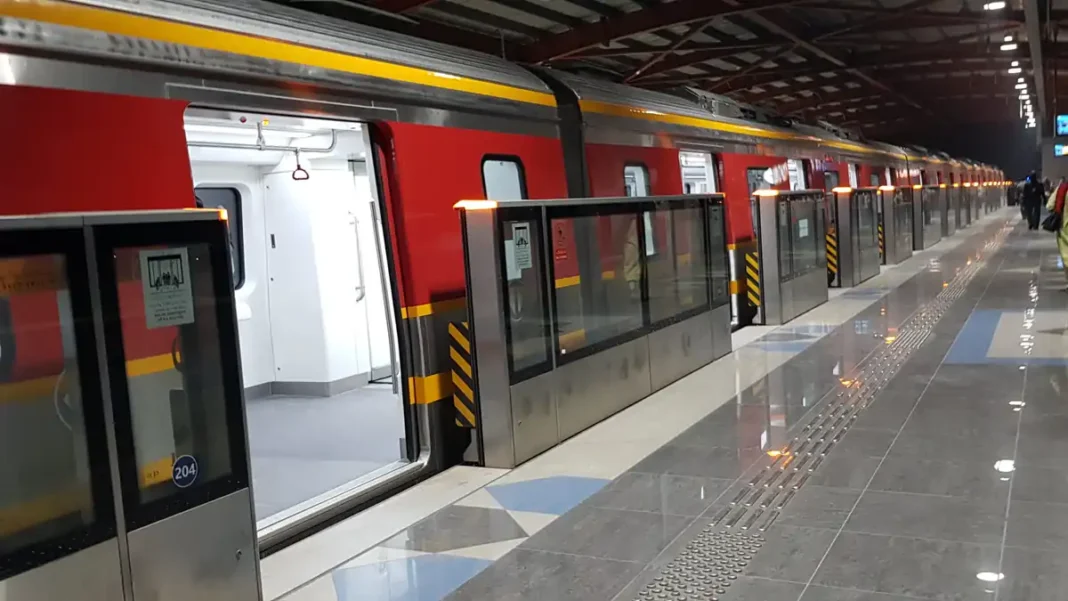
The Orange Line runs 27.1 kilometres across Lahore, from Ali Town to Dera Gujran, with 26 stations. The Metro Bus runs on a separate corridor through the city. Together, the two services carry large numbers of passengers each day, including women and children travelling to work, school and college.
Why the Lahore police harassment action matters
The new drive follows an incident earlier this year that put station safety in the spotlight. On July 27, two policemen were booked for allegedly assaulting and harassing a couple near the Bibi Pak Daman Orange Line station. A case was registered at Qila Gujjar Singh Police Station under sections 170, 171 and 354 of the Pakistan Penal Code.
The complainant, Ali Hassan, said he had gone to the station at around 10:15pm to receive his wife. As the couple were returning home, two uniformed policemen allegedly stopped them, assaulted him and verbally abused both husband and wife. The complainant said he called the Police Helpline 15 during the incident. One of the accused, identified as Mustafa, was apprehended at the scene, while the second suspect, Shahid, allegedly fled before police arrived.
That case showed why station safety needs attention from the top. The new drive is a response to that concern, and it puts a named senior officer in charge of the arrangements.
The Punjab Police are also running a separate programme to improve how officers handle cases involving women and children. On the instructions of Chief Minister Maryam Nawaz Sharif, training workshops are being held for officers from the rank of head constable to deputy superintendent of police. The workshops cover preventing violence against women, children and vulnerable groups, protecting victims, and identifying and investigating sexual and gender-based crimes.
What passengers should expect
The measures will be visible at the stations. Staff have been told to watch for suspicious activity, to act at once on complaints, and to keep a close eye on the areas around stations. The Dolphin Force, which patrols the city on motorcycles, is part of the plan.
Rawalpindi police have introduced e-ticketing at bus stands, with passenger records kept through the Travel Eye app, which shows that transport security is being tightened in other cities as well. Karachi has added double-decker electric buses to its public transport network, which means more passengers will rely on buses and trains in the years ahead. Two Swat policemen were arrested over a tourist assault case, and the Lahore High Court has rapped police over TikTok videos in a missing girls case, which shows that the courts are also watching how police treat the public.
For now, the test of the Lahore drive will be simple: whether passengers, above all women and children, feel safer at the stations in the weeks ahead.
What has Lahore police ordered at Metro Bus and Orange Line stations?
Police have ordered comprehensive security measures at all stations on both networks. SP Dolphin Bilal Ahmed has been assigned to oversee the arrangements, with strict action against people who harass women and children.
Which stations were inspected?
Bilal Ahmed visited stations across Lahore, including Shahdara, Bhati Gate, MAO College and Gaddafi Stadium, where he conducted security audits and met staff deployed at the stations.
Why is the drive happening now?
The drive follows instructions from the DIG Operations, who declared passengers’ dignity and safety the top priority. It also follows a July case in which two policemen were booked for allegedly harassing a couple near the Bibi Pak Daman Orange Line station.
How big are the two networks?
The Orange Line runs 27.1 kilometres across Lahore with 26 stations, from Ali Town to Dera Gujran. The Metro Bus runs on a separate corridor, and both services carry large numbers of passengers each day.