Pakistan Backs UNSC Yemen Sanctions Over Houthi Attacks
Pakistan has backed renewed UNSC Yemen sanctions and demanded an immediate end to Houthi attacks on Saudi Arabia. The UN Security Council adopted the measures by consensus on Thursday, extending an asset freeze and travel ban on people and groups threatening peace in Yemen.
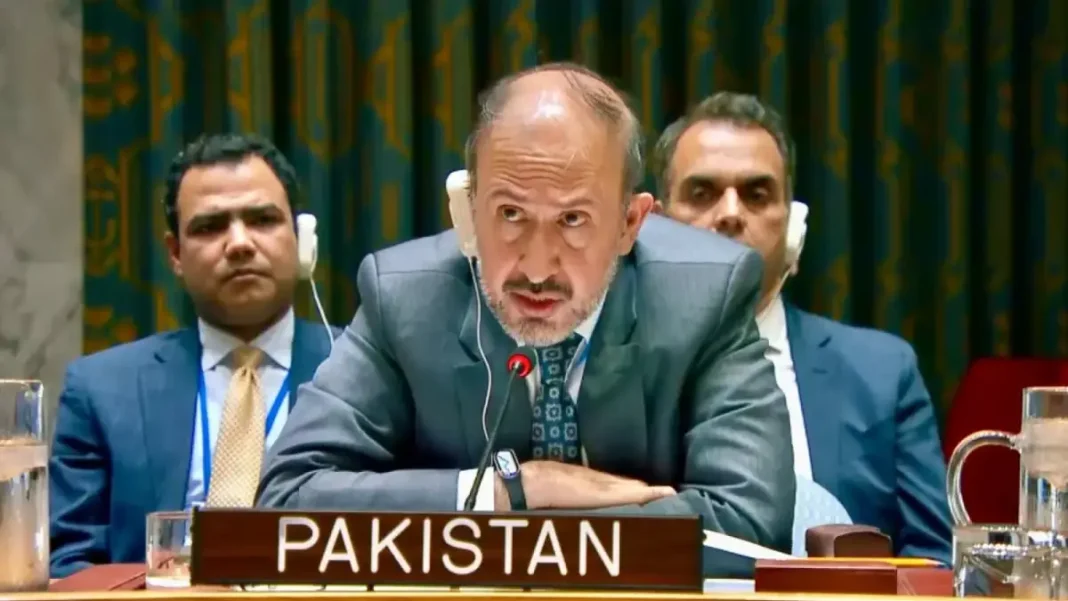
Pakistan’s Permanent Representative to the UN, Ambassador Syed Haider Shah, told the council that Pakistan condemned Houthi attacks on Saudi Arabia in the strongest terms and stood in full solidarity with the Saudi leadership, government and people.
“We demand an immediate and unconditional cessation of these reprehensible Houthi attacks,” he said.
The resolution extends the targeted asset freeze and travel ban until November 14, 2027. It also renews the mandate of the Panel of Experts that monitors the sanctions until December 15, 2027.
UNSC Yemen sanctions target drone and missile parts
The measures aim to cut off the Houthis’ access to components and chemicals used to build drones and missiles. The council asked its members to decide by January 11 what steps to take to stop the group from acquiring listed items, based on a list the expert panel will prepare.
UN monitors have found that the Houthis keep their arsenal going through smuggling and the diversion of civilian-use equipment. The group has grown less dependent on outside supplies as it builds weapons from commercially available parts.
The resolution also asks the panel to look at the money the Houthis raise through their control of key parts of Yemen’s economy. The council demanded that the Houthis halt their military offensive, stop attacks on Saudi Arabia and end threats to commercial shipping. It reaffirmed the arms embargo imposed under Resolution 2216 in April 2015, which has no expiry date.
Arbitrary detention of UN, diplomatic and humanitarian staff by the Houthis could lead to further sanctions. It followed the death in Houthi custody of Mohammad El-Shami, a Yemeni UN Human Rights Office employee detained since June 6, 2024.
What Pakistan asked for at the UN
Ambassador Shah said accountability for people and groups that threaten Yemen’s peace was essential for lasting peace. He called for “an inclusive political process that is Yemeni-owned and Yemeni-led” to advance peace and stability.
Pakistan backed stronger international action, but stressed the conflict needed a political settlement respecting Yemen’s sovereignty, independence, unity and territorial integrity. On the sanctions, Pakistan said the Panel of Experts must work strictly within the Security Council’s mandate, with professionalism, impartiality and consistency. “Such an approach is necessary to strengthen the credibility and effectiveness of the panel’s work,” he said.
Why the resolution was hard to agree
The resolution passed by consensus, but the talks behind it were difficult. Britain had sought to restore language describing the Houthis as a terrorist group, a designation used in previous sanctions resolutions since 2022. London dropped the effort after Russia objected that it could undermine political negotiations.
China, backed by Russia, objected to the proposed list of dual-use items and to the wider mandate for the expert panel. Yemen’s ambassador, Abdullah Al-Saadi, welcomed the condemnation but regretted that the council “was not able to agree on naming things with their names”.
Attacks on Saudi oil sites continue
The Houthis have fired ballistic missiles and drones at Saudi airports, ports and oil installations in recent weeks. On Thursday, the group said it had attacked a pumping station on the Saudi East-West oil pipeline, an oil facility in Yanbu and an Aramco building in Riyadh.
The Saudi-led military coalition said on Thursday that it had intercepted and destroyed two drones, one in the Riyadh region and another in the Eastern Province. The Houthis’ military spokesperson denied targeting Makkah with two ballistic missiles that Saudi civil defence said had been intercepted on Wednesday.
The pipeline matters because the conflict has disrupted oil flows through the Strait of Hormuz. Riyadh has rerouted about 4 million barrels a day of crude through it to Yanbu, equal to about 4 per cent of global supply. The strait has already pushed oil prices up as tanker attacks disrupted shipping. The escalation has also threatened the Bab el-Mandeb Strait, the route linking the Red Sea and the Gulf of Aden.
In October, Pakistan condemned a Houthi attack on a power station in Madinah. A funeral was held in Sanaa for 44 people killed in an alleged Saudi strike. The Saudi-Pakistan defence relationship has also deepened this year, including a Makkah defence alliance meeting in Islamabad.
The Houthis seized Sanaa in 2014, prompting Saudi Arabia to intervene the following year. A UN-brokered truce in 2022 largely froze the conflict, but hostilities resumed earlier this year. Members must agree by January 11 on measures to block the listed items, and the sanctions run until November 14, 2027.
Frequently asked questions
What did the UN Security Council decide on Yemen?
It renewed targeted sanctions by consensus, extending the asset freeze and travel ban on people threatening peace in Yemen until November 14, 2027, and the expert panel’s mandate until December 15, 2027.
What did Pakistan say at the Security Council?
Ambassador Syed Haider Shah condemned Houthi attacks on Saudi Arabia in the strongest terms, voiced full solidarity with the kingdom and demanded an immediate and unconditional end to the attacks.
What do the sanctions restrict?
They restrict the Houthis’ access to components and chemicals used to make drones and missiles, and ask the expert panel to examine how the group funds itself through Yemen’s economy.
Why did the Houthi attacks escalate?
The Houthis have fired ballistic missiles and drones at Saudi airports, ports and oil installations in recent weeks, and said on Thursday they had attacked a pipeline pumping station, a Yanbu oil facility and an Aramco building in Riyadh.