Pakistan Population Growth Declared National Emergency
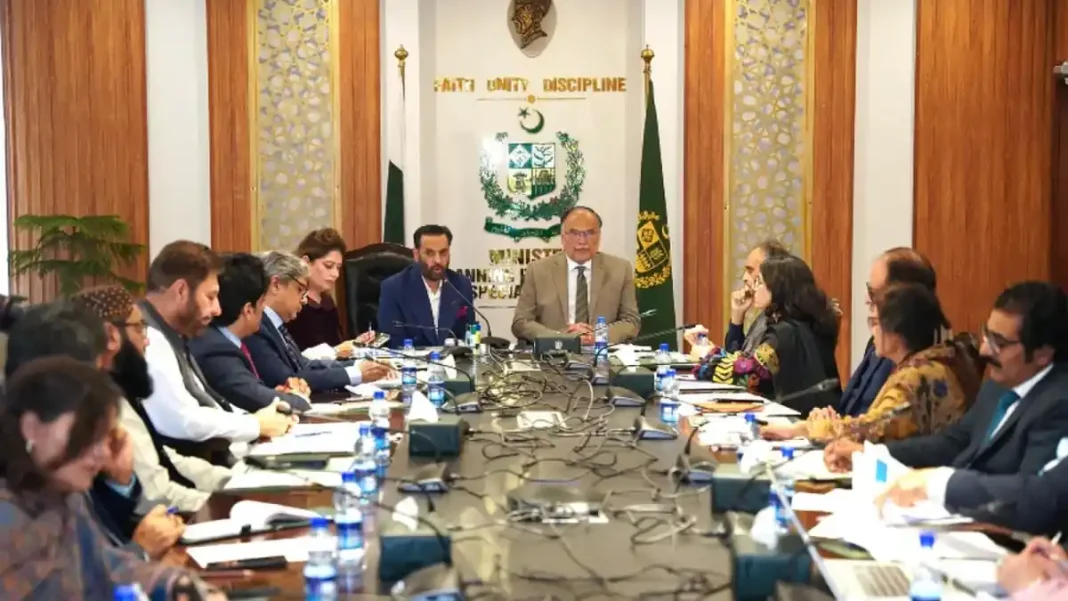
Pakistan population growth is now a national emergency, the first meeting of the National Population Council’s Executive Committee agreed on Thursday. The committee said the rapid rise in numbers needs urgent and coordinated action across the country.
The meeting took place at the Planning Commission in Islamabad. Planning and Development Minister Ahsan Iqbal and Health Minister Mustafa Kamal chaired it together. Federal ministers and secretaries joined them, along with provincial and regional ministers and senior officials from all four provinces, Azad Kashmir and Gilgit-Baltistan.
Iqbal told the meeting that the population growth rate had fallen slowly to 2.4 per cent since 1980, but had then risen again to 2.55 per cent in the 2023 census. He called the reversal a matter of serious concern.
“We have taken our foot off the brake and put it on the accelerator. This trend must be reversed,” he said.
Pakistan population growth and the economy
Iqbal said population figures were not just statistics. He said they were directly linked to Pakistan’s future, the well-being of its children and the sustainability of national resources.
He warned that without balancing population growth with available resources, sustainable development and economic prosperity would stay out of reach. He gave a simple example. If the economy grew by 5 per cent while the population rose by 2.5 per cent, real growth per person would fall to just 2.5 per cent.
Unchecked growth, he said, would make it harder to meet rising needs for education, healthcare, jobs and basic facilities.
The meeting also looked at the way money is shared between the federation and the provinces. Iqbal pointed out that the current National Finance Commission award gives 82 per cent weight to population in resource distribution. He said that formula created a contradiction, since it could reward population growth.
He called for linking the NFC award to development and sustainability indicators. Provinces that kept population growth in balance, he said, should gain from the change.
What the council decided
The committee considered the draft National Health and Population Policy and the National Population Stabilisation Programme, both presented by the health ministry.
Provinces and regions were asked to set up their own population councils and executive committees. They were also asked to prepare costed implementation plans in line with the programme.
The meeting further asked the provinces to link missing data streams with the Contraceptive Logistics Management Information System. The aim is a full picture of the country’s contraceptive supply chain.
The decisions follow a warning from the Senate last month. A Senate resolution warned that Pakistan’s population could reach 390 million by 2050 if growth is not checked. The council’s first meeting now turns that warning into a work plan, with the federal and provincial governments asked to act together.
Birth spacing backed by scholars
The same week, religious scholars backed birth spacing as a health measure. Scholars endorsed birth spacing to protect the health of mothers and children at a consultation in Islamabad organised by the Population Council with the United Nations Population Fund.
At that dialogue, Dr Ali Mohammad Mir, country director of the Population Council Pakistan, said religious leaders had a key role in maternal and child health.
“Every 37 minutes, a mother loses her life in Pakistan. Religious scholars can play a transformative role in guiding families and communities towards informed and responsible decisions,” he said.
Ruet-i-Hilal Central Committee Chairman Maulana Abdul Khabeer Azad and Council of Islamic Ideology Chairman Allama Raghib Hussain Naeemi also took part. Both said protecting mothers and children was fully in line with Islamic teachings.
The council meeting and the scholars’ dialogue point in the same direction. The government wants slower, planned growth, and it wants religious leaders to help carry the message to families.
The debate over new provinces and the NFC award runs alongside this work. Interior Minister Mohsin Naqvi has proposed a referendum on creating new administrative units, and the way resources are shared will sit at the centre of that debate too.
For now, the population council has set the task. Provinces must name their councils, cost their plans and fix their data. The next meeting will show whether the emergency label turns into action.
Frequently asked questions
Why is population growth called a national emergency?
The National Population Council’s Executive Committee agreed the rapid rise in numbers needs urgent and coordinated action. The growth rate rose to 2.55 per cent in the 2023 census after falling to 2.4 per cent since 1980.
What did Ahsan Iqbal propose on the NFC award?
He said the award’s 82 per cent weight for population could reward growth, and called for linking it to development and sustainability indicators instead.
What happens next?
Provinces and regions must notify their population councils and executive committees, prepare costed implementation plans and link their data to the contraceptive supply system.
What did religious scholars say about birth spacing?
At a Population Council dialogue in Islamabad, scholars endorsed birth spacing as a health measure that protects mothers and children, in line with Islamic teachings.