What if one of the healthiest foods in your kitchen is also one of the smallest? The health benefits of seeds are easy to miss, because seeds look plain and taste mild. Yet each tiny seed holds healthy fats, fibre, protein and minerals in a very small package.
Seeds are simple to add to meals you already eat. You can sprinkle them on salads, stir them into yoghurt, or blend them into smoothies. And because they are so small, they fit into almost any dish without changing it much.
Why the Health Benefits of Seeds Are Easy to Miss
Most people think of seeds as a garnish, not as real food. In fact, nature designed each seed to grow a whole new plant. So it carries a dense store of nutrients inside. That is why dietitians call seeds good sources of plant-based healthy fats, fibre and minerals.
Seeds also bring variety to a healthy diet. Each type offers a different mix of nutrients, so eating more than one kind gives your body a wider range. For example, some seeds are rich in omega-3 fats, while others bring magnesium, zinc or vitamin E.
There is one honest catch, though. Seeds are calorie-dense, so a little goes a long way. A sprinkle here and there adds nutrition without adding too much energy to your day.
Flaxseed: Where the Health Benefits of Seeds Begin
Flaxseed, also called linseed, is one of the best-known seeds for good reason. It is loaded with fibre, protein and potassium, and it is also a great source of lignans. Lignans are plant compounds with antioxidant properties, and flaxseed holds far more of them than most other plant foods.
Flaxseed is also rich in alpha-linolenic acid, or ALA, a plant-based omega-3 fat. Your body can turn some ALA into the omega-3 fats in oily fish, but that change is slow. So flaxseed is a useful extra source, not a full replacement for fish.
There is one important detail, though. Whole flaxseeds have a hard shell, and your body has a hard time breaking it down. As a result, whole seeds can pass through without giving up their nutrients. Ground flaxseed is the better choice, because grinding breaks the shell open and lets your body reach what is inside.
Chia Seeds: Tiny Seeds That Turn Into a Gel
Chia seeds look dry and plain in the packet, but add water and they change completely. They absorb up to ten times their weight in water and form a soft gel around each seed. That gel is why chia works so well in puddings, and why it can help you feel full after a meal.
Like flaxseed, chia is an excellent plant source of ALA omega-3 fats. It is also rich in fibre, and it holds all nine essential amino acids, which makes it a complete protein. That is rare for a plant food. It is one reason chia is so popular with people who eat less meat.
Chia seeds are also packed with antioxidants, which help protect your cells from damage. They are very high in fibre, so start with a small amount and drink enough water. Too much fibre at once can cause bloating, so build up slowly.
Pumpkin Seeds: Magnesium, Zinc and a Satisfying Crunch
Pumpkin seeds, also known as pepitas, are the green seeds inside a pumpkin. They are a great source of minerals, and they stand out for two in particular: magnesium and zinc. Magnesium supports muscles, nerves and steady energy, while zinc supports the immune system. You can read more about low magnesium in our guide to magnesium deficiency symptoms.
Pumpkin seeds also bring plant protein, healthy fats and antioxidants to the table. Studies have linked diets rich in pumpkin seeds with lower LDL cholesterol. Their mix of magnesium, zinc and fatty acids also supports healthy blood pressure. For more ideas, see our guide to foods that lower blood pressure.
They also contain tryptophan, an amino acid that helps you fall asleep and stay asleep. Zinc and magnesium help here too, so pumpkin seeds may support better sleep. You can snack on them roasted, or scatter them over salads and soups for crunch. Our full guide to pumpkin seeds covers them in more depth.
Sunflower Seeds: Vitamin E in a Small Shell
Sunflower seeds are a good source of vitamin E and several minerals. Vitamin E is an antioxidant, which means it helps protect your cells from damage by free radicals. Free radicals are unstable molecules that can raise the risk of long-term health problems.
Sunflower seeds also bring B vitamins, selenium and healthy unsaturated fats. Together, these nutrients support the immune system and help your body fight everyday wear and tear. They are also an easy snack, because you can buy them shelled or in the shell.
One tip is worth knowing. Choose unsalted or lightly salted seeds when you can, because salted snacks can quietly push your sodium intake up. Too much sodium can raise blood pressure, so the plain kind is the smarter pick.
Sesame Seeds: Big Flavour — and One Important Warning
Sesame seeds add a warm, nutty flavour to breads, salads and stir-fries. They bring minerals and fibre, and they are high in selenium. Selenium is an antioxidant that may lower the risk of long-term disease. You will also find sesame as tahini, the paste that gives hummus its creamy texture.
But sesame also needs a clear warning. Sesame is now one of the nine major food allergens in the United States. The FASTER Act named it the ninth major allergen in 2021, and the labelling rule took effect on January 1, 2023. So food labels must now list sesame when it is an ingredient.
If you have a seed allergy, read labels with care and ask about ingredients when you eat out. And if you take medication or have a known allergy, talk to your doctor first. Ask before you add new seeds to your diet.
Hemp Seeds: A Complete Protein in Plant Form
Hemp seeds, also called hemp hearts, are soft, nutty and easy to eat. They have the most protein of all the seeds, and they are a complete protein. That means they hold all nine essential amino acids your body cannot make on its own.
Essential amino acids matter because your body needs them for a healthy metabolism, immune system and brain function. You can only get them through food, so a plant source that holds all nine is a useful find.
Hemp seeds are also rich in vitamin E and potassium, and they bring healthy omega-6 and omega-3 fats. Sprinkle them on cereal, yoghurt or salad, or stir them into rice and vegetables for extra texture.
Fenugreek Seeds: A Spice Seed With a Long History
Fenugreek seeds are different from the rest, because cooks use them as a spice as much as a food. They are native to the Mediterranean region, western Asia and Europe. They appear in many Indian, Middle Eastern and North African dishes. Their taste is slightly bitter, with a hint of maple sweetness.
Fenugreek seeds hold fibre, protein and plant compounds, and people have used them in traditional diets for centuries. Some small studies have looked at fenugreek and blood sugar. But there is not yet enough good research to prove its medicinal value. So enjoy it as a flavourful food, not as a treatment.
Add the seeds to curries, lentil dishes and spice blends. Or soak them before cooking to soften their bite. Soaked fenugreek seeds are a popular way to enjoy them, and cooking also takes away some of the bitterness. That way, the flavour blends in gently.
How to Enjoy the Health Benefits of Seeds Every Day
You do not need a new diet to enjoy seeds. Start with one kind you like, and add it to a meal you already make. For example, stir ground flaxseed into porridge, scatter pumpkin seeds on a salad, or top your yoghurt with chia.
Mixing seeds is another easy step. A small mix of sunflower, sesame and hemp seeds adds crunch to salads, soups and rice dishes. And because each seed brings different nutrients, a mix gives you more variety in one bite.
Store your seeds well, too. Keep them in a sealed container in a cool, dry place, and use ground flaxseed soon after grinding. Whole seeds keep longer than ground ones, so grind small amounts at a time.
The Health Benefits of Seeds Are Worth a Small Start
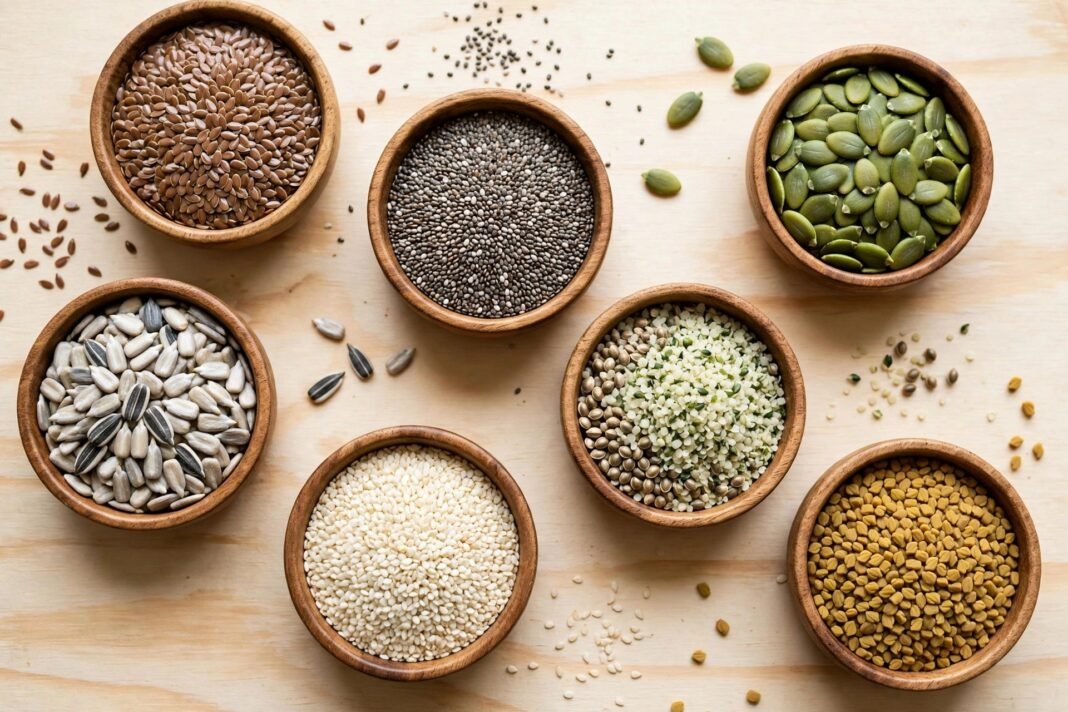
Seven small seeds, seven different gifts. Flaxseed brings fibre and lignans, chia brings its gel and omega-3 fats, and pumpkin seeds bring magnesium and zinc. Sunflower seeds add vitamin E, sesame adds flavour, hemp adds complete protein, and fenugreek adds spice and tradition.
You do not have to eat them all at once. Pick one seed, try it this week, and see how it fits your meals. Which one will you reach for first?
This article is for general information only. It is not medical advice, and it does not replace the advice of a healthcare professional. If you have a health condition, a seed allergy, or you take medication, please talk to your doctor first.