
Step outside on a cold morning, take one deep breath, and your chest can tighten within seconds. Cold air breathing problems are common in winter, and they can catch out even people with healthy lungs. A cough starts, your breath feels short, and the cold air seems to bite with every breath.
There is a clear reason for this. Your lungs like air that is warm and slightly moist. Winter air is cold and dry, so your airways have to work much harder. As a result, they can narrow, make extra mucus, and leave you coughing or wheezing.
Why Cold Air Breathing Problems Start in Winter
Your nose is your body’s air heater. When you breathe in through your nose, it warms the air and adds moisture before the air reaches your lungs. In cold weather, though, the air is so cold and dry that your nose cannot keep up.
As a result, cold, dry air reaches the airways almost unchanged. It irritates the lining of the airways and can cause swelling. That irritation is the first step toward coughing, wheezing, and a tight chest.
Cold air also dries the airways out. Health experts now think dry air, rather than cold alone, is the main trigger for airways narrowing during exercise. Because cold air holds less moisture than warm air, breathing it in can dehydrate the air passages and make them squeeze tighter.
What Cold Air Does Inside Your Airways
Cold air affects your airways in three main ways. First, it irritates the lining, which can swell and narrow the passage for air. Second, the muscles around the airways can tighten, which squeezes them further. Third, the airways may make more mucus, which adds to the blockage.
Together, these changes make each breath harder work. You may notice a dry cough, a whistle when you breathe out, or a feeling that you cannot get a full breath in. For many people, these signs fade once they are back indoors and warm.
In some people, though, the signs last longer. If cold air keeps making you cough or wheeze, it may be a sign that your airways are more sensitive than most. It is worth paying attention to that pattern, because it can point to a lung condition that needs care.
Who Feels Cold Air Breathing Problems the Most
Anyone can feel the bite of cold air, but some people feel it much more. People with asthma often notice their symptoms flare up in winter. The same is true for people with COPD, a long-term lung condition that narrows the airways.
In a survey by Asthma + Lung UK, seven in ten people with lung conditions said cold air triggered their symptoms. That is a large share, and it shows how common this problem is. Older adults can also feel it more, because lung function changes with age.
Children can feel it too. A child who coughs while playing outside in winter may be reacting to the cold air itself. If that cough keeps coming back, it is worth a chat with your doctor. You can also read our guide to why kids get throat and chest infections in autumn.
Asthma and Cold Air: Why Winter Is Harder
Asthma means the breathing tubes are swollen and sensitive. Cold air is one of the most common triggers for asthma, along with dust, smoke, and infections. When cold air hits sensitive airways, they can narrow fast.
The usual signs are coughing, wheezing, shortness of breath, and a tight chest. These can appear within minutes of stepping outside. These are the classic signs of cold air breathing problems, and for some people they can build into a serious flare-up.
Health guidance advises people with asthma to keep taking their preventer inhaler as prescribed, even when they feel well. It also advises carrying a reliever inhaler at all times in winter. A written asthma action plan helps too, because it sets out what to do when symptoms start.
The Winter Cough That Is Not a Cold
Not every winter cough comes from a cold. Cold air breathing problems can look like a cold, but the cause is different. This kind of cough often starts outside and eases once you are warm indoors.
Still, colds and flu do spread more in winter, and they can make breathing harder as well. If you want to lower your chances of catching one, our guide to how to avoid getting sick this autumn covers the basics.
So how can you tell the two apart? A cold usually brings a blocked nose, a sore throat, or a fever as well. A cold-air cough, by contrast, comes on with the cold air and fades when you warm up. If you are unsure, or if a cough lasts for weeks, talk to your doctor.
Exercise in Cold Air: Why Breathing Gets Harder
Exercise makes you breathe faster and deeper, often through your mouth. That means more cold, dry air reaches your airways at once. As a result, running or cycling in winter can trigger coughing, wheezing, or chest tightness.
This has a medical name: exercise-induced bronchoconstriction. It means the airways narrow during or soon after exercise. It can affect people with asthma, but it can also affect people who have never had asthma before.
Warming up slowly helps. Start gently for the first few minutes, so your airways adjust to the cold air bit by bit. If you often cough after cold-weather exercise, talk to your doctor about it.
A Scarf Is Your Simplest Defence
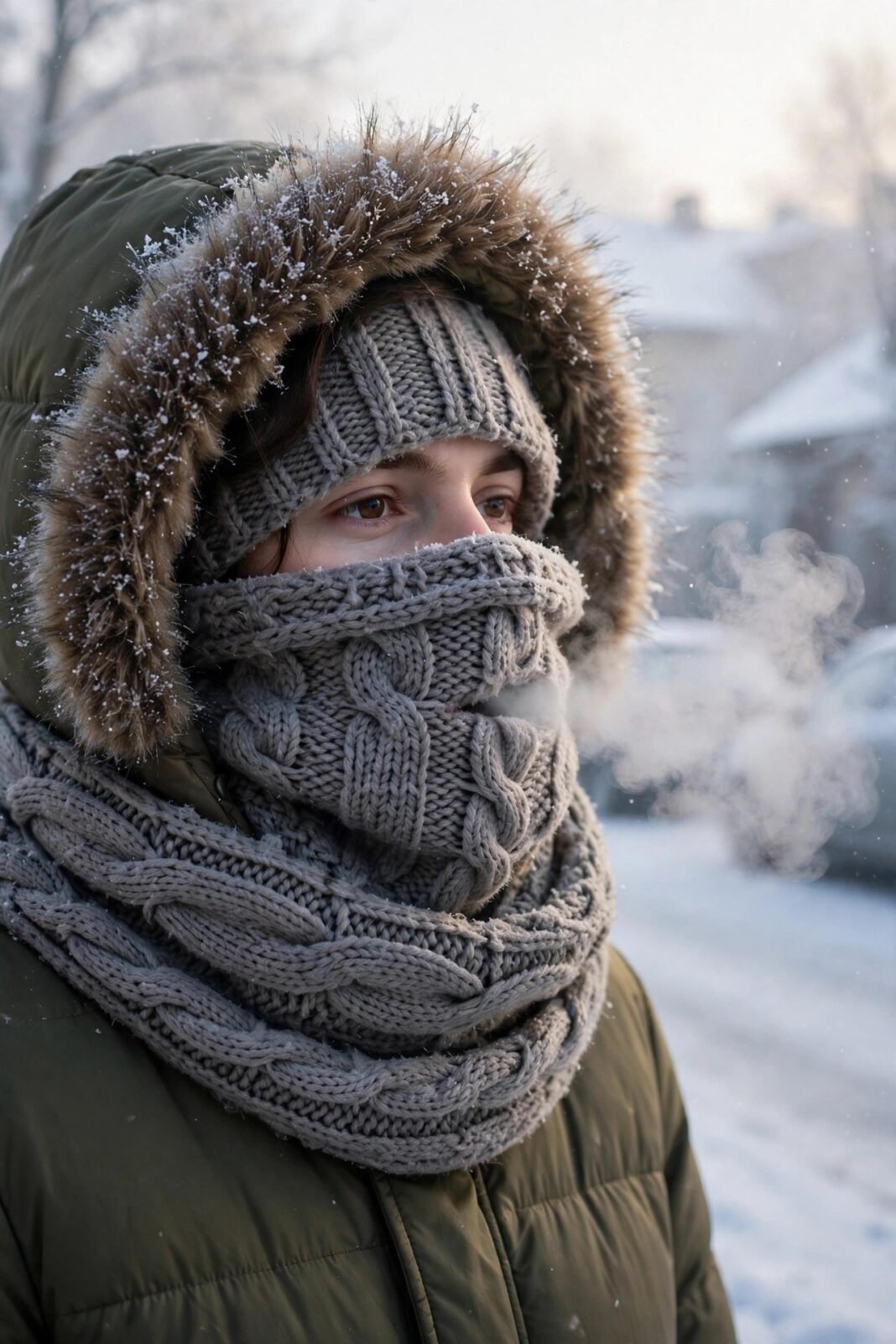
One of the easiest ways to protect your lungs is also the cheapest. Wrap a scarf loosely around your nose and mouth before you step outside. The scarf warms and moistens the air as you breathe through it, so the air reaches your lungs in better shape.
Health experts describe a scarf as a simple heat exchanger. It traps warmth from your breath and passes it to the cold air coming in. A face mask or a snood can work in the same way.
Breathe in through your nose when you can, and out through your mouth. Your nose warms the air far better than your mouth does. Together, a scarf and nose breathing take much of the shock out of a cold morning.
Small Habits That Protect Your Lungs in Winter
A few small habits can make winter easier on your lungs. Check the weather before you go out, and plan shorter trips on the coldest days. Dress warmly, with a hat and gloves as well as a scarf, because keeping your whole body warm helps your breathing too.
Try not to rush from a warm room straight into freezing air. Give your body a minute to adjust at the door. If you exercise outdoors, start slowly and build up, so your airways warm up with you.
Avoid smoke when you can. Cigarette smoke and wood smoke both irritate the airways, and cold air makes that irritation worse. If you smoke, winter is a good time to think about stopping, and your doctor can point you to support.
Cold Air Breathing Problems at Home
Your home can affect your breathing in winter too. Cold rooms, damp walls, and poor ventilation all add to the strain on your lungs. Mould grows easily in damp homes, and its spores can trigger coughing and wheezing.
Keep your home warm and dry where you can. Open windows briefly each day to let damp air out, even when it is cold outside. Wipe away condensation from windows, and fix leaks that let damp in.
Dust and pet hair also build up when windows stay shut. Regular cleaning and vacuuming help keep indoor air clearer. If someone in your home has asthma, these small steps matter even more. Allergies can add to the strain too, so see our guide to fall allergies and their symptoms.
When Cold Air Breathing Problems Need a Doctor
Most cold air breathing problems are mild and pass quickly. But some signs mean it is time to talk to your doctor. If cold air often leaves you breathless, wheezing, or coughing for a long time, get it checked.
The same applies if your symptoms are getting worse, or if they stop you doing everyday things. A doctor can check whether asthma or another lung condition is behind the problem. Finding out early makes it easier to manage.
Winter does not have to mean months of struggling for breath. With a scarf, a slower start, and a warmer home, many people breathe much more easily. Which of these habits will you try first?
This article is for general information only. It is not medical advice, and it does not replace the advice of a healthcare professional. If you have a health condition or you take medication, please talk to your doctor first.