KSE-100 Sheds 450 Points as Early Rally Fizzles
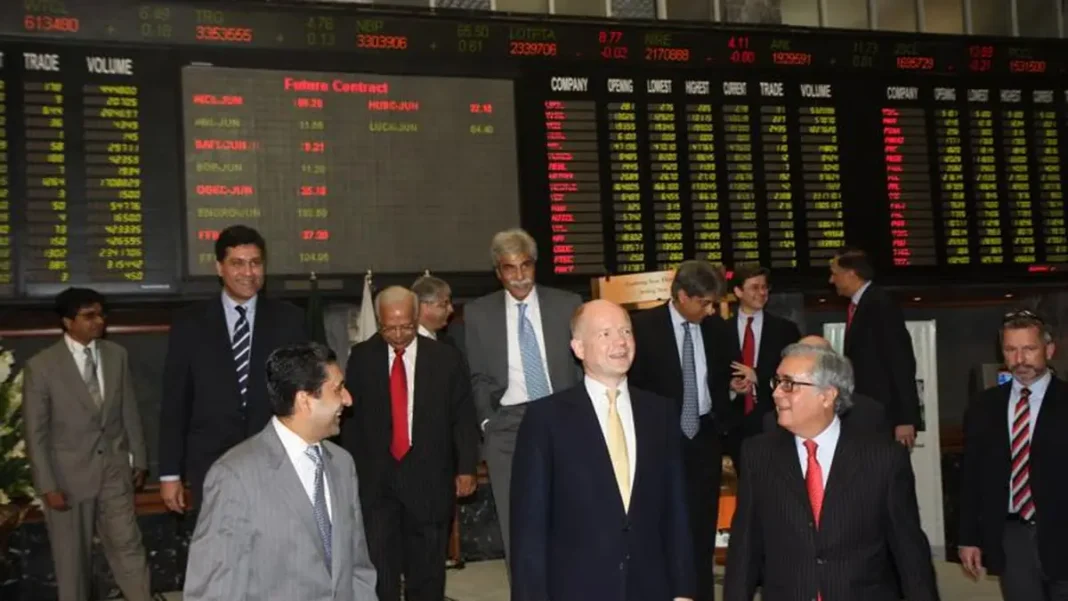
The Pakistan Stock Exchange gave up its early gains on Tuesday as the KSE-100 sheds 450 points by midday, after opening 1,154 points higher. Selling pressure dented buying interest across major sectors and pulled the benchmark index into negative territory.
The index gained 1,154.31 points, or 0.65 per cent, to reach 179,337.26 at 9:34am. But the momentum faded as the session went on, and by around 12:59pm the benchmark was trading down 458.63 points, or 0.18 per cent.
During the session the index touched an intraday high of 179,450.96 and a low of 177,876.50. Traded volume stood at 79.75 million shares, while the traded value amounted to Rs6.78 billion.
Early buying was seen in automobile assemblers, cement, commercial banks, refineries, fertiliser, oil and gas exploration companies, and oil marketing companies. Investors then turned cautious as the buying failed to hold, and the index gave back its early gains.
KSE-100 sheds 450 points: the SBP warning behind the fall
The cautious mood was linked in part to a warning from the State Bank of Pakistan a day earlier about the risk of premature deindustrialisation. The warning dampened investor confidence, according to the report.
In its Annual Report on the State of Pakistan’s Economy for FY2025, the central bank warned that Pakistan faces the risk of premature deindustrialisation. Decades of stagnating industrial value addition, falling productive investment and a shift towards low-value services threaten the country’s long-term growth prospects, the report said.
The warning matters for the market because the stock exchange is heavily weighted towards banks, cement, fertiliser and energy. If industry is losing ground, the earnings outlook for those sectors weakens, and investors pull back.
Oil prices fall on supply hopes
International oil prices also fell on Tuesday as expectations of a supply surplus, driven by recovering Middle Eastern exports, outweighed concerns over continued attacks on tankers in the region and wider geopolitical tensions.
Lower oil prices usually help Pakistan, which imports most of its fuel. But they also weigh on the earnings of local oil and gas exploration companies, which are among the largest stocks on the exchange. That mixed effect added to the cautious tone in the market.
A familiar pattern at the exchange
The day followed a pattern seen only a day earlier. The KSE-100 closed 309 points higher on Monday after a rally fizzled, which means the market has now given back strong openings on two straight sessions. The index is still trading near record territory, but the repeated failure to hold gains suggests that buyers are not yet willing to chase prices higher.
The wider economy gives investors reasons for both hope and caution. Pakistan’s government debt has reached Rs342,000 per person, which limits how much the state can spend to support growth. At the same time, the rupee has been gaining against the euro and is nearing 300, and gold has fallen Rs2,000 a tola for a fourth straight session, which points to easing pressure on household savings.
For now the market is caught between those two forces. Strong openings show that money is ready to come in, but the midday selling shows that investors want more proof that the economy can grow before they commit.
Frequently asked questions
How much did the KSE-100 fall on Tuesday?
The benchmark was down 458.63 points, or 0.18 per cent, at around 12:59pm, after gaining 1,154.31 points at the open.
What was the intraday high and low?
The index touched a high of 179,450.96 and a low of 177,876.50 during the session.
How much was traded?
Traded volume stood at 79.75 million shares, with a traded value of Rs6.78 billion at the time of the report.
Why did investors turn cautious?
Buying failed to hold after the early rally, and the State Bank’s warning about premature deindustrialisation weighed on confidence.
What did the SBP warn about?
In its Annual Report on the State of Pakistan’s Economy for FY2025, the SBP warned that stagnating industrial value addition, falling productive investment and a shift to low-value services threaten long-term growth.