Women Form 82% of Microfinance Borrowers in Pakistan
Women in Pakistan received Rs236.2 billion in loans from non-bank microfinance companies during fiscal year 2026, and women now account for 81.9 per cent of their active borrowers, making women the clear majority of microfinance borrowers in Pakistan. The figures came from a briefing by the Securities and Exchange Commission of Pakistan, known as the SECP.
The microfinance borrowers in Pakistan are therefore mostly women, and the money they borrow goes largely to small businesses and household enterprises. The SECP shared the figures during a visit by David Miliband, president and chief executive of the International Rescue Committee, who addressed a seminar in Islamabad titled “Financial Literacy, Youth and Women’s Inclusion”.
Miliband said that linking social development with economic opportunity was essential for lasting economic independence. He said the International Rescue Committee would work with the SECP to widen women’s financial inclusion and to support Pakistani women who want to start businesses.
He also stressed that small business loans for women must go hand in hand with financial education. Loans alone, he said, are not enough. Women need the knowledge to make sound financial choices and to build businesses that last.
A target of 2.5 million stock market investors
SECP Chairman Dr Kabir Ahmed Sidhu said a lack of financial awareness remained a major barrier to public participation in Pakistan’s capital markets. He said the commission was taking steps to improve access to small business loans for women and had set a target of raising the number of stock market investors to 2.5 million.
Sidhu added that SECP teams were carrying out financial awareness work for young people across the country. The aim is to encourage more people to take part in financial markets and to raise the general level of financial literacy.
The two targets sit together. More women borrowing for business, and more young people learning how markets work, both point to a wider effort to bring ordinary Pakistanis into the formal financial system.
Why microfinance borrowers in Pakistan are mostly women
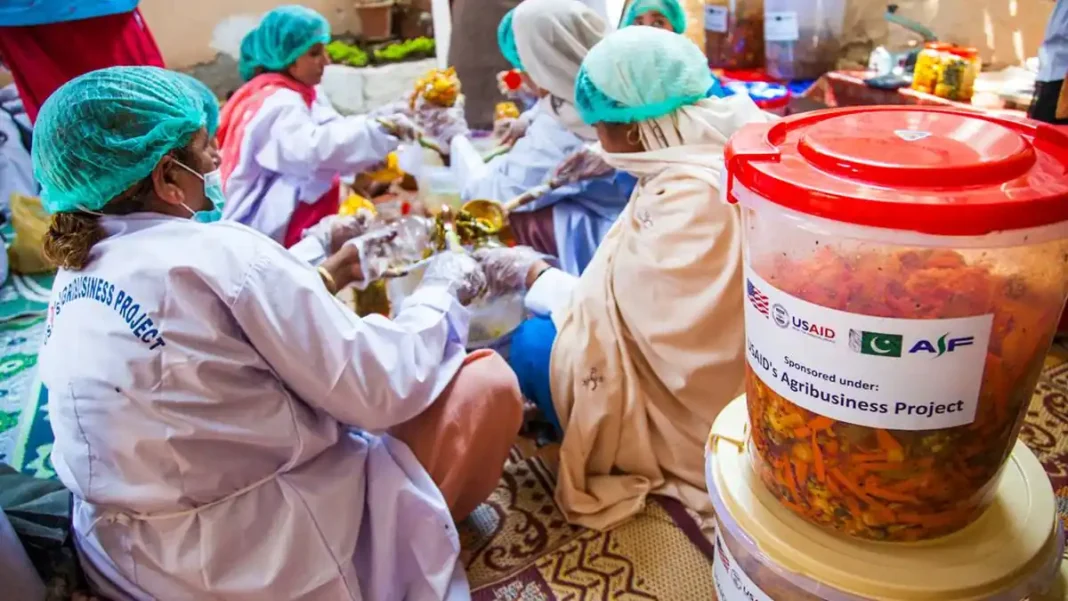
Non-bank microfinance companies lend small amounts to people who often cannot borrow from a bank. They may have no collateral, no formal credit history and no regular salary slip. For women in particular, these loans are often the first formal credit they ever receive.
The Rs236.2 billion lent in one year shows the scale of that market. Women took the large majority of it, which means microfinance in Pakistan is now, in practice, a women’s finance story. The loans typically fund small shops, tailoring work, livestock, food stalls and home-based production.
The risk is also real. A loan that is too large, or taken without understanding the terms, can trap a borrower in debt. That is why Miliband tied the loans to financial education, and why the SECP is running awareness sessions for young people. Credit works best when the borrower understands what she is signing.
Support for women is growing across the system
The SECP figures fit a wider pattern of support for women in Pakistan’s financial system. The Benazir Income Support Programme has approved financial help for unmarried women aged 45 and above, widening the safety net for women with no other income.
Banks are moving in the same direction. Faysal Bank and the State Bank are pushing financial inclusion for people with disabilities, and Mobilink Bank has acquired Apna Microfinance Bank, which brings a microfinance lender inside a larger bank.
Each step is small on its own. Together they show a financial system that is slowly opening to people it once left out, and women are at the centre of that change. For many of the women borrowing, the loans sit beside tight household budgets in an economy where government debt has reached Rs342,000 per person. The challenge now is to turn borrowing into lasting businesses, and to make sure the education keeps pace with the lending.
Frequently asked questions
How much did women borrow from microfinance companies in FY2026?
Women received Rs236.2 billion in loans from non-bank microfinance companies during fiscal year 2026.
What share of microfinance borrowers are women?
Women account for 81.9 per cent of the active borrowers of non-bank microfinance companies in Pakistan.
Who shared these figures?
The Securities and Exchange Commission of Pakistan shared the figures during a visit by David Miliband, president and chief executive of the International Rescue Committee.
What is the SECP’s target for stock market investors?
The SECP has set a target of increasing the number of stock market investors in Pakistan to 2.5 million.
Why does financial education matter alongside small loans?
Because loans work best when borrowers understand the terms. Financial education helps women make sound choices and build businesses that last, rather than falling into debt.