You lift your baby from the bath, and their cheeks feel rough. Their little legs look flaky, and their hands feel dry. If this sounds familiar, you are not doing anything wrong. Baby dry skin in winter is common, and gentle care helps.
Winter is hard on small skin. Cold air outside and warm, dry air inside pull moisture away hour after hour. A baby’s skin is thinner and more delicate than yours, so it loses water fast. As a result, dry patches can appear even when you do everything right.
This guide walks you through simple winter skin care, step by step. It also shows you how to tell simple dry skin from eczema, and when to call the doctor.
Why Baby Dry Skin in Winter Happens So Often
Cold air holds very little water, and heating dries the air inside your home. As a result, your baby’s skin loses moisture all day long.
In addition, babies move between cold and warm many times a day. Each change in temperature dries the skin a little more. That is why baby dry skin in winter often shows up on the cheeks first.
Heating makes it worse too. It creates dry air indoors, and dry air creates dry skin. So a warm house can still be hard on your baby’s skin.
Dry Skin or Eczema? How to Tell the Difference
Simple dry skin looks rough and flaky, but it does not bother your baby much. It may feel dry to touch, and it often improves with moisturiser. Eczema is different. It itches, and that itch is the key sign.
Eczema is a very common skin condition, and it affects about 1 in 5 babies and children in the UK. It usually starts in the first months of life, often between 3 and 6 months of age. In babies, it often appears on the face, scalp and body, but not usually the nappy area.
Look for patches that are red, sore and very itchy. The skin may look dry, cracked or scaly, and your baby may rub their face. If the patches weep fluid or form crusts, the skin may be infected, so call your doctor the same day.
Remember that eczema is not catching, and it often runs in families. It also tends to get better as children grow older.
The Gentle Bath Routine for Baby Dry Skin in Winter
Bath time can help dry skin, or it can make it worse. Small changes make a big difference. Keep the water lukewarm, never hot, because hot water strips the skin of its natural oils.
Keep baths short too. Less than 10 minutes is enough, because longer baths dry the skin out more. In fact, baths beat showers for dry skin, so a short bath is the best choice.
Skip bubble bath and foamy, scented soaps. They often contain detergents that strip the skin of its oils. Instead, wash with a fragrance-free cleanser, or use your moisturiser as a wash.
When the bath is done, pat your baby dry with a soft cotton towel. Do not rub, because rubbing strips more oils from the skin. Then put moisturiser on right away, while the skin is damp. That habit seals in the water from the bath.
Moisturiser: Your Best Friend in Winter
Moisturiser is the heart of winter skin care. It covers the skin with a film that holds water in. As a result, the skin stays soft for longer, even in dry heated air. So use it every day, even when the skin looks fine.
Apply it at least twice a day. Morning and bedtime work well for most families. During a flare-up, or when the skin looks dry, you can use it more often. There is no harm in using it four to six times a day when the skin needs it.
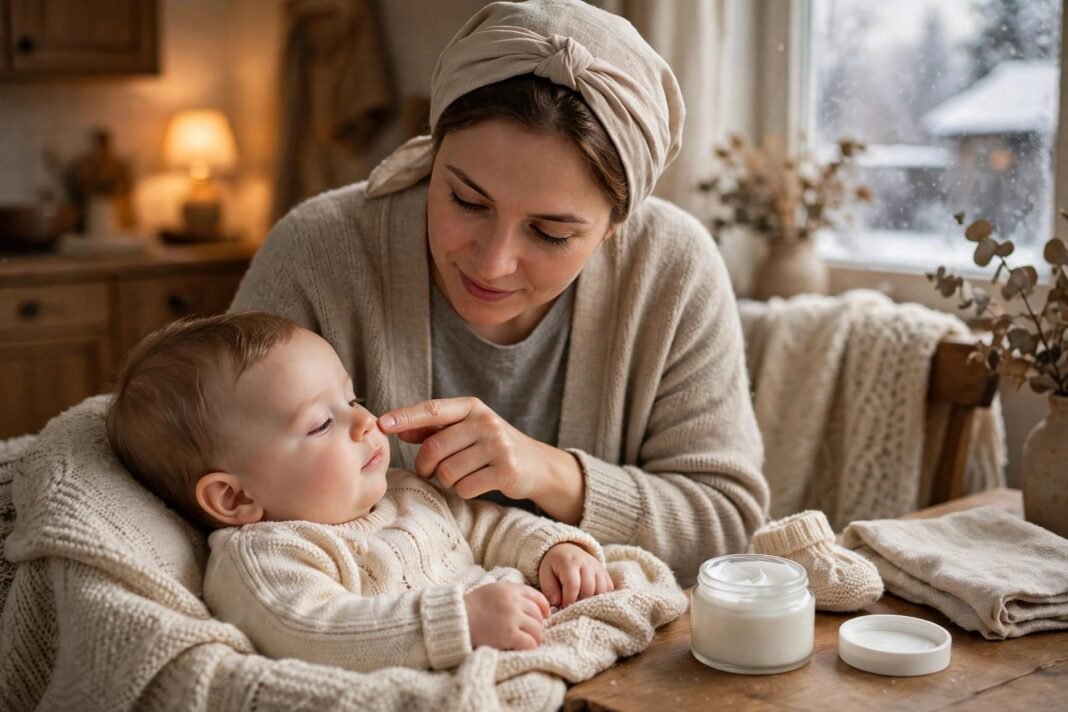
The best time is a few minutes after a bath, while the skin is still damp. Smooth it on with gentle downward strokes. Do not rub it in hard, because that can irritate the skin.
Keep going even when the skin improves. Steady daily use can lower the chance of rashes and itches developing. So make it part of your routine, like nappy changes and feeds.
Choosing the Right Moisturiser for Your Baby
Not all moisturisers are the same. They come as lotions, creams and ointments, and each one works a little differently. Lotions are thin and light. They contain more water and fewer oils, so they suit warmer months or skin that is only slightly dry.
Creams are thicker and hold more oils, so they suit dry winter skin well. Ointments hold the most oils of all, and they help very dry or irritated patches. In addition, they have no preservatives, so they rarely sting or burn.
Whatever you choose, pick one that is fragrance-free and made for sensitive skin. Avoid strong scents or dyes, because these can irritate baby skin. If one moisturiser does not suit your baby, try a different one.
One more tip: do not put your fingers into a tub of moisturiser. Use a clean spoon or pump instead. Fingers can carry germs into the tub, and that can lead to skin infections.
Soft Fabrics and Gentle Laundry
What touches your baby’s skin matters as much as what you put on it. Soft cotton clothing is a good choice, because it breathes well and does not trap heat. Wool and rough synthetic fabrics can irritate dry skin, so keep them away from direct contact with the skin.
If your baby wears wool, put a soft cotton layer underneath. Loose, comfortable clothes help too, because tight clothes can rub sore patches.
Laundry products matter as well. Choose a fragrance-free detergent for sensitive skin, and do an extra rinse, because leftover detergent can irritate the skin. Skip fabric softener and dryer sheets.
Baby Dry Skin in Winter: Protecting Little Cheeks Outdoors
Little cheeks take the hardest hit outdoors. Cold wind dries them fast, and drool makes it worse. So put a layer of moisturiser on your baby’s face before you go out. It acts as a shield against the cold air.
Cover up too. A soft hat and pram cover can keep the wind off your baby’s face. However, do not overdress your baby. Being too hot makes itching worse, so check the back of their neck. If it feels sweaty, take a layer off.
Back inside, wipe away drool gently and add a little more moisturiser if the cheeks look dry. That small routine keeps baby dry skin in winter under control.
When Eczema Flares Up in Winter
A flare-up means the eczema suddenly gets worse. The skin may turn redder, feel sore, and itch more. It may crack or bleed, and your baby may seem unsettled. Winter brings flares more often, because cold air and heated rooms dry the skin.
During a flare, moisturise more often. Four to six times a day is reasonable when the skin is dry or sore. Keep baths short and lukewarm, and keep your baby cool, because heat makes eczema more itchy.
Keep your baby’s nails short, and put soft mittens on them at night. That way, scratching does less damage. If the itch is bad, gently rub the sore area with your finger instead.
Your doctor may suggest a steroid cream for flare-ups. These creams calm the inflammation and help the skin heal. They are safe in short courses, exactly as your doctor advises.
Signs That Mean a Trip to the Doctor
Most dry skin improves with gentle care at home. However, some signs mean your baby needs a doctor. Call your doctor if the skin does not improve after a week or two of steady moisturising. Your baby may need a different treatment.
Call sooner if the skin looks infected. Signs of infected eczema include blisters, crusts, pus spots or leaking fluid. Pain, swelling or warmth are warning signs too. In addition, call if the rash suddenly gets much worse or spreads fast.
If your baby has a high temperature with worsening skin, get advice the same day. Blisters or cold sores near eczema need urgent care too. When in doubt, call. It is always better to ask than to wait.
Baby Dry Skin in Winter: A Simple Daily Routine
In the morning, smooth moisturiser over your baby’s face, hands and dry patches. Before meals, a little on the cheeks can protect the skin from food and drool.
At bath time, keep the water lukewarm and the bath under 10 minutes. Pat dry gently, then moisturise head to toe while the skin is damp. Dress your baby in soft cotton.
At night, check the skin once more and add moisturiser to dry patches. Put on soft mittens if your baby scratches. If the air feels very dry, a cool-mist humidifier can help.
Adults get dry winter skin too, and the same gentle habits help. You can read our guide to winter dry skin care for grown-ups for ideas that work for the whole family. And if itchy skin troubles you as well, our guide to skin itching and eczema in women may help.
Winter will pass, and so will the dry patches. With gentle care, your baby’s skin can stay soft and calm. What helps your baby’s skin most in winter? Share your tip in the comments.
This article is for general information only. It is not medical advice. If you are worried about your baby’s skin, please talk to your doctor, pharmacist or health visitor.