Pakistan Hepatitis Elimination Drive to Screen 70 Million
Pakistan will screen 70 million people under a national hepatitis elimination drive, with free tests and free treatment for those who test positive, Health Minister Mustafa Kamal has announced.
The minister also announced the relaunch of the Sehat Sahulat Card for journalists in Islamabad. Free treatment will be provided at 15 private hospitals under the card.
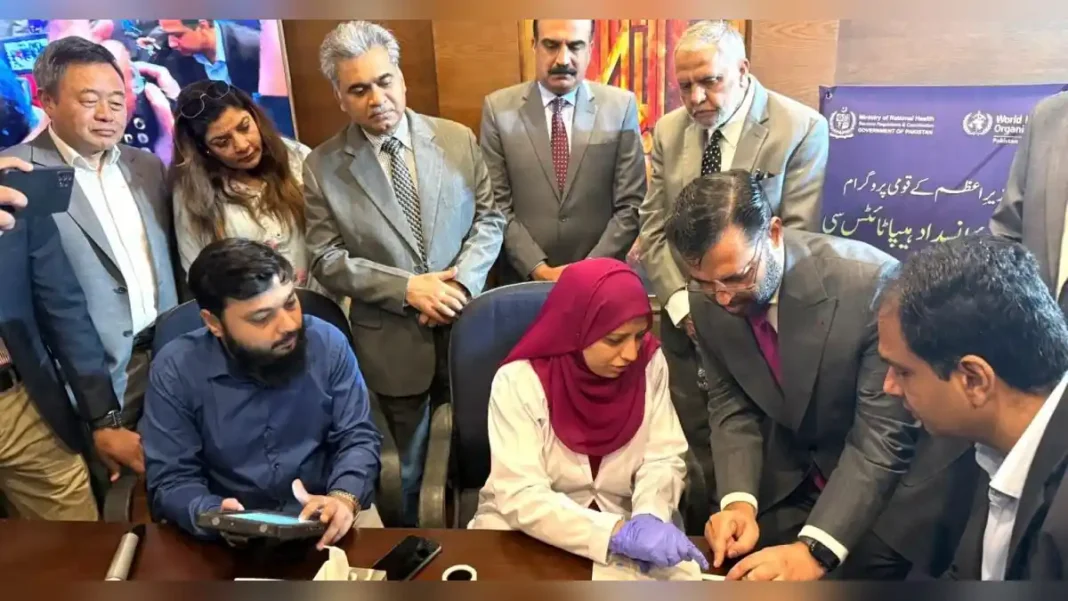
Kamal was speaking to the media at the National Press Club on Tuesday, after inaugurating a hepatitis screening camp organised in collaboration with Akbar Niazi Teaching Hospital. He said focal persons will be appointed at PIMS and Polyclinic to help journalists, and facilities at both hospitals are being improved.
The chief executive of the Sehat Sahulat Programme and representatives of the relevant institutions would visit the National Press Club on Wednesday to brief journalists on the procedure, the minister said.
Free tests and medicine under the hepatitis elimination drive
Under the national hepatitis elimination drive, the government will screen 70 million people across Pakistan and provide free treatment to those who test positive.
A test worth Rs 7,000 is being provided free of cost, Kamal said. Medicine worth Rs 68,000 will also be provided free to Hepatitis C patients across the country.
The programme has started in Islamabad, Azad Kashmir and Gilgit-Baltistan. Digital devices have been provided to operators, and an agreement has been signed with NADRA to support the rollout.
For journalists in the capital, the relaunched Sehat Sahulat Card adds a second layer of cover. The 15 private hospitals on the panel will treat cardholders free of charge, with focal persons at the two main public hospitals to guide them through the process.
Why Pakistan needs the drive
Kamal said Pakistan has the highest number of Hepatitis C patients in the world. The disease usually shows its effects after 20 years and can turn into liver cancer if it is not treated in time.
The scale of the problem is already on the official record. The health ministry told the National Assembly in October that Pakistan tops the world in Hepatitis C cases, a finding that puts the new drive in context: screening is the only way to find patients before the disease turns serious.
The government is following Egypt’s successful model for elimination, the minister said. Treatment is possible within three months if a person tests positive, which is why the drive pairs mass screening with free medicine rather than screening alone. The programme aims to eliminate hepatitis C from Pakistan by 2030.
What happens next
The screening drive will expand beyond the three regions where it has started, with NADRA’s systems used to track patients and make sure treatment reaches them. The minister did not give a date for the nationwide rollout.
The health system faces pressure on several fronts at once. An inquiry committee has been formed at PIMS after an FIA raid over alleged irregularities in the disposal of surgical waste, and antibiotic misuse is estimated to kill more than 200,000 people a year in Pakistan.
The government has also warned parents about fake vaccines after DRAP flagged counterfeit Hexaxim doses for children.
Against that background, the hepatitis drive is the government’s biggest public health push of the year. Its success will depend on whether the screening reaches 70 million people and whether those who test positive complete the three-month course of free treatment.
Frequently asked questions
How many people will be screened under the hepatitis drive?
The government will screen 70 million people across Pakistan and provide free treatment to those who test positive.
What is free under the drive?
A hepatitis test worth Rs 7,000 is free, and medicine worth Rs 68,000 is free for Hepatitis C patients.
Where has the programme started?
It has started in Islamabad, Azad Kashmir and Gilgit-Baltistan, with digital devices provided to operators and an agreement signed with NADRA.
What did the minister announce for journalists?
He announced the relaunch of the Sehat Sahulat Card for journalists in Islamabad, with free treatment at 15 private hospitals and focal persons at PIMS and Polyclinic.
Why is hepatitis such a problem in Pakistan?
Pakistan has the highest number of Hepatitis C patients in the world. The disease usually shows its effects after 20 years and can turn into liver cancer if it is not treated in time.