ICJ Myanmar Genocide Ruling Finds State Guilty
The ICJ Myanmar genocide ruling has found Myanmar guilty of genocide against the Rohingya Muslim minority, in a landmark decision that holds a state responsible for genocide for the first time.
The court in The Hague found on Thursday, November 19, that thousands of killings and widespread sexual violence by Myanmar’s security forces during the 2017 crackdown in northern Rakhine State amounted to state-sponsored genocide. The ICJ Myanmar genocide ruling was delivered by a panel of 15 judges, seven years after the case was filed by Gambia. The decision was nine votes to six, and the court said the evidence showed Myanmar’s forces had killed about 10,000 Rohingya.
“The court finds that Myanmar’s security forces killed thousands of Rohingya civilians, perpetrated widespread acts of sexual violence as well as acts of extreme violence against children and attacked fleeing Rohingya,” presiding Judge Yuji Iwasawa said as he read out the decision.
The panel found that “the Republic of the Union of Myanmar has committed genocide against the Rohingya group in Northern Rakhine State”. Myanmar’s government did not immediately respond to a request for comment.
What the court found in Rakhine
The judges found that Myanmar’s military carried out mass killings of civilians, committed widespread rape and sexual violence against Rohingya women, and burned or razed hundreds of villages during what it called clearance operations.
The military also actively spread hate speech aimed at the Rohingya population, the court said. The judges concluded that “the only reasonable inference that can explain Myanmar’s actions is an intention to destroy a substantial part of the protected group, namely the Rohingya population in Northern Rakhine state”.
Genocide requires proof of a specific intent to destroy a group, in whole or in part, which is why it has rarely been established in international courts.
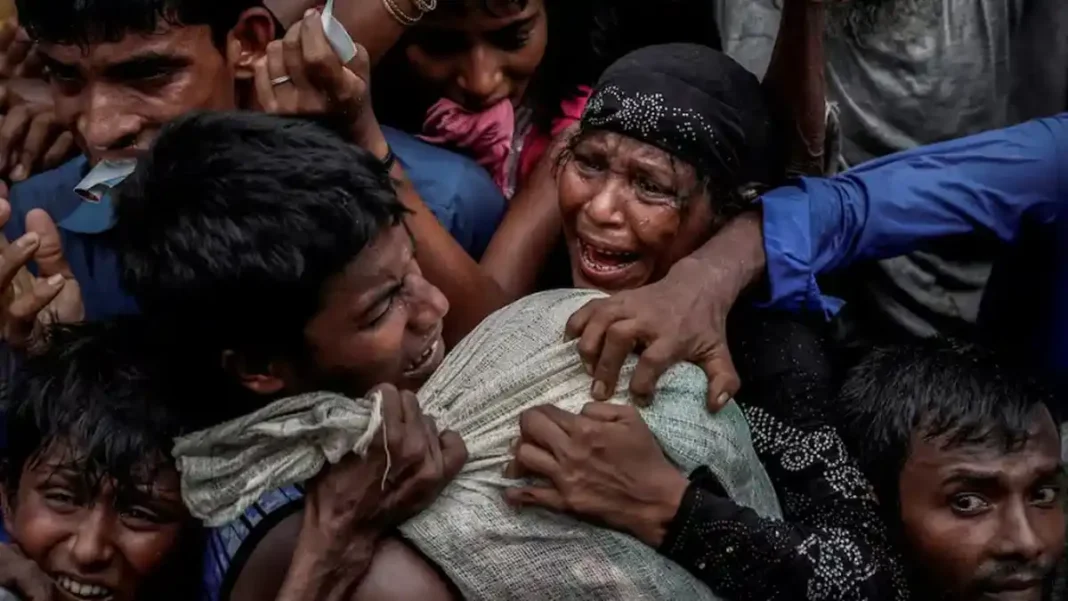
The military offensive drove at least 700,000 Muslim Rohingya from Buddhist-majority Myanmar into neighbouring Bangladesh. More than 1.2 million Rohingya refugees now live in camps in Bangladesh, according to the United Nations, most of them in the crowded settlements around Cox’s Bazar.
A first for the world court
The decision marks only the fourth time since the Nazi Holocaust that an international court has ruled the legal threshold for genocide was met. The earlier findings covered the 1994 Rwanda genocide, the 1995 Srebrenica killings in Bosnia, and atrocities by Cambodia’s Khmer Rouge in the late 1970s.
It is the first time the court has held a state, rather than individuals, responsible for genocide. The court settles disputes between states. It is separate from the International Criminal Court, which prosecutes individuals and can impose jail terms.
The ruling is final and cannot be appealed. The court said Myanmar had an obligation to compensate the Rohingya for the violations it had committed, with the amount to be decided at a later stage. Myanmar must also allow the “safe and dignified return to their place of residence and the reunification of families for the Rohingya displaced as a result of Myanmar’s wrongful acts”.
Why the ICJ Myanmar genocide ruling reaches beyond Myanmar
It is also expected to influence other genocide cases before the court, including South Africa’s 2023 case accusing Israel of genocide in Gaza. Both Israel and Myanmar deny genocide and say their forces responded lawfully to attacks by armed groups.
Feature Pakistan reported earlier this month that the ICJ Rohingya genocide ruling was set for November 19.
Violence in Rakhine has continued since 2017. Feature Pakistan also reported on a Myanmar military attack on a market in Rakhine that killed at least 33 people.
Enforcement remains the hard part
The court has very limited options to enforce its rulings, and Myanmar has shown no sign of accepting its authority over the case.
Pakistan has itself taken disputes to United Nations forums this week, telling the Security Council that India’s move to hold the Indus Waters Treaty in abeyance was unlawful.
For the Rohingya, the judgment is a formal record that what happened to them in 2017 was genocide. Whether it brings them home will depend on pressure from states and the United Nations in the months ahead.
Frequently asked questions
What did the ICJ rule about Myanmar?
The court ruled that Myanmar committed genocide against the Rohingya in Northern Rakhine State in 2017, and must pay compensation and allow the safe return of displaced Rohingya.
Who brought the case against Myanmar?
Gambia, a predominantly Muslim country, filed the case in 2019. The court delivered its decision seven years later, on November 19, 2026.
Why is this ruling historic?
It is only the fourth time since the Nazi Holocaust that an international court has found the legal threshold for genocide was met, and the first time a state has been held responsible for genocide.
Can Myanmar appeal the ruling?
No. Rulings of the International Court of Justice are final and cannot be appealed, although the court has limited power to enforce them.
How many Rohingya fled Myanmar in 2017?
At least 700,000 Rohingya fled to Bangladesh during the 2017 offensive. More than 1.2 million Rohingya refugees now live in camps in Bangladesh.