External Networks Sustain Balochistan Militancy, Study Finds
A new study argues that outside networks sustain Balochistan militancy, and that stopping the people who carry out attacks is not enough unless the networks that enable them are also broken up.
The research, published in the Journal of International Law and Human Rights in November 2026, is titled “The Role of External Forces in Exacerbating Security Challenges and Undermining Development in Balochistan”. It was carried out by Dr Hafiz Najeeb Ullah and Dr Adnan Mehr, visiting lecturers at the Department of History and Pakistan Studies at the International Islamic University Islamabad.
The researchers interviewed 16 people working in security, counterterrorism, politics, governance, development, media, border management and CPEC. From those conversations, they identified six linked ways in which outside facilitation is believed to sustain militancy: money and material help, cross-border sanctuary and movement, logistical backing, propaganda, diaspora and transnational networks, and attacks on CPEC and other strategic interests.
No single puppet-master behind Balochistan militancy
The study’s central idea is that access to resources beyond Balochistan makes militant groups tougher and harder to dismantle: outside help can keep money flowing and people moving, and help a group recover after losses.
Importantly, the researchers do not picture a foreign puppet-master directing individual attacks. They describe something looser: a scattered set of actors, each contributing a different kind of help, without any single command structure. That fragmentation, they argue, is what makes it so hard for investigators to draw a straight line from an external backer to a specific incident. A security-sector participant stressed that money, safe spaces and communication channels are what keep armed groups going.
Borders, propaganda and the CPEC factor
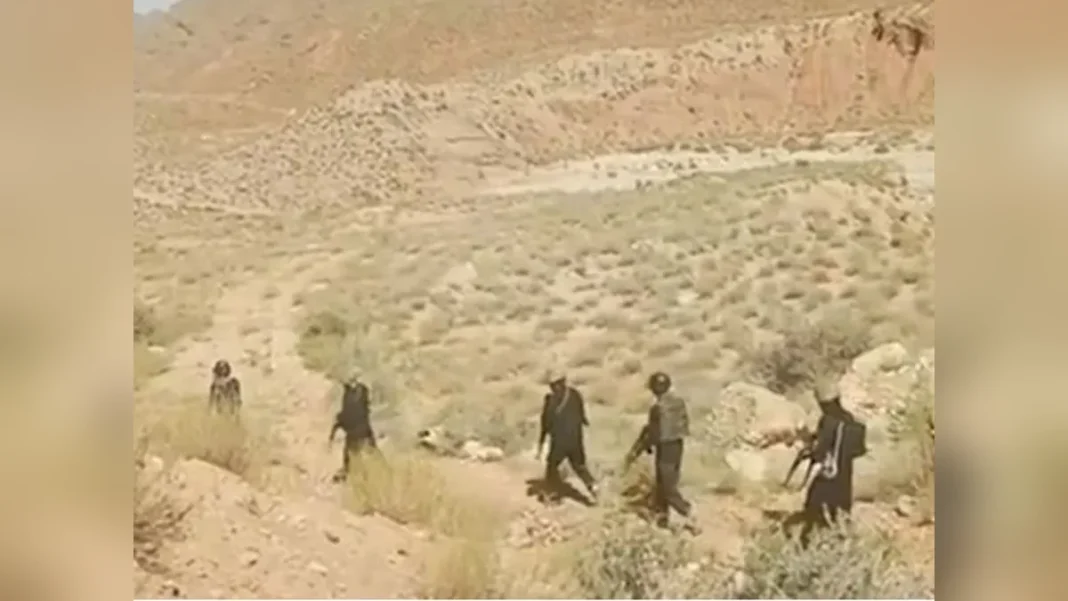
Balochistan shares long, rugged and hard-to-monitor borders with Afghanistan and Iran, where difficult terrain, informal routes and limited monitoring let criminal and armed networks move around, find refuge and stay in contact across the line.
The researchers were careful not to paint ordinary border life as suspect. Families, traders and communities on both sides have been connected for generations. The real distinction, they argue, is between that everyday movement and organised networks exploiting informal routes. They also separate formal state sponsorship from help by non-state transnational networks and from permissive conditions that let armed groups operate across borders without any neighbouring government being involved. Their answer is closer coordination with neighbours and better monitoring of illegal networks.
The study also highlights a quieter front: information. Interviewees described how social media, diaspora communications, selective images, short videos and rumours can turn a local incident into a political storm within hours, and how young people are especially exposed when official information arrives late. These narratives can win visibility for militant groups, justify violence and support recruitment. The researchers argue that silence and slow responses leave a vacuum, but they warn against assuming every critical post is foreign interference: attribution needs source tracing and evidence.
Balochistan matters far beyond its borders. It touches Afghanistan and Iran, gives Pakistan access to the Arabian Sea through Gwadar, and sits at the heart of CPEC. Interviewees said attacks on development projects can shake investor confidence, raise security costs and delay construction, while persistent insecurity restricts workers and contractors and makes investors nervous. The researchers conclude that externally facilitated violence can cost the economy far more than it costs to sustain.
Local grievances still matter, the authors say
Although the study leans heavily on external factors, it does not wave away Balochistan’s own problems. Political marginalisation, unequal distribution of resources, unemployment and uneven development remain genuine concerns. Yet the authors argue that grievances alone do not explain why organised violence persists: militant networks can seize on frustrations and use them to discredit peaceful politics. The researchers believe better governance, wider political participation and visible local benefits from development can weaken that appeal, but development spending by itself cannot dismantle the networks that supply armed groups.
The study recommends financial monitoring, stronger border coordination, intelligence cooperation, protection of strategic infrastructure and better public communication, alongside governance reforms that address legitimate grievances. But the authors are open about their limits: the study is qualitative, rests on just 16 participants, and interview perceptions cannot independently prove foreign sponsorship. Their conclusion is that neither military force nor development projects alone can resolve the crisis. Counterterrorism must break up organised violent networks, but lasting stability also depends on stronger institutions, credible governance and real economic opportunity for local communities.
The findings land against a difficult backdrop in the province. Doctors in Balochistan have been pressing for pending salaries, a missing student from Panjgur recently returned home, and Quetta has seen a JI rally against the Form-47 government. The Bannu peace jirga followed a drone incident in the neighbouring province.
Frequently asked questions
What does the Balochistan study say?
The study says outside networks sustain Balochistan militancy through funding, sanctuary, logistics, propaganda, diaspora links and attacks on strategic projects, and that stopping attackers alone is not enough.
Who carried out the study?
Dr Hafiz Najeeb Ullah and Dr Adnan Mehr, visiting lecturers at the International Islamic University Islamabad, interviewed 16 people working in security, counterterrorism, politics, governance, development, media, border management and CPEC.
Where was the study published?
It was published in the Journal of International Law and Human Rights in November 2026, under the title “The Role of External Forces in Exacerbating Security Challenges and Undermining Development in Balochistan”.
Does the study prove foreign sponsorship of attacks?
No. The authors state plainly that their study is qualitative, rests on 16 interviews, and that perceptions shared in interviews cannot independently prove foreign sponsorship.
What does the study recommend?
It recommends financial monitoring, stronger border coordination, intelligence cooperation, protection of strategic infrastructure and better public communication, alongside governance reforms that address local grievances.