Sui Gas Companies Split Plan Lands on PM’s Table
The Sui gas companies split moved a step closer on Monday, when the government finalised a plan to break up the two gas utilities into six to eight smaller firms and sent it to Prime Minister Shehbaz Sharif for clearance.
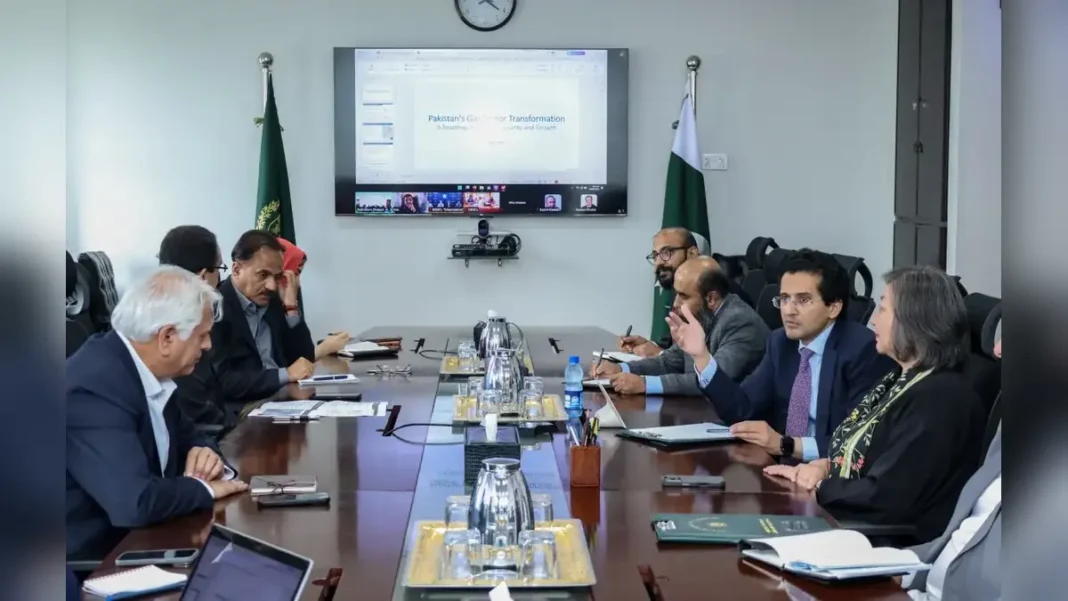
A summary has gone to the prime minister. He will decide whether the cabinet, the Council of Common Interests or parliament endorses it. The World Bank, KPMG and Wood Mackenzie gave technical support, and the International Monetary Fund is on board.
The prime minister must authorise transaction advisers, who would handle the remaining legal and regulatory work within five to six months. “We will be rolling out the transformation plan into the implementation stage by the fourth quarter of 2027,” a top official told Dawn.
What the Sui gas companies split would change
The core is the legal and operational separation of the two Sui companies’ transport and distribution work from their gas supply and marketing business, described in the summary as “the separation of molecules from pipes”.
That separation would end a conflict of interest. Sui Northern Gas Pipelines Limited (SNGPL) and Sui Southern Gas Company Limited (SSGCL) act both as network operators, obliged to give all users access, and as gas suppliers with an interest in shutting out rivals.
The Petroleum Division has proposed at least four sales entities: two competitive suppliers for businesses, and two regulated suppliers for homes. The Sui firms would free up 20 per cent of supply and customers in year one, then 10 per cent in each of the next two years. Price regulation in the competitive market would end once 60 per cent is offloaded.
Households face higher bills
Projections from the companies’ FY2025 accounts show transport and competitive supply turning a profit from the start. The regulated business serving homes would lose money. The government plans to raise gas prices gradually and cut domestic billing slabs from 12 to one. Vulnerable consumers would get direct subsidies.
In SNGPL’s case, transport and competitive supply would earn after-tax profits of Rs24 billion and Rs36 billion. The regulated arm would lose Rs158 billion. Domestic consumers pay an average of Rs1,268 per million cubic feet. The break-even price is Rs2,152, so a 69.8 per cent rise would be needed, or a subsidy of Rs150 billion.
For SSGCL, even the cheapest gas has gone to the regulated arm, yet it would still lose Rs59 billion. Its average price of Rs732 would need an 82.7 per cent rise to reach break-even at Rs1,337. The plan pairs the split with a multi-year tariff on the regulatory asset base method.
Over Rs3 trillion of circular debt moves off the books
More than Rs3 trillion in gas circular debt would move to a special purpose vehicle. Modelled on the Power Holding Company in the power sector, it would be funded through a debt-servicing surcharge on tariffs.
Energy Minister Ali Pervaiz Malik told the National Assembly that the sector’s circular debt and unpaid bills totalled Rs5.454 trillion on June 30, 2026. SNGPL would need Rs736 billion over six years to 2031-32, peaking at Rs165 billion in 2030. SSGCL would need Rs390 billion.
A reform tried before
This is not the first attempt. A PML-N led plan in 2016-17 sought four provincial distribution firms and a transmission company. KPMG and the regulator opposed it on viability grounds, and it was shelved in 2020.
The current roadmap took shape in August. Petroleum Minister Ali Pervaiz Malik and World Bank country director Bolormaa Amgaabazar reviewed the framework. Business Recorder reported at the time that it would separate the transmission, distribution and energy businesses and give OGRA a stronger role. Both companies and their shareholders oppose the unbundling.
Why it matters for Pakistan
Feature Pakistan reported in November that the provinces say they have been denied Rs1.8 trillion in oil and gas profits. The claim turns on who controls gas revenue. The provinces will have a direct say too, since the plan may need approval from the Council of Common Interests.
Petroleum dealers have warned they will shut pumps across the country in 15 days unless monthly fuel pricing returns. Gas shortages in Khyber-Pakhtunkhwa have pushed LPG prices past Rs600. Islamabad has secured a $200 million Oman credit line for PSO supplies and a long-term oil partnership with Muscat.
For households, the split cuts both ways. Competition could bring prices down for factories. Private suppliers could invest in a network that needs hundreds of billions of rupees. But the plan accepts that home consumers pay far below cost. It points to higher tariffs, a single billing slab and targeted subsidies to close the gap.
Frequently asked questions
What is the Sui gas companies split plan?
The government plans to break up SNGPL and SSGCL into six to eight smaller firms, separating their transport and distribution networks from their gas sales businesses to create a competitive gas market.
Will gas prices rise for households?
The plan points to gradual increases. Domestic consumers pay an average of Rs1,268 per million cubic feet against a break-even price of Rs2,152, and the number of billing slabs would fall from 12 to one, with direct subsidies for protected consumers.
What happens to the Rs3 trillion gas circular debt?
More than Rs3 trillion would move into a special purpose vehicle, modelled on the Power Holding Company in the power sector, and funded through a debt-servicing surcharge on consumer tariffs.
When will the new gas companies start work?
Transaction advisers would be appointed after the prime minister’s clearance, and the government aims to reach the implementation stage by the fourth quarter of 2027.
Why are the Sui companies being split?
The plan says the split ends a conflict of interest, since the two firms act both as network operators that must give rivals access and as suppliers with an interest in shutting them out. Competition is meant to bring investment, efficiency and fairer prices.