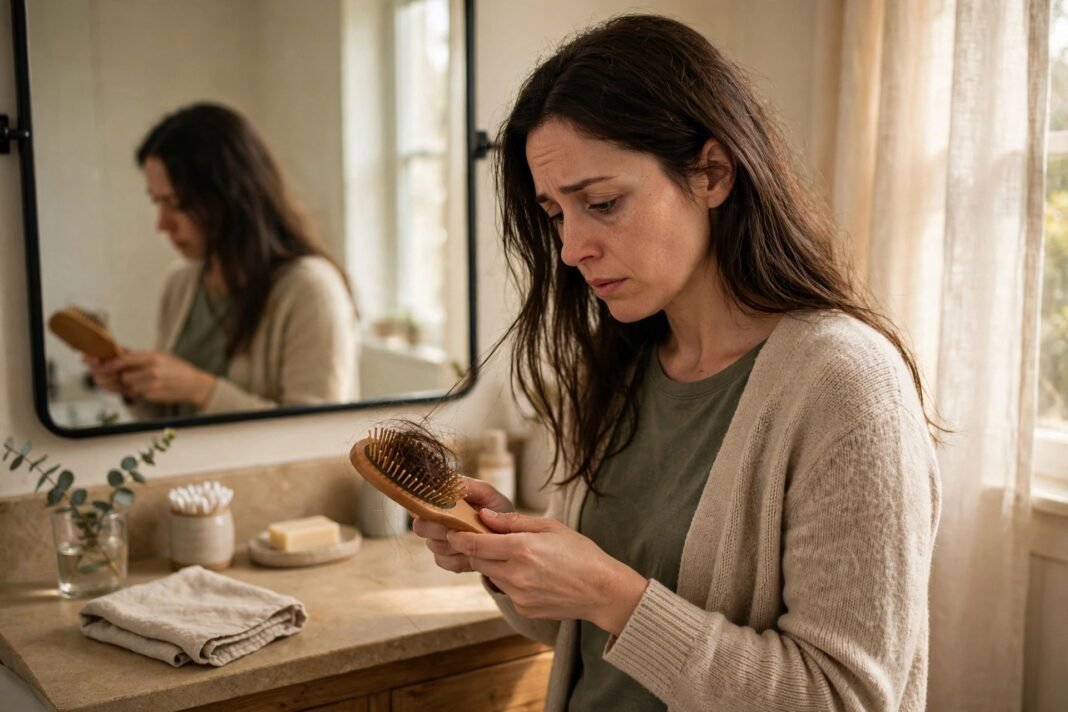
She loves her baby more than anything in the world. Yet some nights, she looks at old photos and feels a sharp ache for her old life. If you are one of the mothers jealous of pre-baby life, you are not alone, and you are not a bad mother.
She misses sleep that lasted all night. She misses meeting friends without planning around feeds. And she misses the woman she was before the baby arrived. Then guilt rushes in, because a good mother, she thinks, should never look back.
The Thought She Is Afraid to Say Out Loud
The thought arrives quietly. It may come during a 3am feed, or while she folds tiny clothes for the tenth time. “I miss my old life.” The words feel shocking, so she pushes them away at once.
But the thought comes back. It comes back when friends talk about holidays. It comes back when she sees her old work clothes in the wardrobe. And each time, the guilt comes back with it.
So she stays silent. She tells herself she should be grateful. She tells herself other mothers manage fine. Meanwhile, the ache stays, because unspoken feelings do not go away on their own.
What Mothers Jealous of Pre-Baby Life Are Really Missing
The jealousy is rarely about one thing. It is about many small losses at once. Time that belonged to her. Sleep that healed her. Freedom to decide her own day.
Sleep is often the first loss. In one large long-running study, mothers slept about an hour less each night in the first three months after birth. Their sleep had still not fully recovered years later. Tiredness like that changes how everything feels.
Then there is the invisible work. Planning meals, remembering appointments, thinking ahead for everyone. This mental load fills her head, even when her hands are still. As a result, she has little room left for herself.
She may also miss her work, her income, or the feeling of being good at something outside the home. Our guide on the hidden price of motherhood looks at the career, dreams and income many mothers give up.
The Name for This Change
There is a word for this huge shift: matrescence. It means the process of becoming a mother. An anthropologist first used the term in the 1970s. A psychologist brought it back into research decades later, and a psychiatrist made it widely known in a 2018 talk.
Matrescence is often compared to adolescence. Both are stages of growth, not problems to fix. The body changes. The brain changes. In one study, brain scans showed that a mother’s brain keeps changing for at least two years after birth.
A large review of 36 studies from 15 countries, covering more than 800 women, found the same theme again and again. What mattered most to women after birth was adapting to a new sense of self, and growing confident as a mother.
So the ache for your old life is not selfishness. It is part of a real change that every new mother goes through. Our guide on how mothers lose their identity raising children looks at the same shift in more detail.
What the Guilt Costs Her
Guilt is the heaviest part of this feeling. She feels guilty for missing her old life. She feels guilty for feeling guilty. And the loop goes on, until she feels she cannot win.
Silence makes it worse. When she cannot say how she feels, she feels alone in a crowded room. She may smile at playgroup while feeling empty inside. Over time, that loneliness can wear her down.
Mixed feelings are far more common than the silence suggests. In one small study, every first-time mother interviewed described mixed feelings about motherhood. In one survey, 68 in every 100 new mothers said they felt they had lost who they were in the first six months after birth.
The guilt can also steal her rest. She tells herself she must earn a break. But rest is not a reward for finishing everything. Our guide on why women feel guilty for resting explains where that voice comes from, and how to quiet it.
How Mothers Jealous of Pre-Baby Life Can Make Peace With It
Peace starts with naming the feeling. Say it out loud, to yourself or to someone you trust: “I love my baby, and I miss my old life.” Both things can be true at the same time. In fact, holding both truths is a sign of honesty, not failure.
Next, bring back small pieces of your old self. One walk alone. One call with a friend. One hour for a hobby you loved. These small pieces do not need to be big to matter.
Ask for help, and be specific about it. “Please take the baby for an hour on Saturday” works better than hoping someone notices. People around you often want to help. They just need to know how.
Talk to other mothers too. Many mothers jealous of pre-baby life feel better once they hear they are not alone. Sharing the ache takes away its power. As a result, the guilt gets smaller, and the joy gets more room.
Finally, stop measuring yourself against other mothers. Social media shows the polished moments, not the 3am feeds. Your path is your own, and it does not need to look like anyone else’s.
When the Feelings Need More Support
For most mothers, these mixed feelings ease with time and support. But if low mood lasts for weeks, or gets worse, please talk to your doctor or another healthcare professional. They can listen without judgement, and point you toward the right help.
You can also find free, confidential support wherever you live through Find a Helpline, a global directory of helplines. Befrienders Worldwide also lists emotional support centres around the world.
Missing your old life does not mean you love your baby less. It means you were a whole person before motherhood, and you still are. What is one small piece of your old life you could bring back this week?
This article is general information, not medical advice. Please speak to a healthcare professional if you are worried about your health.