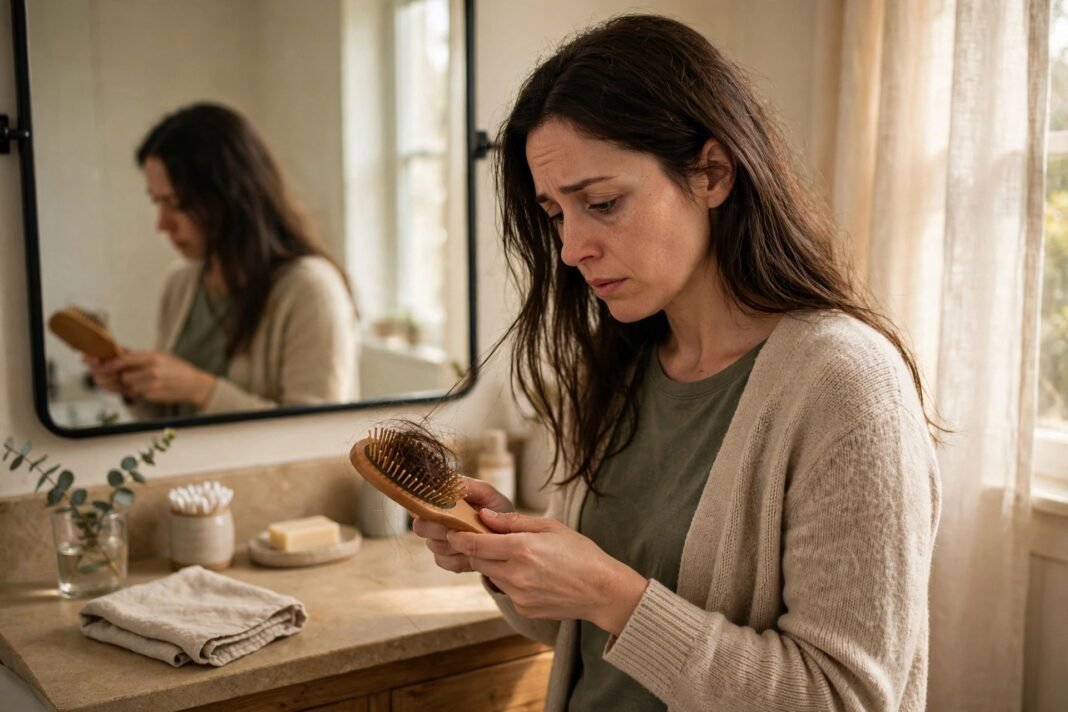
You step out of the shower and look at the drain. A clump of hair sits there, and your stomach drops. This is postpartum hair loss, and it surprises almost every new mother. In fact, it is one of the most common changes after birth. Nobody warned you about it, and nobody mentioned the weakness or the skin changes either.
Your body has just done something huge. But the weeks after birth can feel like a stranger moved into your skin. Your hair falls, your arms feel heavy, and your face looks different in the mirror. So it is no wonder you feel shaken.
The Morning You Notice Postpartum Hair Loss
It often starts with the hairbrush. One morning, you pull it through your hair and see far more strands than usual. Then you notice the shower drain, the pillow, and the floor. Your ponytail feels thinner in your hand. For example, a style that once felt thick now feels light and flat.
At the same time, your body feels weak in ways you did not expect. Climbing the stairs leaves you breathless. Your legs feel shaky after a short walk. Meanwhile, your skin has changed too. Dark patches sit on your cheeks, spots appear along your jaw, and your skin feels dry and tight.
Why Postpartum Hair Loss Happens
Your hair follows a cycle of growing, resting, and falling out. During pregnancy, high levels of oestrogen keep more hairs in the growing phase. As a result, your hair looks thicker and fuller for months. You shed far less than usual.
After birth, oestrogen levels fall quickly. The hairs that pregnancy held back now move into the resting phase together. So a few months later, they fall out at the same time. Most women notice the shedding about three to four months after birth. It usually peaks at about four months.
Postpartum hair loss is not true hair loss. Instead, it is heavy shedding, and the hair grows back. In fact, most women see their hair return to its normal fullness by their baby’s first birthday. It helps to know the normal numbers. Most people lose 50 to 100 hairs a day without noticing. After birth, that number rises for a while. That is why the shedding looks so dramatic, even though it is temporary.
Hair can also fall more at certain times of year. Our guide to autumn hair fall in women explains why that happens.
The Weakness Nobody Warned You About
Weakness after birth has a simple cause. You lost blood during the birth, and your body is still catching up. Blood loss can lower your iron levels. And low iron can leave you feeling weak, tired, and dizzy.
The signs are easy to miss, because tiredness feels normal with a new baby. But weakness that does not ease is worth noticing. You may feel out of breath after small tasks. Your head may ache, or your skin may look paler than usual. You may also find it hard to focus.
Sleep loss adds to the weakness. Broken nights leave your body with no time to recover. So the tiredness builds day after day. Our guide on why women feel tired all the time looks at the hidden reasons behind constant tiredness.
A simple blood test can check your iron levels. If you feel weak for weeks, ask your doctor or midwife about it. Rest is not laziness. It is part of recovery.
Skin Changes After Birth
Your skin changes because your hormones are shifting again. Dark patches may appear on your cheeks, forehead, or upper lip. These patches are called melasma, and they are common in pregnancy and after birth. They often fade over time, but sun can make them darker.
Breakouts are common too, often along the jaw and chin. Your skin may also feel dry, tight, or more sensitive than before. Stretch marks fade slowly, from red or purple to silver, over months. The dark line down your belly usually fades too.
Gentle care helps. A mild, fragrance-free cleanser suits sensitive skin. Moisturiser works best on skin that is still damp after a shower. And daily sunscreen helps protect dark patches from getting worse. Our guide to winter dry skin care has more gentle tips for dry, tight skin.
What These Changes Do to How You Feel
These changes are physical, but the hurt is emotional. You look in the mirror and do not recognise yourself. Your hair is thinner, your body feels weak, and your skin looks different. So you may feel less like yourself than ever before.
Many women feel guilty for caring about how they look. After all, they have a healthy baby, so they feel they should be happy. But you can love your baby and still grieve the body you had. Both feelings can live side by side.
The silence makes it worse. Everyone asks about the baby, and nobody asks how you feel. As a result, many women carry these worries alone. Our guide to emotional exhaustion in women explains how hidden burdens build up behind a smile.
Feeling low about these changes does not make you vain. It makes you human. Your body changed fast, and your feelings need time to catch up.
Gentle Ways to Look After Your Hair, Skin and Body
There is no quick fix, and your body needs time. But small, gentle habits can help while you recover. Postpartum hair loss needs no treatment, because it ends on its own. Start with your hair. A volumising shampoo can make thin hair look fuller. Put conditioner on the ends only, so it does not weigh your hair down. Loose styles pull less on the roots than tight ponytails. And a shorter cut can make hair look thicker.
Rest when you can. Sleep when the baby sleeps, even in the daytime. Eat regular meals, and include foods that give you iron, such as beans, lentils, and leafy greens. If you wonder about vitamins or supplements, ask your doctor first.
For your skin, keep it simple. Wash gently, moisturise while your skin is damp, and use sunscreen every day. Avoid harsh scrubs and strong products while your skin is sensitive.
Ask your doctor if the shedding has not eased by your baby’s first birthday. Also ask if you notice bald patches, or if weakness, dizziness, or breathlessness does not ease. A doctor can check for other causes, such as low iron or a thyroid problem.
If the feelings feel heavy, you do not have to carry them alone. You can find free, confidential support wherever you live through Find a Helpline, a global directory of helplines. Befrienders Worldwide also lists emotional support centres around the world.
This article is general information, not medical advice. Please speak to a healthcare professional if you are worried about your health.
Which change surprised you most after birth, and what helped you through it?