Smartphone Imports in Pakistan Put 40,000 Jobs at Risk
Smartphone imports in Pakistan have surged so sharply that local manufacturers say more than 40,000 jobs are now at risk. Imports of used smartphones jumped to 98,383 units in October 2026, up from just 1,434 units in July, while local production fell by about 17 per cent over the same period. The Pakistan Mobile Phone Manufacturers Association (PMPMA) has raised the matter with the Ministry of Industries and Production and the Federal Board of Revenue (FBR), warning that the trend is pushing assemblers towards layoffs. The Express Tribune reported the figures on Tuesday.
The numbers behind the surge
Total imports of fully built smartphones rose from 18,431 units worth $17.8 million in July to 150,133 units worth $71.7 million in October. Used handsets drove the jump, as the gap between the duty on imported phones and the duty on kits for local assembly narrowed sharply.
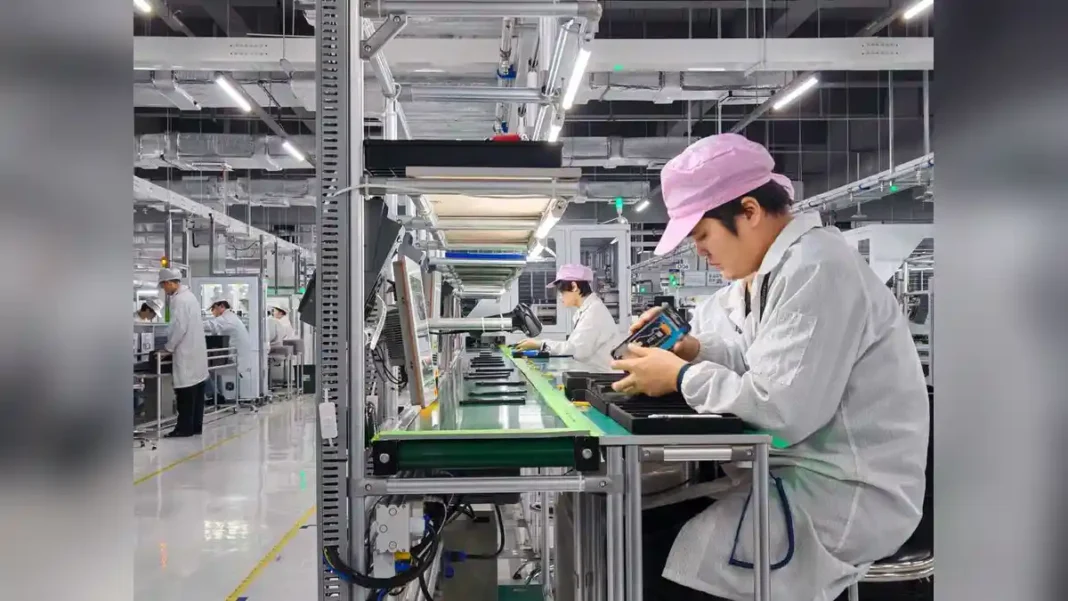
Local production fell from 906,711 units in July to 752,870 units in October, a drop of around 17 per cent. The industry employs a direct and indirect workforce of more than 40,000 people and produces almost all global brands in Pakistan. Nearly all manufacturers have reported layoffs and retrenchment of skilled workers to cut costs, according to the association.
Fully built imported phones have now captured 41.8 per cent of the smartphone market by value. That share is hurting job creation and investment in a sector the government has spent years trying to build, the association said.
Shipments from one leading US brand, Apple, have also risen fast. Its imports more than doubled in two months, from 40,787 units in August to 91,508 in October, according to customs data reported by Flare.
Why smartphone imports in Pakistan are rising
Industry sources point to two reasons for the surge. The first is that the tariff gap between fully built smartphones and completely knocked-down (CKD) kits for locally assembled phones has narrowed to around 11 per cent on a $100 phone and 14 per cent on a $200 phone. With so little difference, importing a finished phone has become more attractive than assembling one here.
The second reason is a downward revision in FBR valuations issued in January 2026. The change made it much cheaper to import used smartphones at under-invoiced values, causing a loss to the national exchequer, the industry said.
For the last three years, manufacturers have also complained about reverse cascading, which makes it impossible to localise parts such as chargers, batteries, cables and motherboard assembly. A charger is importable at zero duty inside a CKD kit, but its raw materials attract nearly 20 per cent duty. The industry has repeatedly asked the government to fix that gap.
What it means for workers and buyers
The stakes go beyond factory floors. If local assembly keeps shrinking, Pakistan loses skilled jobs and keeps spending foreign exchange on finished phones instead of building the capacity to make them.
The industry points to India as a contrast. From near-zero phone exports in 2020, India is touching almost $30 billion in exports in fiscal year 2025-26, with government support for local value addition and production-linked incentives. Industry sources said Pakistan should follow a similar strategy.
The wider picture for local manufacturing
The October figures fit a broader pattern. Pakistan’s plants assembled 23.03 million phones in the first ten months of 2026, according to Pakistan Telecommunication Authority (PTA) data, with VGO TEL the largest assembler at 3.50 million units. Commercial imports reached 3.95 million phones in the same period, already 67 per cent more than in all of 2025. Local phones still outnumber imports by almost six to one, but their share of supply has slipped to about 85 per cent, from about 93 per cent in 2025.
The Ministry of Industries and Production is drafting a new policy that would push domestic value addition to as much as 50 per cent, up from an estimated 10 to 20 per cent at present. Chinese phone maker Transsion, parent of the TECNO, Infinix and itel brands, is also in talks to expand component manufacturing in Pakistan. Feature Pakistan reported that Transsion discussed the plan with Pakistani officials after a meeting with Finance Minister Muhammad Aurangzeb.
Meanwhile, mobile data use keeps rising as more Pakistanis move to smartphones, now 71 per cent of devices on the country’s networks. Demand is not the problem. The question is whether those handsets will be assembled in Pakistan or imported finished.
What happens next
The PMPMA wants the tariff gap corrected and the valuation of used phones fixed, so assembling in Pakistan is cheaper than importing a finished device. Until that happens, manufacturers say, production will keep falling and more workers will lose their jobs.
Frequently asked questions
How many used smartphones were imported in October 2026?
Used smartphone imports reached 98,383 units in October 2026, up from just 1,434 units in July 2026, according to industry figures reported by The Express Tribune.
How much did local smartphone production fall?
Local production fell from 906,711 units in July 2026 to 752,870 units in October 2026, a reduction of around 17 per cent.
How many jobs are at risk?
The domestic smartphone industry employs a direct and indirect workforce of more than 40,000 people. Nearly all manufacturers have reported layoffs and retrenchment of skilled workers.
Why are imports rising faster than local assembly?
Two main reasons: the tariff gap between fully built phones and assembly kits has narrowed to about 11 per cent on a $100 phone, and a January 2026 revision in FBR valuations made it cheaper to import used phones at under-invoiced values.
What is reverse cascading?
Reverse cascading is a tariff structure in which the duty on a finished component is lower than the cumulative duty on the raw materials needed to make it locally. In Pakistan, a charger can be imported at zero duty inside a kit, but its raw materials attract nearly 20 per cent duty, which blocks localisation.