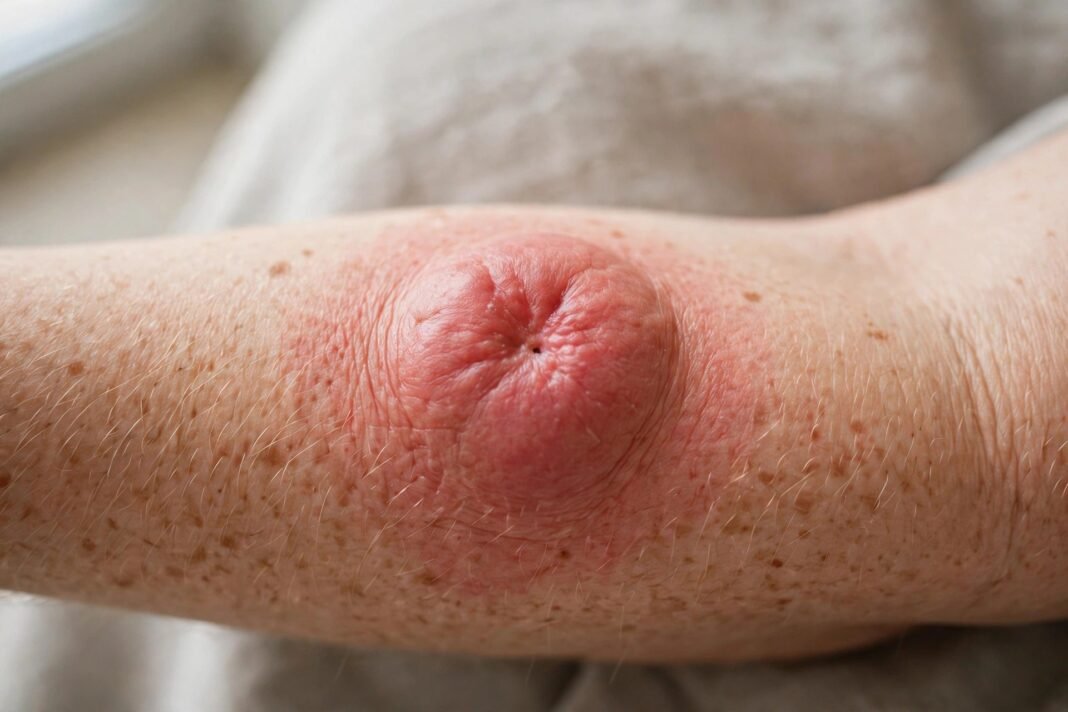
You wake up in the morning and look at your arm. A mosquito bit you last night, but this bite does not look normal. It is big, red, hot and swollen, and it itches so much that you can hardly think about anything else. You start to worry. Is it infected? Do you need a doctor? In many cases, the answer is simpler than you think. It may be skeeter syndrome, an allergic reaction to a mosquito bite that looks far worse than a normal bite.
What Is Skeeter Syndrome?
Skeeter syndrome is a large local allergic reaction to mosquito bites. When a mosquito bites you, it leaves a small amount of saliva in your skin. That saliva holds proteins that stop your blood from clotting while the mosquito feeds. For most people, the result is a small itchy bump that fades in a day or two.
But in skeeter syndrome, the body overreacts to those proteins. Instead of a small bump, the bite turns into a large area of swelling, redness and warmth. The reaction stays near the bite, yet it can spread well beyond the spot where the mosquito fed. It looks alarming, but in most cases it is uncomfortable rather than dangerous.
Signs of Skeeter Syndrome
The main sign of skeeter syndrome is a large swelling where the mosquito bit you. The swelling usually starts about eight to ten hours after the bite. It can grow for a day or two, and then it slowly settles. Most reactions clear up within three to ten days.
You may also notice:
- Redness or a change in skin colour around the bite
- Skin that feels warm or hot to the touch
- Strong itching that makes it hard to sleep
- Pain or tenderness when you touch the area
- A hard lump under the skin
- A blister near the bite
Rarely, the reaction can come with a fever, hives in other parts of the body, or swollen lymph nodes. In very rare cases, a severe allergic reaction can affect the whole body. If you have trouble breathing, feel dizzy, or notice swelling of your lips or tongue, get emergency help at once.
Why Some People React More Than Others
Skeeter syndrome is most common in young children. Their immune systems are still learning how to respond to mosquito saliva, so the reaction can be strong. It is also more common in older adults and in people whose immune systems are weaker than usual. However, adults of any age can have it too.
People who are new to an area can react more strongly as well, because their bodies have not met those local mosquitoes before. The good news is that reactions often become milder over time. As the body gets used to mosquito saliva, the swelling tends to shrink with each season.
Skeeter Syndrome or an Infection? How to Tell
A big swollen bite can look like an infection, so it is natural to worry. The two problems behave in different ways, and timing is the clearest clue.
Skeeter syndrome is an allergic reaction. It appears fast, usually within hours of the bite. It itches as much as it hurts, and it tends to peak and then settle over a few days.
An infection, on the other hand, appears later and gets worse instead of better. The skin around the bite stays hot and red, the pain grows, and you may see pus or fluid coming from the bite. A red streak spreading out from the bite is another warning sign.
One more thing to know: a large allergic swelling can still become infected if you scratch it open. Scratching breaks the skin and lets bacteria in. So even when the swelling is only an allergy, try hard not to scratch it.
How to Calm Skeeter Syndrome at Home
For a normal allergic swelling, simple steps can help you feel better:
- Use a cold compress. A cool damp cloth or an ice pack wrapped in cloth can ease the swelling and the itch.
- Do not scratch. Scratching feels good for a moment, but it makes the swelling worse and can break the skin.
- Keep the area clean. Wash it gently with soap and water, and pat it dry.
- Cover it if you need to. A clean bandage can stop you from scratching without thinking, especially at night.
- Ask a pharmacist. A pharmacist can advise you on over-the-counter options that may help with itching and swelling.
If itching keeps you awake at night, you may find it helps to keep the room cool and to wear loose clothing over the bite. You can also read our guide on how to sleep better without medication for simple habits that help when discomfort keeps you up.
When to See a Doctor
Most cases of skeeter syndrome settle on their own. But you should see a healthcare professional if:
- The swelling keeps growing after a few days instead of settling
- You see pus or fluid coming from the bite
- A red streak spreads out from the bite
- You have a fever that does not go away
- The bite is near your eye and the swelling affects your sight
- You are not sure whether it is an allergy or an infection
Get emergency help right away if you have trouble breathing, swelling of the face, lips or tongue, dizziness, or fainting. These signs can mean a severe allergic reaction, and they need urgent care.
How to Avoid Big Reactions
You cannot always avoid mosquito bites, but a few habits can lower your chances of a bad reaction:
- Use mosquito repellent when you spend time outside, especially in the evening
- Wear long sleeves and long trousers when mosquitoes are active
- Use screens on windows and doors, and a bed net if you need one
- Empty standing water near your home, where mosquitoes lay their eggs
- Wear light-coloured clothing, which attracts fewer mosquitoes than dark colours
If you react strongly to bites every time, it is worth talking to a healthcare professional. They can help you plan ahead, especially before a trip to a place with many mosquitoes.
A mosquito bite that looks worse than usual is frightening, but it is often just your immune system overreacting. Skeeter syndrome looks dramatic, yet it usually settles within days. Watch the timing, keep the bite clean, and do not scratch. And if anything about the bite worries you, or it keeps getting worse, ask a doctor. It is always better to check than to guess.
Have you ever had a mosquito bite swell up far more than usual? Share your experience in the comments.
This article is general information, not medical advice. Please speak to a healthcare professional if you are worried about your health.