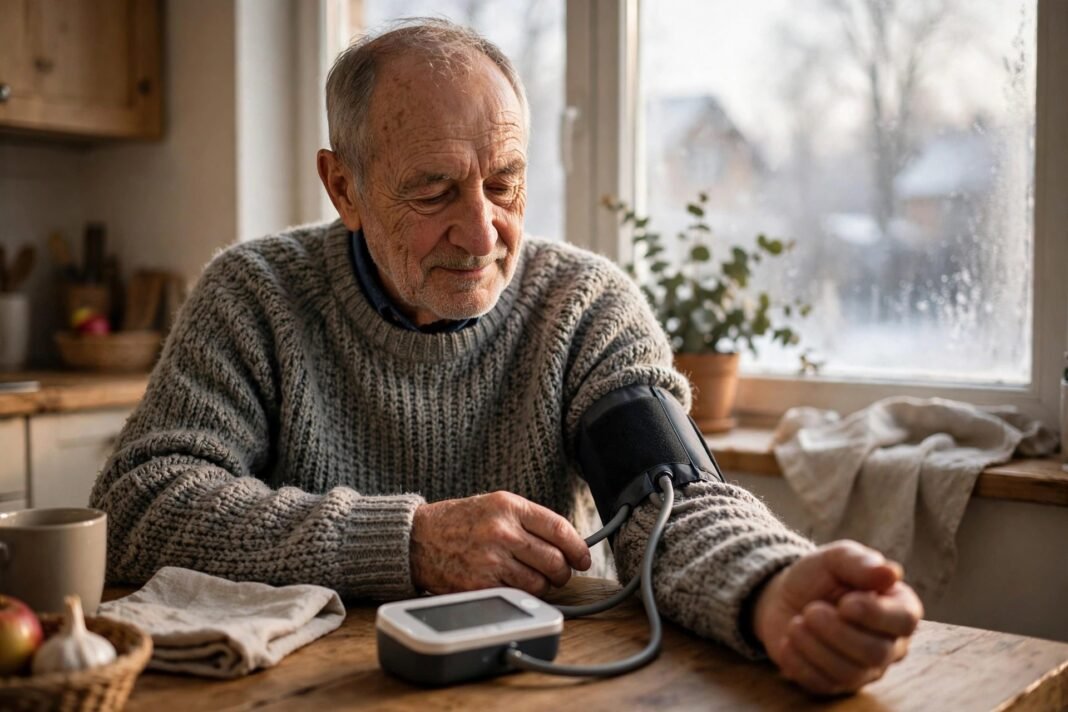
The morning is cold, and the kitchen feels chilly against your bare feet. You wrap both hands around a warm mug. Then you slip the cuff onto your arm, just as you do every morning. The numbers appear, and they are higher than the ones you saw in July. Your heart sinks a little, because you have changed nothing. You take your medicine, you eat carefully, and you still try to walk. So why does this keep happening every single winter? If this scene feels familiar, please take comfort in one fact. Blood pressure rises winter after winter for many older adults, and you are not failing.
Doctors see this pattern every year, in almost every clinic. In fact, one large study of more than 60,000 adults found the same thing. Their top reading rose slightly in the cold months, and fewer kept their pressure in a healthy range. The change is usually small, yet small rises add up over a long season.
Why Blood Pressure Rises Winter After Winter
The main reason starts with the cold itself. When cold air touches your skin, your blood vessels tighten. They narrow on purpose, because your body wants to hold its heat. As a result, your heart must push harder to move the same blood. Harder pushing means higher pressure inside those vessels. Think of a garden hose with a thumb pressed over the end. The water sprays out faster, even though nothing else changed.
Age makes this response stronger, unfortunately. Over the years, artery walls grow stiffer and less flexible. So they cannot soften and widen the way younger vessels can. Meanwhile, older bodies also adjust more slowly to sudden changes. A quick step from a warm room into cold air can therefore spike a reading.
Daily habits shift in winter too, and they quietly add pressure. For example, icy paths and dark evenings make walking feel risky. So many older adults move far less than they did in summer. In addition, winter food tends to be heavier and saltier. Warm soups, baked dishes, and festive meals often carry hidden salt. Salt holds water in the body, and extra water raises pressure further. A few extra pounds can also creep on, and even a small gain can nudge readings upward.
Winter also brings coughs, colds, and flu into the house. In addition, a cold home keeps vessels tight for hours at a time. Research on older adults links cold homes with higher readings. So a chilly house is not just uncomfortable; it can quietly work against you.
Blood Pressure Rises Winter: What to Watch at Home
One single reading rarely tells the whole story. Instead, watch the pattern across days and weeks. Are your morning numbers slowly climbing as the season deepens? Patterns like these give your doctor far more than one number can. For this reason, a simple notebook becomes a powerful tool.
Good habits make home readings honest and useful. Firstly, sit quietly for a few minutes before you begin. Keep your back supported, and rest both feet flat on the floor. In addition, support your arm so the cuff sits level with your heart. An empty bladder helps too, and so does a calm room. Avoid tea, coffee, and hard activity shortly before you check. Then take the reading twice, a short pause apart, and write down both numbers. Finally, note the time, the weather, and how you felt.
A higher winter reading is information, not an emergency by itself. So please do not panic over one surprising number. Rest, warm up, and check again later. Above all, never change your prescribed medicine because of one reading. Your doctor may adjust treatment after seeing a clear pattern. However, that decision belongs to your doctor alone. Keep taking your medicine exactly as prescribed, even on good days.
Gentle Habits That Help All Winter
Warmth is your first and simplest helper. Keep your living room and bedroom comfortably warm, especially in the morning. Dress in soft layers, and warm your hands before a reading. A warm scarf and hat matter outdoors too. Cold air on the face can tighten vessels within minutes. So cover up kindly before you step outside.
Movement still matters, even when the garden path looks icy. On rough days, walk inside your home, march gently on the spot, or climb a few stairs slowly. Short, regular movement beats one long, tiring effort. Always move at a pace that lets you talk comfortably. And if a movement makes you dizzy, stop and rest at once.
Food can help too, in quiet and steady ways. Fresh vegetables, beans, fruit, and whole grains support healthy pressure. Meanwhile, processed foods and ready meals often hide large amounts of salt. Our guide to foods that lower blood pressure offers gentle, everyday ideas for your plate. You do not need a perfect diet; small swaps still count.
Stress also rises in winter, with its bills, darkness, and family worries. As a result, your body stays tense, and tense bodies hold pressure up. Slow breathing, warm baths, prayer, music, and quiet hobbies can all soften that tension. Our simple guide to stress management techniques shares more calm ideas for hard days. Sleep deserves care as well, because poor nights often bring higher mornings. A regular bedtime and a warm, dark room can help.
When to Call a Doctor Quickly
Share your winter notebook at every appointment, even if the numbers look fine. A steady upward drift deserves a conversation, not silent worry. Also call your doctor if readings stay far above your usual range for days. New dizziness, unusual tiredness, or swelling in the ankles is worth mentioning too.
Some signs, however, need urgent help the same day. Call emergency services at once if you feel chest pain or pressure. Do the same for sudden breathlessness, sudden vision changes, or a severe headache. Weakness on one side, confusion, or trouble speaking also needs urgent care. These signs can point to a serious problem, and minutes matter. Please never wait and hope they pass on their own.
This article is general information, not medical advice. Please speak to a healthcare professional if you are worried about your health.
Winter will test your numbers, but it does not have to frighten you. You now know why the season pushes pressure upward. So keep the kettle warm, keep the notebook close, and keep your gentle routines going. Spring always returns, and your readings usually soften with it. Until then, tell us — what small winter habit helps you feel most in control of your health?