Pakistan Textile Exporters Adapt to Keep EU Market Access
Pakistan’s textile exporters are showing a growing willingness to adapt to changing European Union requirements, a positive sign for efforts to keep EU market access under the revised Generalised Scheme of Preferences Plus (GSP+).
The assessment comes from Dr Michael Arretz, managing director of the German Importers Association (VFI), who told The Express Tribune he had observed openness among Pakistani exporters towards adopting new practices to meet international standards.
He called their willingness to change particularly encouraging, saying exporters increasingly recognised the need to improve and welcomed guidance and proven solutions.
“Think mentality-wise, I see a lot of openness, second, the will to change, and third, they are saying, ‘okay, we have to change some things.’ So, this will change, I think that’s the most important thing, and therefore I’m so happy to be here,” Arretz said.
He said progress depended on exporters acknowledging shortcomings and learning from practices adopted elsewhere.
Tougher rules from January 2027
His remarks come as Pakistan prepares for a more demanding phase of its trade relationship with the EU. The revised GSP framework, in effect from January 2027, will require beneficiary countries to implement 32 international conventions, up from 27.
Pakistan must formally reapply by the end of 2028 with a forward-looking action plan, while the European Commission keeps monitoring implementation on the ground.
Pakistan already faces five new conditions under the revised scheme, covering labour rights, climate action and governance. German importers have also been shifting sourcing to Pakistan from China, an opening for exporters that meet European standards.
What is at stake for EU market access
The stakes are considerable. The EU, Pakistan’s largest export market, imported goods worth 8.7 billion euros from Pakistan in 2025, nearly 29.8 percent of the country’s total exports, and textiles and clothing made up around 70 percent of that trade.
Under GSP+, eligible Pakistani products enter the EU at zero duty. If Pakistan lost the arrangement but kept standard GSP access, textile exporters could face duties of around 9.6 percent, and a return to most-favoured-nation tariffs could raise duties to around 12 percent on several major textile and apparel categories.
That gap explains why buyers watch compliance closely. A duty of 9.6 percent or 12 percent would wipe out the price edge Pakistani goods hold over rivals with their own preferential deals.
Industry stakeholders say the new requirements also offer a chance to modernise production, improve working conditions and strengthen Pakistan’s standing as a reliable supplier.
Large exporters ahead, small units lag
Shahid Anwar, former secretary general of the Federation of Pakistan Chambers of Commerce and Industry, said larger exporters had made reasonable progress meeting international requirements, particularly those supplying established European brands, while smaller factories face challenges over safety, fire protection, working conditions and labour law compliance.
He said Pakistan had built an integrated textile value chain with strong positions in bed linen, towels, knitwear and garments, but exporters must compete on more than price, on quality, productivity, timely delivery and compliance.
Leena Abid, a textile analyst at Arif Habib Limited, said larger exporters generally had stronger compliance systems from their exposure to European buyers, and Pakistan needed to improve documentation, enforcement and production standards as regional suppliers strengthened.
Fuzail Shoaib, a textile analyst at KTrade, said large exporters were increasingly aligning operations with international protocols, including third-party audits, structural safety, fire protection and safety certification, but compliance stayed uneven across smaller firms, with gaps in minimum wages, working hours, collective labour rights and environmental safeguards.
He said Pakistan’s integrated textile base and access to cotton gave it a strong foundation, and readymade garments now made up more than 20 percent of textile and apparel exports in FY26.
The road to higher-value exports
The sector supports farmers, transporters, small businesses and industrial workers, and provides jobs for women, although informal hiring, low wages and limited female participation restrict its benefits.
Muzammil Hussain of the Towel Association said exporters needed to invest in modern technology, energy efficiency, worker welfare, environmental certification and product innovation, and that higher-value products, stronger branding and more destinations could cut dependence on price competition.
He also stressed consistent policies, affordable energy, better logistics, easier trade procedures and access to financing to support the transition.
Farm exports to the EU are already growing under the same preference scheme, and Pakistan is pressing China for zero-tariff treatment to lift exports to $25 billion.
For the textile sector, the message is plain. The will to change is there, and buyers are ready to help. The test is whether it reaches beyond the large exporters to the smaller factories and subcontractors that make up much of the chain.
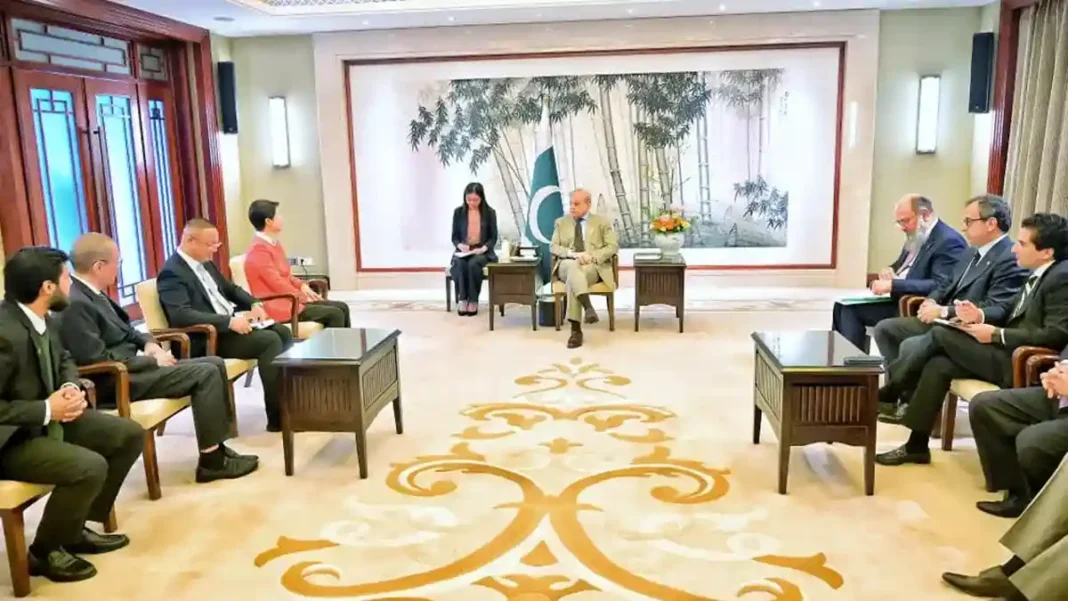
German importers welcomed Pakistani exporters’ willingness to adopt modern practices to secure EU access.
Frequently asked questions
What is GSP+?
GSP+ is the European Union’s Generalised Scheme of Preferences Plus. It lets eligible Pakistani products enter the EU market at zero customs duty, in return for the effective implementation of international conventions on human rights, labour rights, the environment and governance.
What changes under the revised GSP framework?
The revised framework takes effect from January 2027 and requires beneficiary countries to implement 32 international conventions, up from 27. Pakistan must formally reapply by the end of 2028 with a forward-looking action plan.
How much does Pakistan export to the EU?
The EU imported goods worth 8.7 billion euros from Pakistan in 2025, or nearly 29.8 percent of Pakistan’s total exports. Textiles and clothing made up around 70 percent of Pakistan’s exports to the bloc.
What would Pakistan lose without GSP+?
If Pakistan lost GSP+ but kept standard GSP access, textile exporters could face duties of around 9.6 percent. Under most-favoured-nation tariffs, duties could rise to around 12 percent on several major textile and apparel categories.
Are Pakistani exporters ready for the new rules?
Larger exporters supplying European brands have made reasonable progress, according to industry voices. Smaller factories and subcontractors still face gaps in safety, fire protection, working conditions, minimum wage implementation and environmental safeguards.