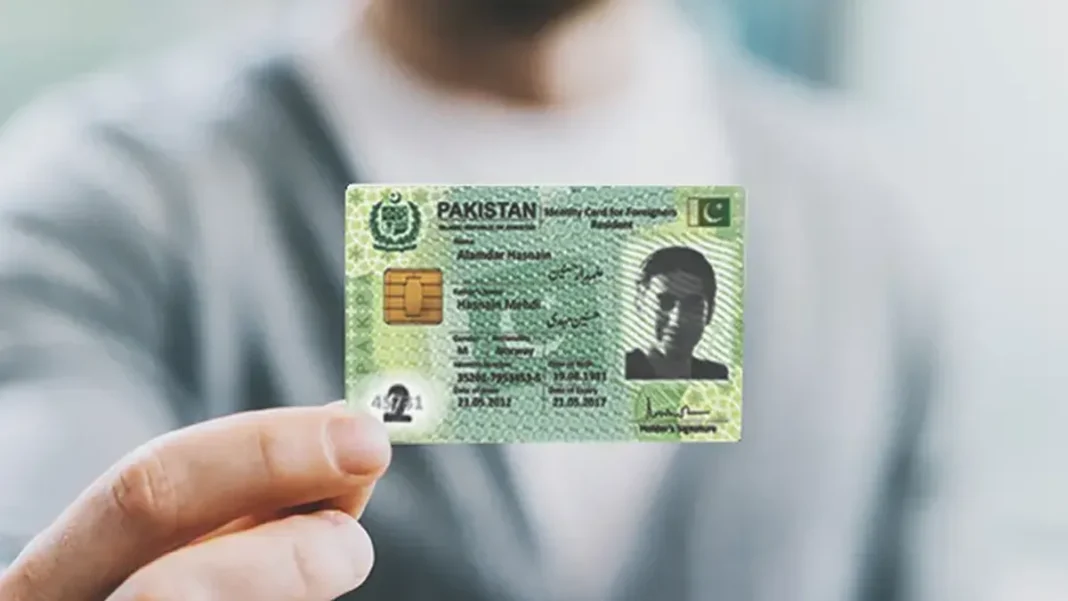
Look at the front of your CNIC — that 13-digit number (شناختی کارڈ نمبر) is not random. NADRA designed it so that every part tells a story: where your family was registered, which family tree you belong to, and whether the card belongs to a man or a woman. Here is the full meaning of the citizen number, part by part, in simple Urdu and English.
Quick answer: A Pakistani CNIC number has the format XXXXX-YYYYYYY-Z. The first 5 digits are your location code (province, district, tehsil, union council); the middle 7 digits are your family code linking your NADRA family tree; the last digit shows gender — odd (1,3,5,7,9) for men, even (2,4,6,8) for women.
In this guide
The 13-Digit Format at a Glance
Every CNIC number follows the same pattern: XXXXX-YYYYYYY-Z — five digits, a hyphen, seven digits, a hyphen, one digit. Written out, a typical number looks like 61101-1234567-1. The number is assigned at birth and stays with you for life; it simply becomes your CNIC number when you turn 18 and get the card. Because it never changes, it anchors everything: bank accounts, SIM registrations, your voter entry, your passport, and your tax record.
First Digit: Your Province (صوبہ)
The very first digit tells NADRA which province or territory your family record belongs to:
- 1 — Khyber Pakhtunkhwa (خیبر پختونخوا)
- 2 — Former FATA, now merged into KP (فاٹا)
- 3 — Punjab (پنجاب)
- 4 — Sindh (سندھ)
- 5 — Balochistan (بلوچستان)
- 6 — Islamabad Capital Territory (اسلام آباد)
- 7 — Gilgit-Baltistan (گلگت بلتستان)
The remaining four digits of the first block drill down further: roughly, division, then district, then tehsil, then union council. So 61101 reads as Islamabad (6), district 11, tehsil 0 — where a zero in the tehsil position means district and tehsil share the same name — and union council 1. Two siblings born in the same city will share this first block; it reflects the family’s registered location, not where each child happened to be born.
Middle 7 Digits: Your Family Code (خاندانی کوڈ)
The middle seven digits are the family code — NADRA’s way of drawing your family tree. Members of one family share related codes, so the database can link parents, children and siblings to each other. This is the part of the number that makes the CNIC more than an ID card: it is a family register. When NADRA verifies “family tree” information — for inheritance cases, for issuing a new citizen’s first card, or for B-forms for children — it is this code doing the work.
Last Digit: The Gender Rule
The final single digit after the last hyphen encodes gender, and the rule is beautifully simple: odd digits (1, 3, 5, 7, 9) are issued to men; even digits (2, 4, 6, 8) to women. That’s it — one glance at the last digit of any CNIC tells you the holder’s recorded gender. (NADRA also records transgender as a gender category on the card itself.)
A note of caution: dozens of websites claim to “verify” or “look up” CNIC details from the number alone. Your CNIC number is sensitive personal data — the key to your bank, SIM and property records. NADRA’s own guidance is to share it only with trusted institutions, and no unofficial site can legitimately pull your full record from the digits. For how the number fits into the wider citizenship system, see our complete guide to Pakistan nationality and the 1951 Citizenship Act.
Frequently asked questions
What is the meaning of the CNIC number in Urdu?
شناختی کارڈ نمبر کے 13 ہندسوں کے تین حصے ہیں: پہلے 5 ہندسے آپ کا صوبہ، ضلع، تحصیل اور یونین کونسل بتاتے ہیں؛ درمیان کے 7 ہندسے آپ کا خاندانی کوڈ ہے؛ آخری ہندسہ جنس بتاتا ہے — مردوں کے لیے طاق (1،3،5،7،9) اور عورتوں کے لیے جفت (2،4،6،8)۔
Does the CNIC number change when I renew my card?
No. The 13-digit number is assigned once — at birth — and never changes. Renewals, Smart CNIC upgrades and NICOP conversions all keep the same number.
Can someone find my personal details from my CNIC number?
Not legitimately from the digits alone. The number’s structure reveals only province/area, family linkage and gender. Full personal records sit in NADRA’s secure database, accessible only to authorised institutions — beware unofficial “CNIC check” websites.
Related Guides
- Pakistan Nationality: The Complete Guide — citizenship, CNIC and dual nationality in one place
- What “Pakistan Nationality” Means: Citizen vs Pakistani Explained
- Pakistan Citizenship: How the 1951 Act Decides Who Is a Citizen
- How to Get Pakistani Nationality: 5 Legal Routes