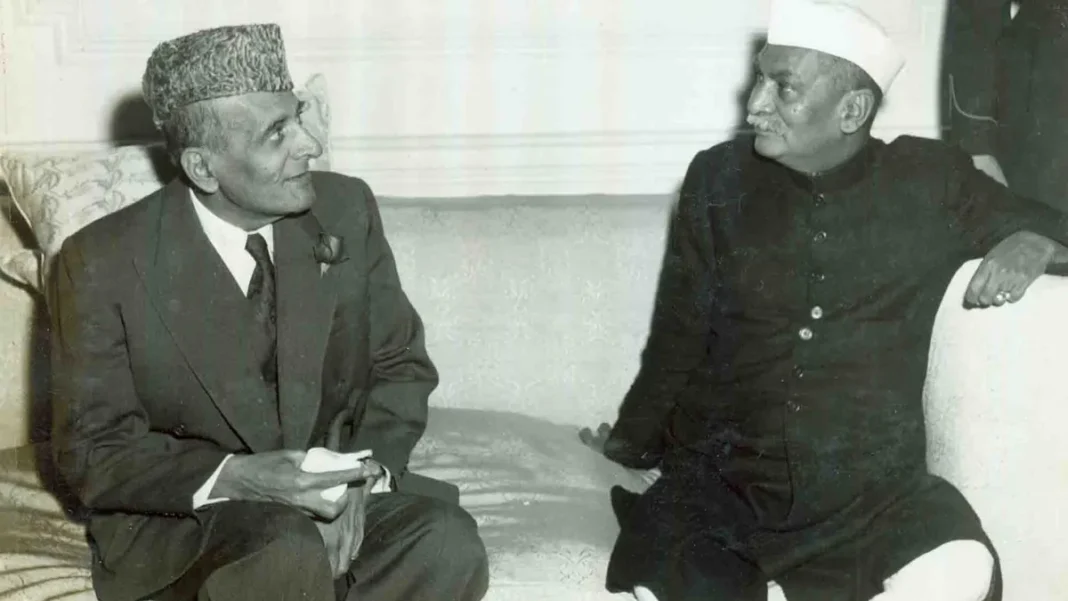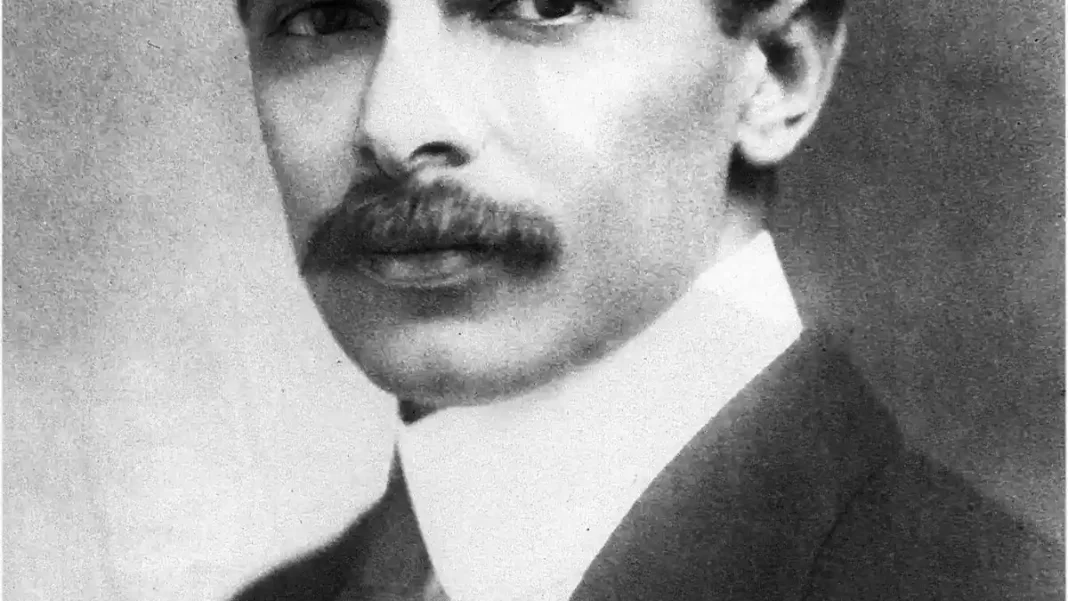
Muhammad Ali Jinnah — the Quaid-e-Azam (Great Leader) — founded Pakistan. This is the definitive short account: the man, the movement, and the 13 months he led the country he created.
Quick answer: The founder of Pakistan is Muhammad Ali Jinnah (1876–1948) — the Quaid-e-Azam. He led the All-India Muslim League, won Pakistan through the 1940 Lahore Resolution and the 1946 elections, became its first Governor-General (15 Aug 1947), and died on 11 September 1948.
In this guide
The Man
Born 25 December 1876 in Karachi, Jinnah was a Bombay barrister — Lincoln’s Inn, brilliant advocate — who entered politics as an Indian nationalist (Congress, 1906) before concluding that Muslims needed a separate homeland. Cold, precise, incorruptible: ‘a man of granite’ as one British viceroy put it. He married twice, lost his wife Rattanbai young, and drove himself relentlessly — the tuberculosis that killed him was hidden even from his closest aides.
The Movement
The road to Pakistan: the Lucknow Pact (1916), the break with Congress, the Fourteen Points (1929), the Lahore Resolution (23 March 1940) demanding independent Muslim states, the 1946 elections (the League swept Muslim seats — the plebiscite for Pakistan), Direct Action Day, the Cabinet Mission, and finally the 3 June Plan — partition. Jinnah negotiated every step; his 11 August 1947 address promised religious freedom — the speech Pakistan still argues about.
The 13 Months
As Governor-General, Jinnah was Pakistan’s supreme authority — setting up the state, the armed forces, the central bank, addressing the refugee catastrophe, and fighting the first Kashmir war. Dying of tuberculosis and lung ailments, he worked until days before his death on 11 September 1948. His mausoleum (Mazar-e-Quaid) in Karachi is Pakistan’s national monument. The title: Father of the Nation.
Jinnah’s Vision for Pakistan
What did the founder actually want? The debate never ends: the 11 August 1947 speech (‘you are free to go to your temples…’) suggests a secular, inclusive state; the two-nation theory suggests an Islamic homeland. Jinnah’s Pakistan was democratic, constitutional, tolerant — ‘a democratic type, embodying the essential principles of Islam’. Every faction claims him; the Objectives Resolution (1949) was the first attempt to settle what his Pakistan meant. The argument is Pakistan’s oldest — and still its most alive.
The Death: Questions That Linger
Jinnah died of tuberculosis and lung disease — but the circumstances bred conspiracy theories: the ambulance breakdown on the way from the airport (the ambulance ran out of fuel; the replacement took hours), the secrecy around his illness, the missing medical records. Historians accept natural causes accelerated by overwork; the ‘what if he had lived’ question is Pakistan’s founding counterfactual. He was 71. The state he built lasted; the man barely saw it.
Frequently Asked Questions
Who founded Pakistan?
Muhammad Ali Jinnah — the Quaid-e-Azam — who led the Muslim League’s Pakistan movement and became the country’s first Governor-General in 1947.
When did Jinnah die?
11 September 1948, in Karachi — barely 13 months after Pakistan’s creation. His mausoleum, the Mazar-e-Quaid, is the national monument.