


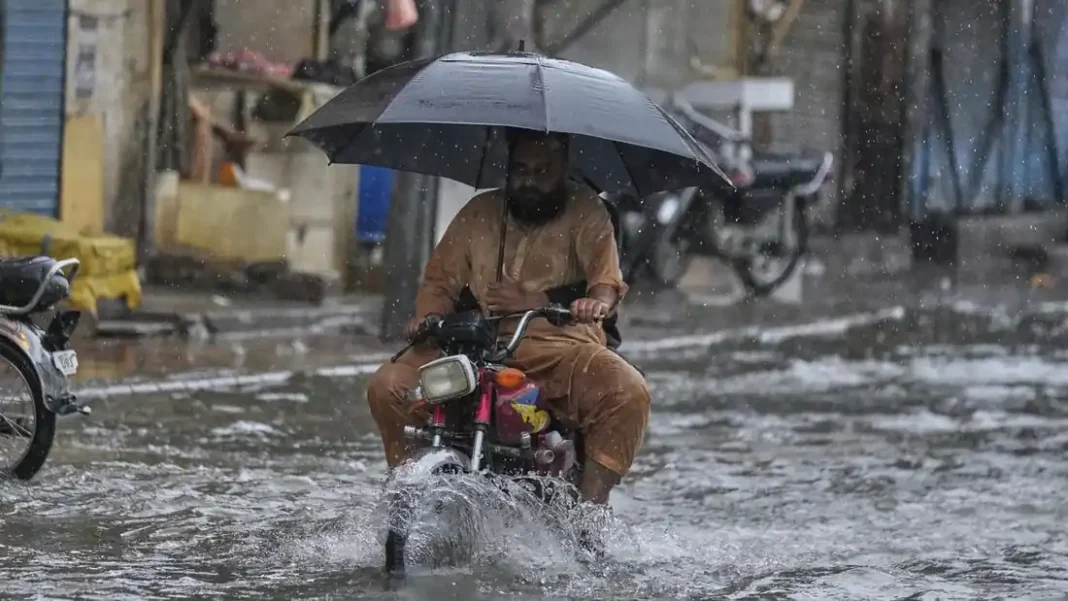
Storm in Pakistan — the complete storm guide. Monsoon downpours, hailstorms, dust storms (andhi), and how Pakistan weathers them.
Quick answer: Storms in Pakistan mean monsoon downpours (June–September), hailstorms (which damaged Mohmand’s crops in October 2026), pre-monsoon dust storms (andhi), and western-disturbance winter storms in the north. No major storm is active today. Official warnings: PMD and NDMA.
Storm Types in Pakistan
Pakistan experiences four distinct storm families. Monsoon storms (June–September): torrential downpours, cloudbursts and the flooding they cause — the deadliest category. Hailstorms: violent, localised, and devastating to standing crops — the October 2026 Mohmand hailstorm shredded crops and solar installations. Andhi: pre-monsoon dust storms that sweep the plains in May–June, toppling trees, billboards and power lines. Western-disturbance storms: winter systems bringing heavy rain and snow to the north (December–March).
Tropical cyclones are rare but not unknown: the Arabian Sea occasionally sends cyclonic storms toward the Sindh–Balochistan coast (Karachi keeps a wary eye every June). The PMD’s cyclone warnings are the ones coastal residents must never ignore. For today’s conditions, see storm in Pakistan today; for the seasonal context, our monsoon pillar.
Monsoon Storms
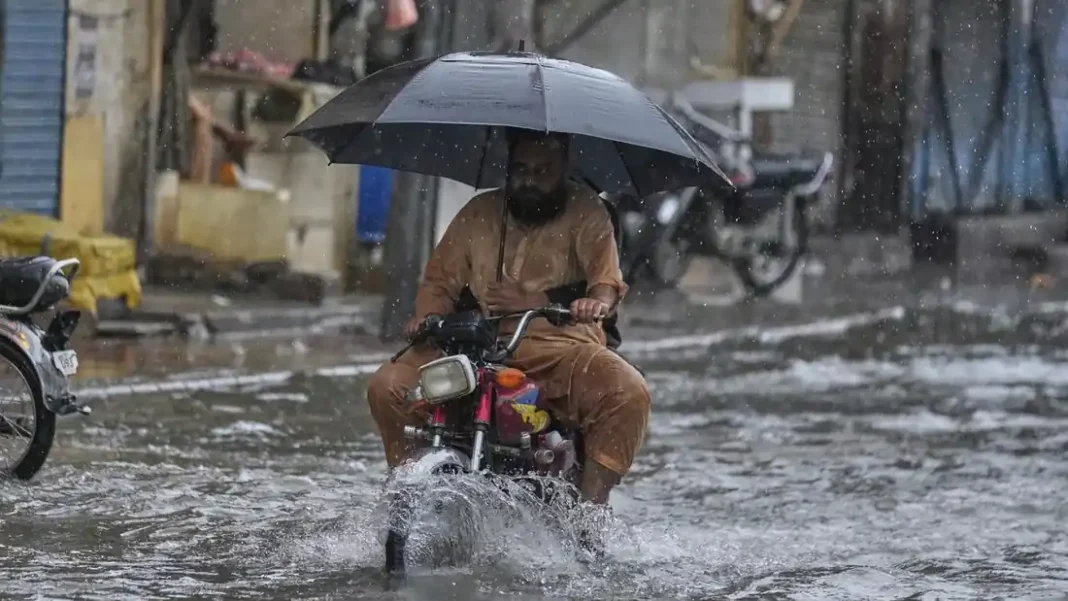
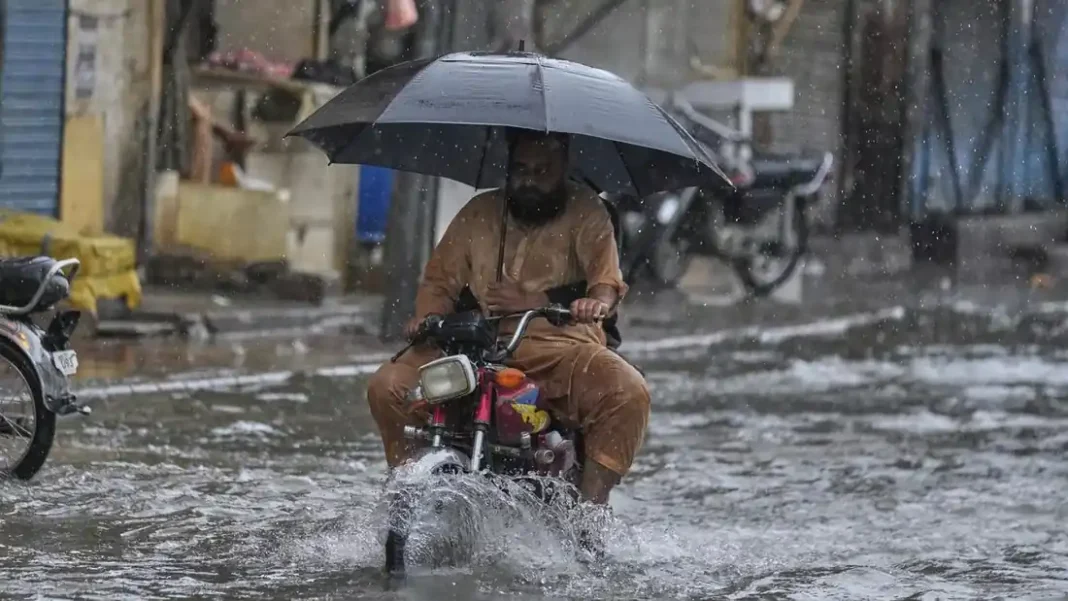
A monsoon “storm” in Pakistan usually means one of two things: a prolonged heavy spell (2–4 days of continuous rain that swells rivers and floods cities) or a cloudburst (100mm+ in an hour, flash floods within minutes). The October 6–7, 2026 spell was the former type — persistent torrential rain that saturated northern slopes until they gave way, killing 11 in landslides, then hammered KP’s plains the next day: a child dead in Mardan, Peshawar’s main roads underwater, 83 power feeders tripped.
Urban Pakistan’s storm vulnerability is structural: encroached nullahs, unplanned housing and unmaintained drains turn ordinary downpours into urban floods. Lahore’s underpasses, Karachi’s Gujjar Nullah, Peshawar’s University Road — the same places flood every year. The NDMA’s impact-based warnings now name the expected impacts (urban flooding, hill torrents, landslides) rather than just rainfall amounts — read them as instructions, not forecasts.
Hailstorms
Hailstorms are Pakistan’s most underrated storm: brief, hyper-local, and economically brutal. Golf-ball-sized hail shreds standing wheat, maize and orchards in minutes; the October 2026 hailstorm in Mohmand’s Pandiali tehsil damaged crops and solar power systems across the area. KP’s northern districts and the Potohar plateau are hail-prone, especially in the spring and autumn transition months.
For farmers, hail is the uninsurable risk — no warning system predicts it reliably, and a ten-minute storm can erase a season. The PMD’s nowcasting (short-range radar alerts) is improving, but in practice the advice remains: harvest early if hail is in the forecast, and never shelter under trees in a hailstorm — lightning kills more Pakistanis than hail does.
Andhi: The Dust Storms
Before the monsoon comes the andhi — the great dust storms of May and June. Born in the heated plains of Punjab and Sindh, an andhi arrives as a towering wall of dust, dropping visibility to zero and temperatures by 10°C in minutes. They uproot trees, collapse billboards, snap power lines and trigger roof accidents — and they are the monsoon’s advance guard: the first andhi of the season tells farmers the rains are 2–3 weeks away.
Andhi safety is simple: get indoors, stay away from windows, never drive through one, and secure anything on your roof. In cities, the andhi’s real damage is to the power grid — tripped feeders and fallen lines are routine. Our rain guide covers what follows the dust.
Recent Storms: 2026’s Ledger
October 6–7, 2026: northern landslides (11 dead), KP deluge (1 child dead in Mardan, Peshawar flooded, 83 PESCO feeders tripped, Mohmand hailstorm). August 2026: KP rains killed 9 and damaged 103+ houses (PDMA). Monsoon 2026 overall: 185 dead, 521 injured (NDMA, 26 June–17 September). 2025 monsoon: 1,037 dead, 229,000+ houses destroyed. 2022: the super-floods — 1,700+ dead. The trend line is not toward fewer storms; it is toward storms outside the calendar — October deluges, unseasonal hail, winter cloudbursts. Pakistan’s storm season is quietly becoming year-round.
Storm in Pakistan: FAQs
Is there a storm in Pakistan today?
No major storm on 11 October 2026 — the October 6–7 spell has passed and skies are clearing. Northern slopes remain landslide-prone after saturation.
What is an andhi?
A pre-monsoon dust storm (May–June): a wall of dust that drops visibility to zero, topples trees and power lines, and signals the monsoon is 2–3 weeks away.
Which storm type kills most people in Pakistan?
Monsoon downpours and their floods — by far. Cloudbursts, flash floods, roof collapses and drownings in nullahs account for the bulk of the 185 deaths in the 2026 monsoon.
Does Pakistan get cyclones?
Rarely, but yes — Arabian Sea cyclonic storms occasionally threaten the Sindh–Balochistan coast (Karachi). The PMD issues dedicated cyclone warnings; coastal residents should treat them as evacuation-grade alerts.
 — types, recent storms, warnings. PMD and NDMA alerts. October 2026.)