


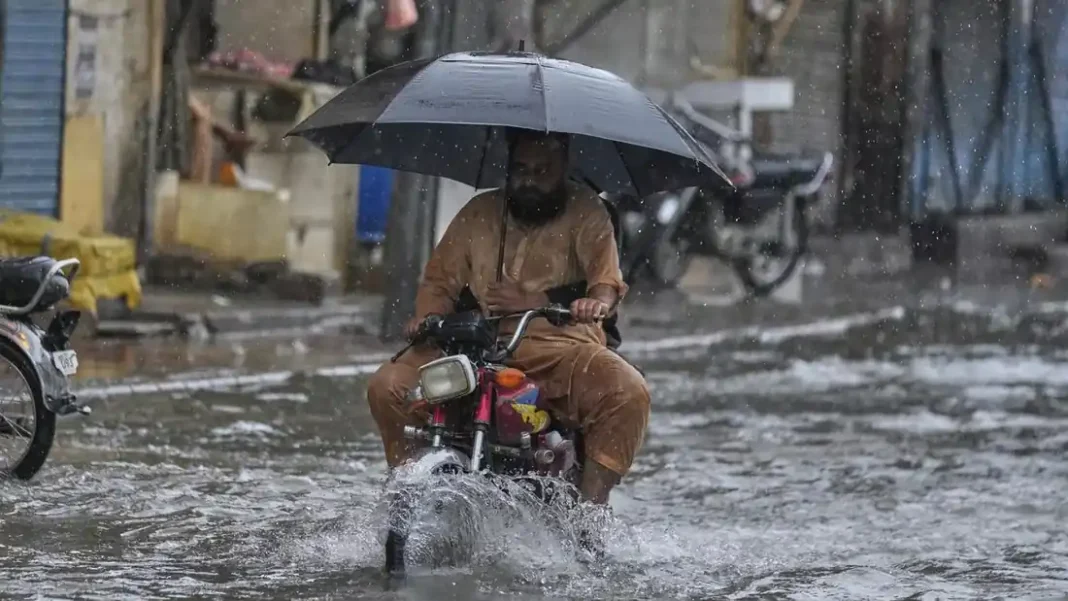
Rain in Pakistan — how much falls, when, and where. The complete seasonal picture, with 2026’s verified numbers.
Quick answer: Rain in Pakistan comes mainly from the monsoon (late June–September), peaking in July–August, plus western disturbances in winter (December–March). The July–September 2026 monsoon brought 120.5mm nationally — 19.3% below normal (PMD), with Sindh the driest province and Gilgit-Baltistan the only above-normal region.
The Two Rain Seasons
Pakistan has two distinct rainy seasons, and confusing them is the commonest mistake in weather reporting. The summer monsoon (late June–September) is the big one: moisture-laden winds sweep up from the Arabian Sea and the Bay of Bengal, drenching the eastern half of the country. July and August are the peak months — this is when cloudbursts, urban flooding and hill torrents happen.
The second season is the winter rains (December–March), driven by western disturbances — low-pressure systems travelling from the Mediterranean. These matter most in the north: Punjab, Khyber Pakhtunkhwa, Gilgit-Baltistan and Azad Kashmir get their winter snow and spring water from them. October and November are usually the driest months — which is why the October 6–7, 2026 downpour that flooded Peshawar and triggered deadly northern landslides was so unusual. For the full seasonal story, see our monsoon in Pakistan pillar.
Where It Rains Most
Rainfall in Pakistan is wildly uneven. The wettest belt runs along the Himalayan foothills and the northeast: Murree, Islamabad, Sialkot and the Potohar plateau record the highest annual totals, often above 1,000mm a year. Punjab’s central plains and KP’s settled districts get a solid monsoon. The driest regions are western Balochistan (Nok Kundi, Dalbandin — some of the driest inhabited places on earth, under 100mm a year) and the Thar desert, which lives or dies on a handful of monsoon showers.
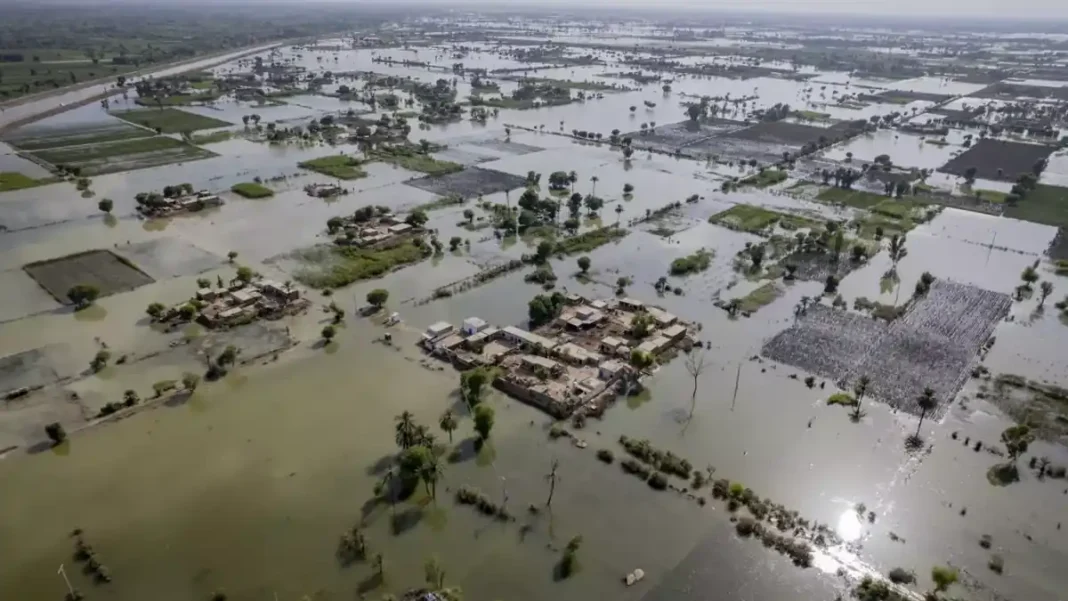
This geography explains Pakistan’s flood paradox: Sindh gets little rain but suffered the 2022 catastrophe, because the Indus carries the north’s rain south. When the river swells, it is the downstream plains — not the rainy hills — that drown. Storms, when they strike, follow the same logic: see our guide to storms in Pakistan.
Rainfall in 2026: The Numbers
The Pakistan Meteorological Department’s end-of-season bulletin for 2026 surprised many. The July–September monsoon delivered 120.5mm nationally — 19.3% below the 1991–2020 normal. The PMD blamed a developing El Niño, which typically weakens South Asian monsoon activity.
The provincial breakdown: Sindh recorded the largest shortfall — 50.8% below normal, with Karachi an extraordinary 92% below normal. Balochistan was 33.7% short; Azad Kashmir 18.4%; Khyber Pakhtunkhwa 16.3%; Punjab just 3.8% below. Gilgit-Baltistan was the only region above normal (+4.6%). Yet the “dry” monsoon still killed 185 people and injured 521 (NDMA, 26 June–17 September) — proof that in Pakistan, single violent spells matter more than seasonal totals.
September 2026 followed the pattern: rain below normal in most of the country, above normal only in parts of Punjab, most of KP and parts of GB. The PMD’s drought bulletin noted Quetta running up to 4°C above normal — and warned of a possible 25% water shortage in the coming Rabi season, a direct threat to wheat sowing.
Records and Extremes
Pakistan’s rainfall records are staggering. The 2022 monsoon remains the benchmark disaster: August rainfall ran more than 240% above average nationally, the wettest August since 1961, killing over 1,700 people and submerging a third of the country. The 2010 Indus floods killed around 2,000 and affected 20 million. On the dry side, multi-year droughts periodically grip Tharparkar and Cholistan, killing livestock and forcing migration.
Cloudbursts — sudden, violent downpours dumping 100mm+ in an hour — are Pakistan’s deadliest rain phenomenon. Islamabad’s Margalla Hills, Murree and the Sulaiman Range are cloudburst-prone; the resulting flash floods give minutes of warning. If you live in these zones, treat every PMD heavy-rain alert as a personal warning. Wondering about conditions right now? Check storm in Pakistan today.
Rain in Pakistan: FAQs
When does it rain most in Pakistan?
July and August — the peak of the southwest monsoon. The second wettest period is the winter rains of January–March in the north.
Which city gets the most rain in Pakistan?
Murree and the Islamabad foothills are among the wettest inhabited places in Pakistan, regularly recording over 1,000mm a year. Among major cities, Islamabad gets the most rain; Karachi gets the least reliable rain.
Why was the 2026 monsoon called “dry” if 185 people died?
Because seasonal totals measure averages, not violence. The July–September 2026 rainfall was 19.3% below normal (PMD), but deaths come from isolated intense events — cloudbursts, roof collapses, flash floods — not from the season’s average.
Does it rain in Pakistan in winter?
Yes, in the north. Western disturbances bring rain and snow to Punjab, KP, GB and AJK from December to March — the water that fills the rivers for the summer.
, today's weather. Monsoon late June–September. Updated Oct 2026.)