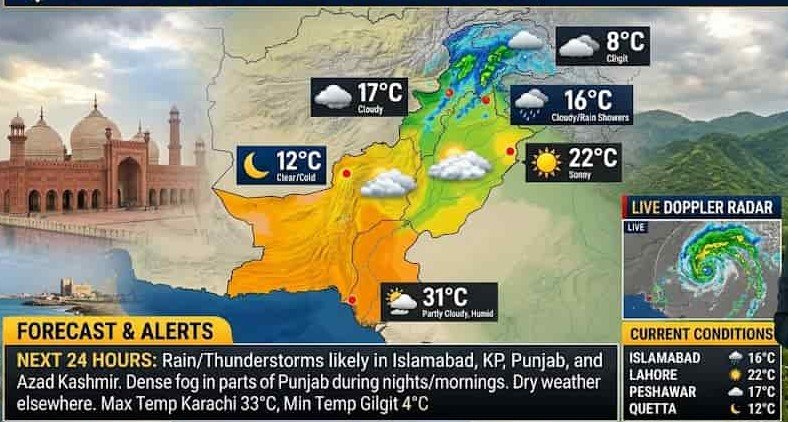
Pakistan is experiencing changing weather patterns as different regions of the country face a mix of conditions, from warm and humid weather in plains to rainfall, flash flood risks and colder conditions in northern mountainous areas. For tourists planning trips across Pakistan, understanding the latest weather situation is important to enjoy a safe and comfortable journey.
The country’s weather remains highly diverse because of its geography. While cities like Karachi, Lahore, Islamabad and Peshawar continue to experience warm temperatures with humidity and occasional rainfall, northern regions including Gilgit-Baltistan, Khyber Pakhtunkhwa and high-altitude areas are facing changing mountain weather conditions.
The Pakistan Meteorological Department (PMD) continues to monitor weather systems affecting different parts of the country and issues alerts regarding rainfall, snowfall, thunderstorms and possible hazards for travellers.
Overall Weather Situation in Pakistan
Pakistan’s current weather situation shows a clear difference between northern and southern areas. The plains are mostly experiencing warm conditions, while northern mountainous regions are seeing cooler temperatures with chances of rain and snowfall at higher elevations.
Major cities including Islamabad, Lahore and Karachi may experience partly cloudy skies, scattered showers and humid weather conditions. Tourists visiting urban destinations should keep light clothing, umbrellas and comfortable footwear according to the expected conditions.
The monsoon season continues to influence several parts of the country, increasing the possibility of heavy rainfall in some areas. Weather authorities have warned that intense rainfall can create urban flooding problems, especially in low-lying areas and regions with poor drainage systems.
For travellers, sudden weather changes can affect road conditions, flight schedules and outdoor activities. Checking weather updates before starting a journey is highly recommended.
Northern Areas Weather Update: Snowfall and Cold Conditions
Pakistan’s northern areas remain the biggest attraction for tourists because of their mountains, valleys and scenic landscapes. Destinations including Hunza, Skardu, Naltar, Fairy Meadows, Swat, Kalam, Murree and Naran attract thousands of visitors every year.
However, weather in these regions can change quickly because of high altitude and mountain conditions. Upper areas may experience colder temperatures, rainfall and snowfall during weather systems moving through the region.
High-altitude locations in Gilgit-Baltistan and Khyber Pakhtunkhwa can receive early snowfall, creating beautiful winter scenery but also increasing travel challenges. Snow-covered roads, slippery tracks and temporary road closures are common risks during severe weather conditions.
Tourists planning trips to northern Pakistan should carry warm clothes, waterproof jackets, gloves and suitable shoes. Travellers should also check road conditions before moving towards remote mountain destinations.
As temperatures continue to drop in northern Pakistan, high-altitude areas are becoming the center of attention for weather lovers and tourists. The arrival of winter brings breathtaking snowfall views, especially in areas like Gilgit-Baltistan. The first snowfall at Khunjerab Pass marks the beginning of the winter season in one of Pakistan’s most beautiful mountain regions. Read our detailed update about the first snowfall at Khunjerab Pass and winter conditions in Pakistan.
Flood Risk in Northern Pakistan
Northern Pakistan faces a unique weather challenge because heavy rainfall, rapid snowmelt and glacier activity can increase flood risks in some areas.
Regions of Gilgit-Baltistan and Khyber Pakhtunkhwa remain sensitive to flash floods, landslides and glacial lake outburst flood (GLOF) risks. Weather authorities have repeatedly advised tourists to avoid unnecessary travel near rivers, streams and unstable mountain slopes during extreme weather.
Tourist spots located near rivers and valleys can become dangerous during heavy rainfall. Visitors should avoid camping near water channels and should follow instructions from local authorities.
Mountain roads can also become difficult because of landslides and falling rocks. Tourists travelling by car should keep emergency supplies, fuel and basic medical items during long journeys.
Weather Conditions in Popular Tourist Destinations
Hunza Valley
Hunza remains one of Pakistan’s most beautiful destinations. During changing weather conditions, mornings and evenings can become cold while daytime temperatures remain pleasant.
Visitors should prepare for colder nights, especially if travelling towards higher areas like Khunjerab Pass. Weather changes can happen quickly, so warm clothing is necessary.
Skardu
Skardu offers breathtaking views of mountains, lakes and valleys. However, tourists should remain updated about snowfall and road conditions before visiting remote areas.
Heavy snowfall can affect routes towards Deosai Plains and other high-altitude locations.
Murree and Galiyat
Murree, Nathia Gali and surrounding areas attract large numbers of tourists. Rain and snowfall can make roads slippery, especially on mountain turns.
Visitors should avoid travelling without checking weather alerts and road updates.
Swat and Kalam
Swat Valley offers beautiful landscapes throughout the year. However, upper Swat areas can experience colder weather and snowfall earlier than lower regions.
Tourists should carry winter essentials when travelling towards Kalam, Malam Jabba and nearby mountain locations.
Travel Safety Tips for Tourists
Tourists planning a trip across Pakistan should follow some important safety measures during changing weather conditions.
Always check the latest forecast before travelling. The Pakistan Meteorological Department provides updated weather information and warnings for different regions.
Avoid travelling towards mountain areas during heavy rainfall warnings. Landslides and road blockages can create serious problems for visitors.
Keep your vehicle prepared before travelling to northern areas. Carry extra fuel, food, drinking water, warm clothes and a first-aid kit.
Avoid walking or camping near rivers during rainy weather because flash floods can occur suddenly.
Tourists should also keep mobile phones fully charged and save emergency contact numbers before entering remote areas.
Best Time to Visit Northern Pakistan
Pakistan’s northern areas offer different experiences throughout the year. Summer remains popular for hiking, trekking and exploring valleys, while autumn attracts visitors because of colourful landscapes.
Winter attracts tourists who want to experience snowfall and snow-covered mountains. However, winter travel requires more preparation because roads and weather conditions can become challenging.
Visitors who want comfortable travel should choose their destination according to weather conditions and personal preferences.
Final Weather Advice for Travellers
Pakistan’s weather is currently showing a combination of warm plains, changing rainfall patterns and colder northern conditions. Snowfall in mountain regions creates beautiful views for tourists, but flooding, landslides and road problems remain important concerns.
Travellers should plan carefully, follow official weather updates and respect local warnings. With proper preparation, Pakistan’s mountains, valleys and cultural destinations can offer an unforgettable travel experience in every season.